

Soilbuild Construction makes a comeback
The company’s revenue has risen 58% to S$391.8 million and earnings have more than trebled to S$26.6 million in FY2024

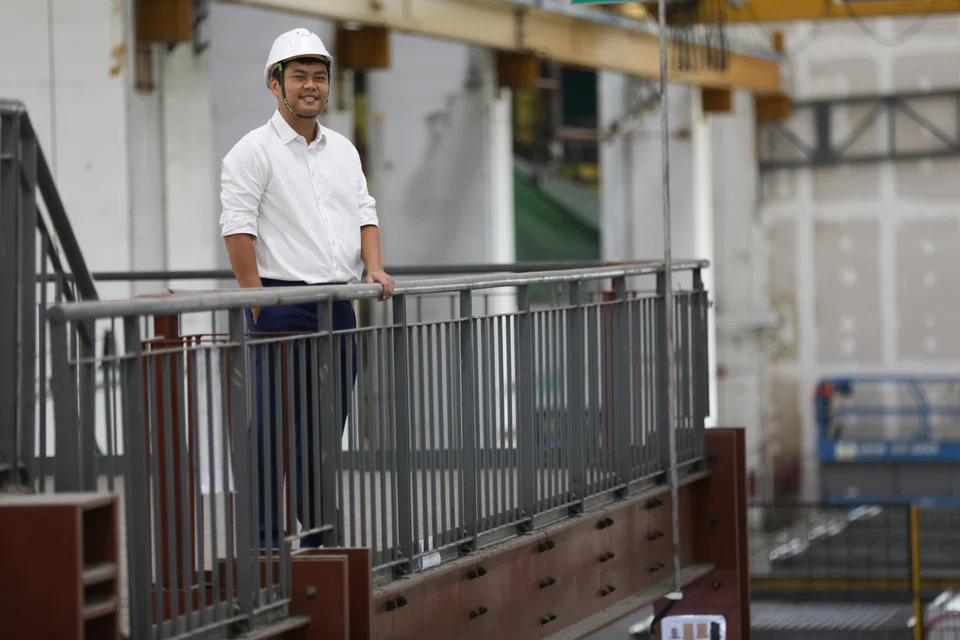
[SINGAPORE] The pandemic years of 2020 to 2022 were challenging years for Soilbuild Construction. Revenue and profits slumped as construction activity – and the world – came to a halt.
It was during those dark days when group chief executive officer Lim Han Ren joined the company. “I would say it was like a baptism of fire,” he quipped. He was not an engineer by training, and the learning curve was steep.
But what Lim had was a fresh pair of eyes. His experience in private equity helped him identify new opportunities, as well as ways to strengthen Soilbuild’s brand and differentiate itself from competitors.
More specifically, he said, that meant honing in on digitalisation and sustainability to streamline work processes and win more contracts.
For example, he worked with his team to use building information modelling software to create detailed 3D video renderings of projects they were bidding for. These fly-through videos show not only an aerial view of the potential development, but also a close-up view of its interior and surroundings.
“This allowed us to work with (clients) more intimately and engage with them better, which possibly helped us secure some of our tenders in the past few years,” said Lim. The 3D models also helped clients with spatial planning since the exact dimensions of equipment can be included, improving time and cost savings.
Becoming environmentally friendly
On the sustainability front, Lim noted that builders’ environmental friendliness was becoming increasingly important when bidding for construction projects.
He cited Soilbuild’s recent project with German logistics company DB Schenker as an example. When bidding for the tender to build a sustainable and energy efficient logistics facility, Lim said, Soilbuild itself had to commit and meet certain conditions such as reducing its construction energy and water consumption.
Additionally, the government is now taking environmental-sustainability criteria into consideration when assessing bids for large construction and information and communications technology projects, with up to 5 per cent of evaluation points allocated to such considerations.
Lim said Soilbuild has been an early adopter of such initiatives since 2008, but the group is now doubling down on it as the industry moves to green its supply chain.
This includes substituting diesel generators with battery energy storage systems where possible, reducing carbon footprint by around 50 per cent; outfitting offices with solar panels to generate clean energy; recycling construction waste, for instance by turning scrap rebar into storage racks; and using rainwater to wash equipment.
“A lot of multinational companies (MNCs) are more advanced in their sustainability goals,” Lim added. “This allows us to capitalise on it, potentially putting us ahead of our competitors when we tender for some of these MNC jobs.”
Revenue and profit bounce back
This approach proved successful with revenue and profit soon bouncing back.
In the latest FY2024, revenue rose 58 per cent year on year to S$391.8 million. It was also more than double FY2020’s S$148.9 million.
Earnings more than trebled to S$26.6 million – a significant reversal from the group’s three straight years of losses between FY2020 and FY2022.
The group also hit a key business milestone last year by securing a S$647.5 million contract for the construction of PSA Supply Chain Hub @ Tuas – its largest ever contract, bringing its order book beyond the S$1.2 billion mark for the first time. Shares surged to a five-year high the morning after the announcement.
These “strong” results and Soilbuild’s improved liquidity reflect the “tangible results of our team’s collective efforts in strategy, execution and capital management”, Lim said.
The future continues to look promising for Soilbuild, buoyed by strong growth in the construction sector.
Some S$47 billion to S$53 billion in construction contracts are expected to be awarded this year, according to the Building and Construction Authority (BCA). This is higher than the estimated S$44.2 billion in contracts in 2024, and is up to 11.7 per cent higher than pre-pandemic levels in 2019.
BCA attributed the anticipated increase to the launch of more public infrastructure projects, as well as public and private housing developments. For instance, the government said it will launch about 130,000 HDB flats between 2021 and 2027 to meet demand-supply imbalances, increasing public housing by 11 per cent.
Singapore is also working to establish itself as a regional hub for advanced manufacturing.
This will naturally attract more MNCs which require high-spec industrial spaces – a niche that Soilbuild has carved in the construction space, said Lim. “We are well-positioned to capitalise on these opportunities.”
There are, of course, challenges on the horizon.
“Geopolitical tensions could potentially disrupt supply chains… and labour continues to be a problem,” said the chief executive.
He added that workplace safety is an issue in the industry. For example, the second half of 2024 saw 15 fatalities in the sector, up from just five in the first half of the year.
“That’s something that could potentially derail our industry, so we will definitely pay quite close attention to it,” said Lim. “But having gone through Covid, we are much better equipped, organisation-wise and business-wise, to deal with these issues as and when they come up.”
TRENDING NOW

Once staunchly pro-China, Malaysian Chinese businesses are now distancing themselves from Beijing

Britain’s mansion tax shows the difficulty of targeting wealth
Three hats, one goal: How Ng Kian Swan runs sustainability at NUHS

COE review: The gap between luxury and mass-market cars isn’t the only one worth bridging

