

Elevating Singapore’s advanced manufacturing cluster
Amid the opportunities and challenges ahead, how can companies in advanced manufacturing move in to secure the next phase of growth?
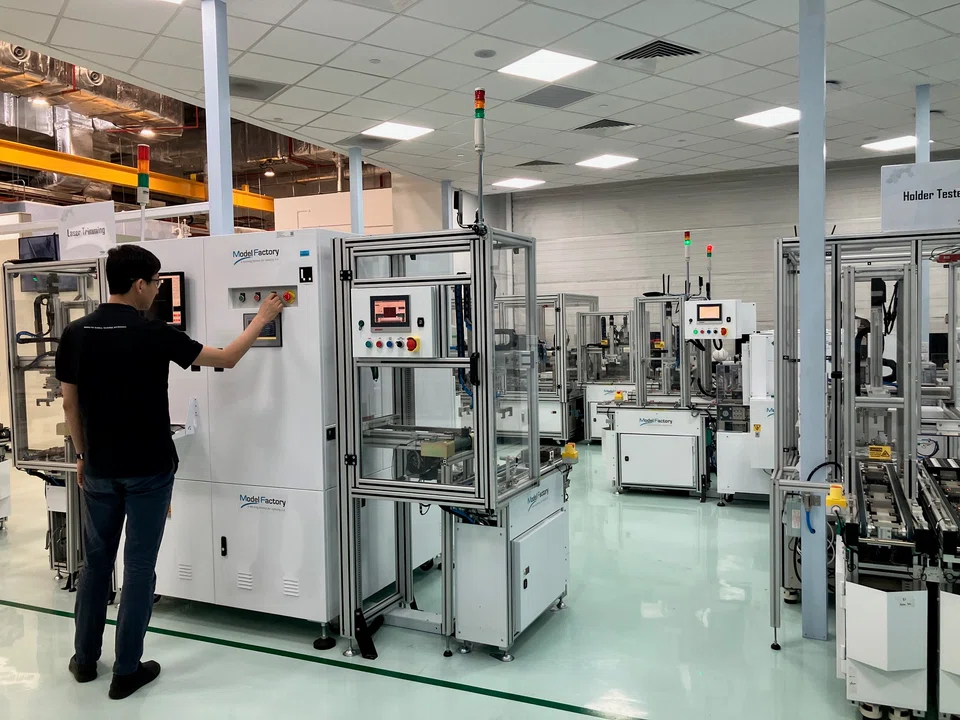
THE manufacturing sector is a key pillar of Singapore’s economy, contributing some 19 per cent of the country’s gross domestic product in 2023.
Against the backdrop of growing global demand for manufacturing, in 2021, the Singapore government launched the Manufacturing 2030 initiative to enhance the value-add of the sector by 50 per cent between 2020 and 2030. It also envisioned Singapore becoming a global business innovation and talent hub for the advanced manufacturing cluster, consisting of electronics, precision engineering, energy and chemicals, aerospace and logistics.
In Budget 2024, the Singapore government doubled down on its efforts to realise this vision cluster, addressing four key areas of investment and innovation promotion, energy transition, financing for growth, and workforce transformation, underpinned by tax and fiscal measures.
Promoting investments and R&D
More than 140 countries have committed to implementing a 15 per cent global minimum tax rate for large multinational enterprises (MNEs) between now and 2025. Singapore, too, will be implementing the 15 per cent global minimum effective tax rate next year. Understandably, many large global MNEs will be re-evaluating their business plans, reorganising their operations and considering the implications for their global supply chains and financing arrangements to ensure compliance and maintain tax efficiency.
With BEPS 2.0 Pillar Two, Singapore’s ability to use tax incentives to attract foreign direct investments from large MNEs may be diluted. In response, a new fiscal scheme, Refundable Investment Credit (RIC), has been introduced in Budget 2024 to enhance Singapore’s investment promotion toolkit. The RIC scheme will offer up to 50 per cent support on each qualifying expenditure category for up to 10 years.
For the advanced manufacturing cluster, the RIC scheme seeks to encourage players to pursue research and development (R&D) and innovation projects. For example, chemical companies can tap the incentive to support their investment in new production facilities, research and innovation, and decarbonisation projects that reduce industrial carbon emission.
Companies in the electronics industry can leverage the RIC scheme to support their investments in semiconductor manufacturing, electronics assembly and related technologies to enhance productivity and improve their products and services through innovation and R&D.
Supplementing the RIC is the additional S$3 billion injection into the Research, Innovation and Enterprise 2025 initiative, which will focus on deep-tech R&D, and critical and novel technologies. For the advanced manufacturing cluster, the relevant initiatives include the National Semiconductor Translation and Innovation Centre and the National Robotics Programme – which are expected to play critical roles in diversifying and creating new economic opportunities within the cluster.
Making the energy transition
Concerns over environmental sustainability are driving energy transition. This means companies in the advanced manufacturing cluster need to consider adopting energy-efficient equipment and energy-saving practices, which require significant investments.
The Energy Efficiency Grant (EEG) was introduced in 2022 to help enterprises in offsetting rising energy costs. Since its launch, nearly 2,000 companies have tapped the EEG. The grant supports businesses across various industries by offering enhanced support of up to 70 per cent for qualifying companies to adopt pre-approved energy-efficient equipment for small and medium-sized enterprises (SMEs) and 30 per cent support for non-SMEs. In Budget 2024, the grant was enhanced and extended to more sectors, including manufacturing.
The EEG complements other sustainability-oriented schemes like the Enterprise Sustainability Programme (ESP), which offers consultancy support for businesses to identify areas for efficiency gains before purchasing energy-efficient equipment with the help of the EEG. This integrated approach aims to provide holistic support for Singapore’s businesses on their sustainability journey.
Accessing financing for growth
Financing is a key challenge, especially for smaller businesses. Further, the escalating cost of doing business is putting pressure on companies as some balance survival against growth.
Hence the government has enhanced the Enterprise Financing Scheme (EFS) to help Singapore enterprises, including those in advanced manufacturing, to access financing more readily across all stages of growth. Three enhancements have been made. The maximum loan quantum under the EFS – SME Working Capital Loan will be raised from S$300,000 to S$500,000 to help qualifying enterprises meet their increased working capital and operational cashflow needs. Also, the enhanced maximum loan quantum under the EFS – Trade Loan of S$10 million will be extended till Mar 31, 2025, to support businesses’ trade needs, including inventory or stock financing. Lastly, advanced manufacturing companies looking to expand overseas may consider the EFS – Project Loan, which supports internationalisation efforts through financing fulfilment of overseas projects.
Transforming talent and skills
A skilled and adaptable workforce is one of the key factors that attract global investors to set up business in Singapore. For the advanced manufacturing cluster, having a strong pool of skilled talent to support the business is critical. With the accelerating pace of technological advancement, including the rise of artificial intelligence (AI), there is a greater need than ever for firms to continually review and upskill workforce capabilities, to exploit opportunities to drive innovation and productivity.
For example, companies will need to equip their workforce with skills to work effectively with AI-enhanced processes and systems. To this end, they can tap the SkillsFuture Enterprise Credit that is geared towards encouraging employers to undertake enterprise and workforce transformation.
As the business landscape becomes more competitive, Singapore’s companies must stay hungry for growth. Seizing opportunities and leveraging the suite of support measures announced in Budget 2024 can certainly bolster the competitiveness of companies in the advanced manufacturing cluster, and hence further anchor Singapore’s bid to be a global frontrunner in this space.
Desmond Teo is EY Asia-Pacific Family Enterprise Leader and Johanes Candra is partner, Business Incentives Advisory at Ernst & Young Solutions LLP. The views reflected here are the writers’ and do not necessarily reflect the views of the global EY organisation or its member firms.






