Singapore banks may curb financing of firms in ‘zero-tolerance’ approach to open burning, deforestation
DBS, OCBC, UOB reiterate strict sustainability standards for clients as scrutiny intensifies over haze crisis

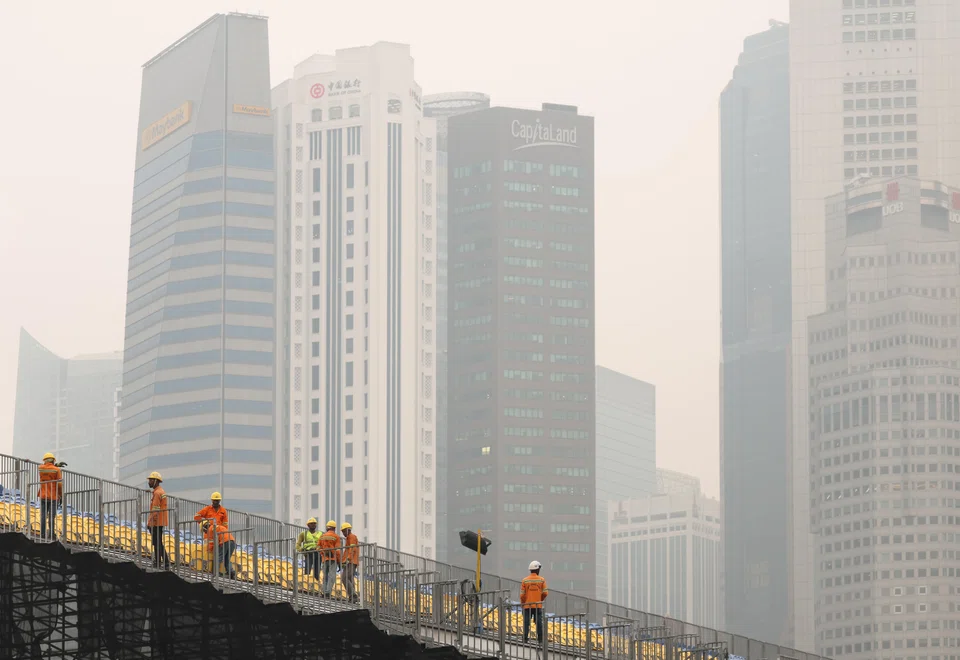
[SINGAPORE] Singapore banks could reduce funding or exit relationships with errant companies, due to their “zero-tolerance” approach to open burning and deforestation practices among the companies they finance.
This comes amid growing scrutiny of firms linked to the region’s haze crisis.
While the local banks were unable to comment on their ties to companies linked to the haze, they said that they would take decisive action if their clients are found to have breached their sustainability requirements.
Mike Ng, group chief sustainability officer at OCBC, said: “Where there is clear evidence of conduct that breaches our sustainability requirements or applicable laws, we will take decisive action, including reducing financing support or exiting the relationship.”
This comes as Singapore steps up pressure on companies potentially responsible for the transboundary haze, with Senior Minister K Shanmugam calling out banks to consider risks arising from environmental and legal issues as they may have financed companies linked to the fires.
OCBC said it conducts ESG risk assessments on its clients regularly throughout the financing tenure, which includes evaluating clients’ capacity, commitment and track record in mitigating such risks.
A DBS spokesperson also said that the bank reviews clients’ alignment with its sustainability policies on a regular basis, as part of ongoing client engagements and risk assessments.
The bank has “strict policies” governing deforestation and a zero-tolerance approach to burning and requires clients to maintain “No Deforestation, No Peat, No Exploitation” commitments, its spokesperson added, without elaborating on what the repercussions would be.
UOB also noted its sectoral palm oil policy, which requires clients to uphold principles of no open burning, no peat development and no deforestation.
Its spokesperson added that the bank has been engaging clients on the current haze situation, and will take decisive action against client relationships that do not adhere to its policy.
This may include reducing funding, ring-fencing loans for specific purposes or ending relationships.
Other banks that The Business Times reached out to declined to comment, including Citigroup, Standard Chartered and HSBC.
On Monday (Oct 19), Shanmugam, who is coordinating minister for national security and minister for home affairs, said that Singapore will use “every legal and regulatory lever” to confront companies linked to the region’s choking haze.
He added that the government is considering legal, regulatory and economic measures to pressure these companies where it matters – including on their bottom lines, access to financing and standing with investors.
Singapore has so far issued legal notices to 10 companies in Indonesia for contributing to the haze affecting the city-state, as part of the Transboundary Haze Pollution Act.
Four of the companies named are suppliers for Indonesia’s Asia Pulp & Paper (APP), which has a Singapore presence.
APP, which was given a Notice of Temporary Restrictions that subjects it to daily fire response reporting requirements and strict monitoring, said that the fires “originated outside (its suppliers’) boundaries”.
The Singapore Exchange also queried seven Singapore-listed firms about their operations and potential ties to the haze: Golden Agri Resources, Bumitama Agri, First Resources, Wilmar, Kencana Agri, Indofood Agri and TSH Resources.
Among them, Shanmugam said that First Resources’ initial statement – that some fires spread into its areas under management from outside its boundaries – was “no matter how well drafted, (not good enough)”.
Later, the palm oil company said that it was “confident” that an objective review will establish that it does not engage in land clearing by fire, and has welcomed a thorough, evidence-based examination of the facts surrounding the haze situation.
Meanwhile, he also noted the Monetary Authority of Singapore’s (MAS) supervisory jurisdiction over the banks to make sure that they manage their risks properly.
BT has reached out to MAS for comment.