Sinar Mas’ APP says most fires began outside 3 supplier concessions amid Singapore haze scrutiny
It notes there had been no fire-related violations by its suppliers between 2023 and 2026

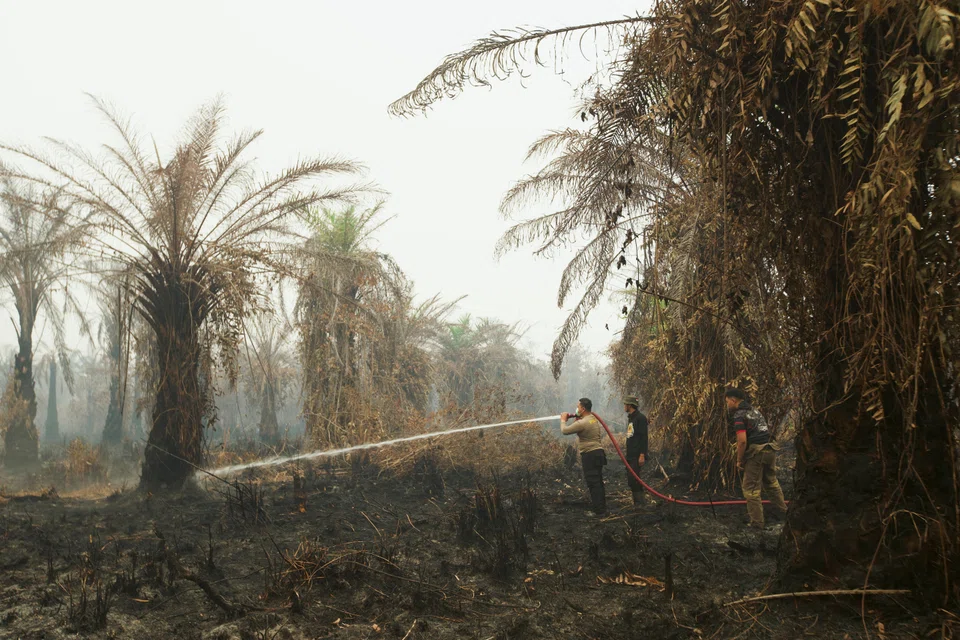
[JAKARTA] Asia Pulp & Paper (APP) said that almost all fires detected within three of its suppliers’ concessions between July and October originated outside their boundaries. The Indonesian pulp and paper group was responding to Singapore’s latest efforts to hold companies linked to transboundary haze accountable.
In its reply to The Business Times on Monday (Oct 19), APP noted that satellite analysis indicated that the fires had spread into the three concessions from surrounding areas. Much of its firefighting resources were deployed to contain blazes that crossed concession boundaries.
It added that it was working with the relevant suppliers to support their responses to the fires, ensure cooperation with authorities and reinforce fire-prevention requirements across its supply chain.
“APP takes the Singapore government’s concerns seriously, and supports efforts by both Singapore and Indonesia to prevent and control transboundary haze,” the company said in a statement.
The company, which is part of the Sinar Mas Group conglomerate, did not identify the three suppliers in its response or provide the underlying satellite data.
BT’s checks found that three of the companies named by Singapore’s National Environment Agency (NEA) on Oct 16 – Bumi Andalas Permai, Bumi Mekar Hijau and SBA Wood Industries – are APP suppliers operating in South Sumatra.
A fourth APP supplier, Buana Megatama Jaya, was named in a separate round of notices on Monday, bringing the total number of companies notified by NEA to 10.
APP said that companies managing land have a responsibility to prevent fires, respond quickly when they occur and minimise their impact, regardless of their origin.
APP pointed out that its zero-burning policy prohibited the deliberate use of fire for land clearing and management throughout its supply chain.
It added that burning is also prohibited under Indonesian law. “The deliberate use of fire has no commercial rationale. Fire destroys the growing stock on which a plantation depends; burning therefore forfeits the very asset the business relies upon.”
The group pointed out that it had invested almost US$300 million in its integrated fire-management system over the past decade. Its measures include community patrols, monitoring systems, firefighting teams and aerial resources.
APP added that there had been no fire-related violations by its suppliers between 2023 and 2026, without providing further details on how violations were assessed or how the company monitored compliance across its supply chain.
The statement did not specify how many suppliers had been suspended or dropped over fire-related breaches during the period, despite BT’s questions on what enforcement measures had been taken over the past three years.
APP said that in 2026, its crews detected fires in an average of 47 minutes, supported by more than 6,000 firefighters, 1,700 pumps, 15 helicopters, 108 drones and a network of monitoring posts and situation rooms. Beyond firefighting, the company explained, it worked with suppliers to assess incidents, strengthen preventive measures and ensure compliance with its zero-burning requirements.
The response comes after NEA issued preventive measure notices to companies allegedly linked to the haze, including three independent suppliers in APP’s fibre supply chain.
The notices require the companies to address fires, prevent further burning and submit plans to reduce the risk of recurrence.
The NEA’s move puts renewed scrutiny on the responsibilities of companies whose operations or supply chains may be linked to fires that contribute to the haze that is affecting Singapore and neighbouring countries.
Singapore’s Transboundary Haze Pollution Act allows the authorities to pursue companies and individuals responsible for causing or contributing to haze pollution in Singapore under specified conditions.
Indonesia’s Home Affairs Minister Tito Karnavian said on Monday that the government had no objection to Singapore taking legal action against companies allegedly linked to the haze, provided it was in accordance with Singapore law. “We are working together to control and mitigate forest and land fires to prevent serious consequences. If any corporations are found to be involved, the Indonesian government will not hesitate to take firm action,” he added.
In the same briefing, national police chief Suyudi Ario Seto said that the police are investigating 98 cases involving corporations suspected of violating regulations on forest and land fires.
President Prabowo Subianto on Monday called for large-scale efforts to tackle forest and land fires. He ordered the authorities to intensify wildfire management and deploy military equipment on a greater scale for cloud-seeding operations.
The directive comes as Indonesia continues to battle fires across several regions, with recurring haze raising concerns over public health and cross-border air pollution.
The recurring transboundary haze has also led to scrutiny of regional agriculture companies’ fire prevention measures and accountability for fires in Indonesia. It has also prompted plantation groups in Malaysia to defend their operations and reiterate their zero-burning commitments.
Malaysia’s Communications Minister Fahmi Fadzil said on Oct 16 that no Malaysian plantation companies were involved in fires in Indonesia, citing checks presented to the Cabinet by Plantation and Commodities Minister Noraini Ahmad.
Malaysian plantation groups Kuala Lumpur Kepong and Genting Plantations have similarly said recently that fires detected within their concessions originated outside their boundaries.
Additional reporting by Tan Ai Leng in Kuala Lumpur
Decoding Asia newsletter: your guide to navigating Asia in a new global order. Sign up here to get Decoding Asia newsletter. Delivered to your inbox. Free.
Copyright SPH Media. All rights reserved.