

ST Engineering, Asian defence peers rally as Middle East conflict deepens, but war not seen as a spending catalyst
Analysts say long-term growth drivers, such as Europe’s rearmament push, are a bigger factor

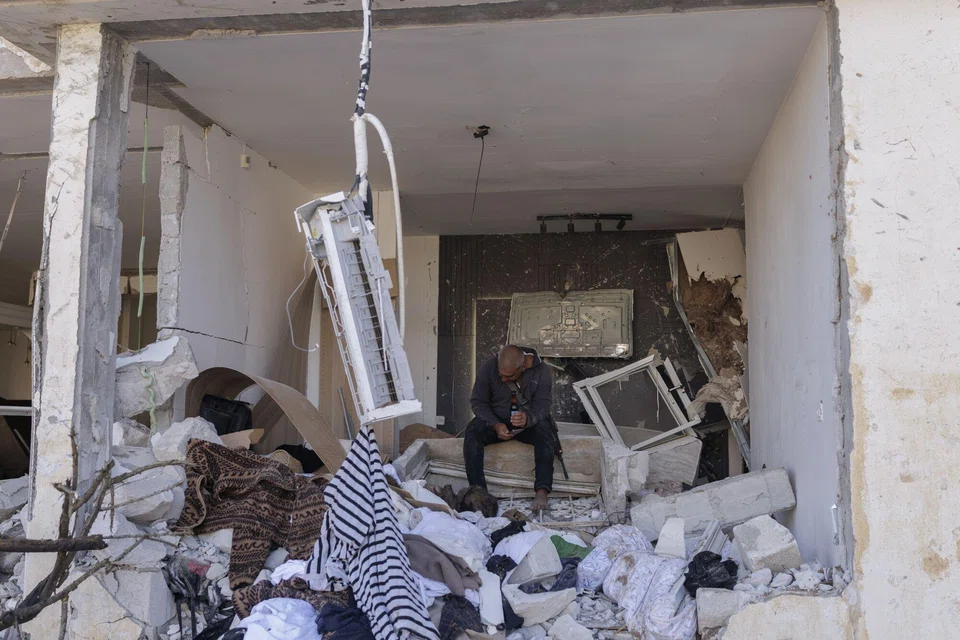
[SINGAPORE] Asian defence counters have surged as the Middle East conflict entered its fourth week, with analysts expecting further upside after strong gains in 2025.
However, the longer-term trajectory for defence spending remains anchored to structural global drivers – including the US’ “America First” stance and Europe’s rearmament push – rather than any single conflict, they said.
“The war on Iran should not change the fundamental outlook for defence spending because countries who have not built or upgraded their defence forces were already in the process of budgeting this into their spending,” said Lorraine Tan, director of equity research in Asia at Morningstar.
“The trigger for the spending was the realisation that one can’t rely solely on the US for assistance, and also learning from how Ukraine has had to scramble to borrow equipment,” she added, referring to the ongoing Russia-Ukraine war.
Since the US and Israel struck targets in Iran on Feb 28, what some had expected to be a short-lived conflict has broadened across the Gulf region as Teheran retaliated, pushing up energy prices and stoking global inflationary fears.
Even so, defence contractors have emerged as clear beneficiaries of investor interest, amid expectations that a prolonged conflict will lift demand for munitions and accelerate procurement cycles.
Associate Professor Goh Puay Guan of National University of Singapore Business School said: “Asian suppliers are providing components for weapon systems, but could also be making and providing the end weapon products.”
He added: “This increase in demand can also be seen in the rise in share prices of publicly traded defence-related companies in the last one year, vastly outperforming market indices.”
For instance, Singapore’s ST Engineering’s stock has risen 7.7 per cent since Feb 28 and 27.6 per cent in the year to date, based on Monday’s (Mar 23) close of S$10.74. This makes it the top-performing blue-chip counter on the Straits Times Index on both counts.
Across the region, other major defence contractors have also posted robust gains.
In the year to date, South Korea’s Hanwha Corp is up 33.7 per cent and Korea Aerospace Industries by 45.5 per cent. Meanwhile, Japan’s Mitsubishi Heavy Industries has gained 8.5 per cent and Kawasaki Heavy Industries has advanced 37.2 per cent in the same period.
By comparison, the global benchmark S&P 500 has fallen 5.1 per cent since the beginning of the year.
Structural drivers
However, analysts stressed that the recent rally in Asian defence contractors’ share prices is tied more to long-term growth drivers than to the US-Iran conflict alone.
In 2025, Asia’s defence spending rose 5.7 per cent in real terms to US$573 billion, marginally faster than the 5.5 per cent growth recorded in 2024, based on figures from the International Institute for Strategic Studies.
OCBC equity research analyst Ada Lim wrote in a note on Thursday that, while China “dominates” Asia’s defence spending, South Korea and Japan have also pencilled in record defence budgets for 2026.
The increased spending by South Korea and Japan should benefit their domestic champions, Lim and fellow analyst Chu Peng told The Business Times separately.
This comes as Asian countries prioritise local sourcing for defence needs, in line with the Trump administration’s “America First” and defence burden-sharing policy.
At the same time, global rearmament demand – particularly in Europe – is “increasingly met” by Asian firms, observed Lim, citing ST Engineering’s 2025 partnership with Italian contractors Leonardo and Aris to offer the Bronco 3 vehicle to the Italian military as one example.
“ST Engineering is one of our preferred industrial names; (it) doubled international defence order wins from S$300 million to S$600 million in FY2025, and is confident to double it again in FY2026,” said Lim and Chu.
While the stock is trading at a forward 12-month price-to-earnings ratio of about 32 times – above its long-term average of 20.5 times – it remains at a discount to global aerospace and defence peers, which trade closer to 44 times, they added.
Maybank analysts Krishna Guha and Jarick Seet, in a Mar 14 report, similarly expressed bullishness on ST Engineering’s growth potential, rating it a “buy” with a target price of S$12.50, up from a previous “hold” rating and S$9.50 target.
Satellite communications firm Addvalue Technologies was also cited as the research house’s top small and mid-cap pick on the Singapore Exchange.
This followed Singapore’s Budget 2026 statement, where Prime Minister and Finance Minister Lawrence Wong said that the Republic is prepared to spend more than the typical 3 per cent of gross domestic product on defence if needed, partly due to unmanned warfare and cybersecurity concerns.
The Maybank analysts added: “We believe ST Engineering and Addvalue are key beneficiaries of rising defence spending and increasing use of unmanned systems (such as drones) for warfare.”
TRENDING NOW

Stocks to watch: Clar, Seatrium, Sheng Siong, MPACT, NetLink NBN, Starhill Global Reit

Singapore government slaps loan curbs on individual private-hire car buyers

If Europe goes to war, the fallout will be felt in East Asia

DBS denies rumours of Indonesia unit merging with Bank Central Asia; analysts see sense in a deal

