


Stoneweg Europe Stapled Trust sets sights on Spain and Switzerland to grow unit price
Its managers are bullish on the logistics and light industrial sector as e-commerce, onshoring and fatter defence budgets could swell demand for warehouses

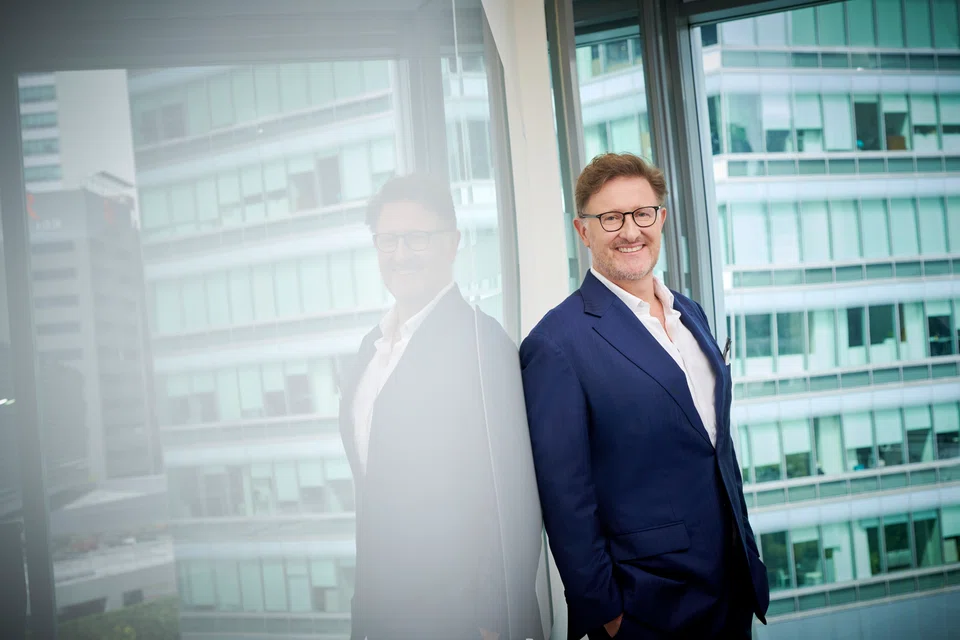
[SINGAPORE] For too long, the property markets in Spain and Switzerland have eluded Stoneweg Europe Stapled Trust (Sert), but this may soon change, with the managers having welcomed a European sponsor late last year.
Simon Garing, chief executive officer and executive director of Sert’s managers, told The Business Times: “For many years, we wanted to get into Spain, but we had no boots on the ground.”
And Switzerland, although “a great market” similar in some respects to Singapore, had also been tough to break into because the assets there are “very tightly held”, he said.
“The advantage we have now is Stoneweg’s headquarters is in Geneva, and so it has a logistics, light industrial team and business in Switzerland,” he said.
“So in the next one to three years, you’ll see us invest in Spain and Switzerland.”
The managers’ refreshed strategy follows a series of changes in Sert, formerly known as Cromwell European Real Estate Investment Trust (Reit). It has been listed in Singapore since 2017.
Homing in on Spain and Switzerland would likely expand Sert’s footprint in Western Europe and the Nordic region, which already accounts for 86 per cent of its portfolio by geography.
This would mean selling out the “very small, less-liquid markets”, such as its Slovakian, Finnish or Polish offices, which account for 12.7 per cent of its portfolio.
But Garing said the plan is not to push the weightage in central Europe down to zero.

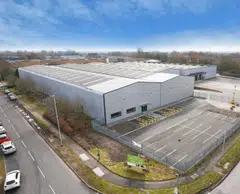
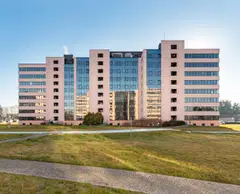
Places like the Czech Republic, which accounts for 3.4 per cent of Sert’s assets, have a positive economic outlook, are cheaper to operate in, and still offer slightly higher yields than markets like Germany, he added.
“We’re conscious that Asia-based investors perhaps don’t necessarily understand the nuances of Central Europe versus Western Europe,” he said. “We think if we can be more Western Europe, that comes with the perception of less risk.”
As far as risk goes, the question is whether greater geographical diversification would be helpful. After all, three countries – France, Italy and the Netherlands – account for nearly two-thirds of the Reit’s portfolio.
Sert currently has 104 assets in 10 countries in Europe, with a portfolio value of 2.25 billion euros (S$3.39 billion).
“We sleep so well at night because we have 1,000 leases – our largest tenant is only 3.8 per cent, and the top 10 tenants are about 20 per cent of total rent. So we don’t have to wake up one day and find there’s an issue with a particular tenant,” he said.
Logistics and light industrial over offices
There is no dominating industry sector in its portfolio now, but Garing plans to tweak Sert’s asset-class weightage over the next two years, by bringing the logistics and light industrial sectors and data centres up to 70 per cent, from the current 60 per cent.
This implies a reduction in office assets to 30 per cent. The managers’ realignment comes despite the cyclical upswing that offices are facing, with office occupancy rates near pre-Covid levels.
“Office transactions are now the second-most sought after in Europe,” he said, as investors eye the “out-of-favour asset class” at relatively discounted prices.
Yet, office Reits tend to trade at a discount to their net asset value (NAV), unlike their industrial and logistics peers.
For one, it is less capital-intensive to keep a warehouse running than an office building, which has much higher energy consumption.
Several other factors inform Garing’s bullish view on the logistics and light industrial sector’s long-term potential.
Demand for warehouse space is projected to rise on the back of e-commerce growth and the trend of onshoring in Europe.
Expanding defence budgets also provide a further impetus. Allies of the North Atlantic Treaty Organization have committed to raising defence expenditure to 5 per cent of gross domestic product by 2035. This could generate an additional 37 million square metres of demand for warehouse space, Garing noted, citing data from a recent Savills report.
Meanwhile, the trustee-manager of Stoneweg European Business Trust in June announced a 50 million euro investment in the Stoneweg Icona data-centre (IDC) fund, or AiOnX. This translates to a 6.72 per cent stake in a 10-year life development fund.
The portfolio comprises interests in five early-stage data-centre development sites taking up a total of 310 hectares in Denmark, Ireland, Italy, Spain and the United Kingdom.
It is a project the managers have been waiting a number of years for, following a fruitless attempt in 2020 with the “wrong joint venture partner”.
In such early-stage projects that involve developing rural farmland, securing power and water supply as well as a pre-lease could potentially push up their value by five to 10 times, said Garing.
This could bring an estimated 13 per cent yield on cost, he said, compared with 5 per cent had the project been acquired after it had been developed.
Protecting dividends
This is about as far as the managers would go in riding the artificial intelligence boom.
“We don’t want to go out, and on our balance sheet take on 100 per cent development risk of another data centre,” he said.
No dividend is expected from the development fund in the next two to three years, until tenants start paying rent. The interest expense from a larger investment would then eat into the Reit’s dividend.
“We’re very mindful of protecting the dividend of the Reit, and this is one of the reasons we have the Reit and the business trust,” said Garing.
It is also why, even if interest rates are trending lower, the managers are not about to go on a buying spree.
“We’re very mindful of our gearing, we’re very mindful of our investment-grade credit rating (from) both S&P and Fitch, so we’re not out there looking to gear up to buy assets,” he said.
“Our incentive is to grow the share price, not grow AUM (assets under management).”
Better days
He said he has not forgotten the painful days when spiking interest rates forced many Singapore Reits to refinance their debt, and eroded their dividends.
In the first half of 2025, Sert’s managers reported a 1.1 per cent rise in revenue to about 107 million euros, but a 7 per cent drop in distribution per stapled security to 0.06533 euro.
“That is now behind us,” Garing said, noting that Sert has no debt expiring till 2026. He also expects some savings in the next round of refinancing.
At an 8 per cent annualised yield and a 25 per cent discount to NAV, he notes that Sert compares favourably to the average S-Reit distribution yield of 6.7 per cent. Underpinned by the strengthening euro and lower interest rates, the managers don’t have to be “overly bullish”, he said.
“If we can be stable for the next 12 months, investors will enjoy a very good return,” he said.
“But if we can start showing dividend growth, then we should see some good share price growth, and that’s ultimately our goal.”
Garing’s optimism perhaps stems from the fact that he has seen far worse days – including a hostile takeover attempt five years ago – since becoming the manager’s CEO in 2018.
The fog appears to have finally lifted. In December 2024, alternative investment groups Stoneweg and Icona Capital joined hands to acquire the former sponsor’s entire stake in the Reit.
“I like the fact that a very smart, deep-pocketed investor called Stoneweg identified that we were mispriced and invested 240 million euros of their own capital … into us,” he said.
“That’s a great recognition and endorsement of the portfolio, of the team and the strategy, and that’s left a really powerful sentiment and motivation for the team.”
Decoding Asia newsletter: your guide to navigating Asia in a new global order. Sign up here to get Decoding Asia newsletter. Delivered to your inbox. Free.
Copyright SPH Media. All rights reserved.
TRENDING NOW

ComfortDelGro appoints two new independent directors

Once staunchly pro-China, Malaysian Chinese businesses are now distancing themselves from Beijing

NoonTalk needs continued financial support from CEO Dasmond Koh, auditors warn
DP Architects sets the benchmark for sustainability disclosure and design

