

In the AI era, Apple’s strengths may become its constraints
Incoming CEO Ternus will need to balance AI openness with the firm’s tight integration
[SAN FRANCISCO] Apple built its empire on control.
For decades, the company’s tightly managed ecosystem, spanning custom chips, proprietary operating systems and curated apps, delivered devices that were secure and easy to use.
That approach helped turn the iPhone into the most successful consumer product in history, generating nearly US$210 billion in revenue last year. It also made Apple the world’s top-valued company for much of the past decade, a position only overtaken by artificial intelligence chipmaker Nvidia in 2024.
But when incoming Apple CEO John Ternus takes over from Tim Cook this fall, he will face a question that is key to the company’s survival in the AI age, testing the limits of Apple’s practice of curating which apps and services can tap into its hardware.
The current wave of AI innovation has been driven largely by openness: quick iteration, broad developer access and tools that work across platforms.
Companies such as OpenAI, Google and Meta have released models that sometimes spinoff in unintended directions but improve visibly and continuously, attracting developers and users at a pace few traditional product cycles can match.
Apple, not unexpectedly, has been cautious. Cook, a loyal steward of Apple co-founder Steve Jobs’ vision, has emphasised privacy and quality that only come with tight control.
That restraint has earned it trust with users, but also left the company open to antitrust pressure in the US and abroad, including a legal battle with “Fortnite” creator Epic Games and new European Union rules that force Apple to allow more competition on its devices.
That tension has intensified with AI, as the boom tends to reward speed and experimentation.
SEE ALSO
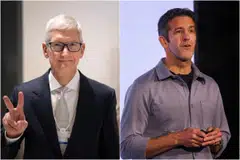
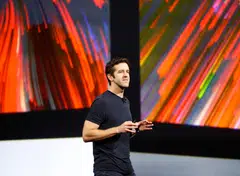
“By choosing a hardware leader in John Ternus, Apple may be signalling that it still believes the future of AI will run through tightly integrated devices, not just software,” said Timothy Hubbard, assistant professor of management at the University of Notre Dame’s Mendoza College of Business.
“That could be smart, but it also raises a deeper risk: the very strengths that made Apple dominant – their discipline, polish, and control – could become constraints if the next era rewards openness and faster iteration. That rapid innovation is where Apple started, and maybe that’s where the company needs to return.”
OpenClaw contrasts with Apple’s control
Starting with Jobs, who turned around an ailing Apple in the late 1990s, and then Cook, who made Apple’s services business into a US$110 billion annual sales powerhouse, the Cupertino, California-based firm has proven that tight integration leads to long-term customers and durable profits.
Now, Ternus’ biggest challenge will be weaving AI into Apple’s impenetrable ecosystem at a time when a more open approach is taking the world by storm.
One example is OpenClaw, software that can control an army of AI “agents” that can carry out complex tasks traditionally handled by humans and has spread widely in China, with users ranging from schoolchildren to grandparents.
But OpenClaw also illustrates the risks of openness. The software remains raw, carries security vulnerabilities and can take alarming actions, including exposing private financial information on the open Internet. The tensions it exposes are exactly those Apple has long sought to avoid.
Ternus has been clear in media interviews that Apple was interested in shipping products rather than raw technologies such as OpenClaw that generate excitement but do not become daily staples like the iPhone.
Apple has, however, expressed some willingness to use AI technology developed by rivals when needed. In January, it struck a deal with Google to use its Gemini AI models in an effort to improve its Siri virtual assistant.
Notre Dame’s Hubbard said Apple could also take a page from Nvidia’s playbook. Last month, Nvidia said that it would take OpenClaw’s open-source software and adapt it into a product called NemoClaw, which will have safeguards and limits put in place so that the OpenClaw approach can operate in a business environment.
Gene Munster, a longtime Apple analyst and investor at Deepwater Asset Management, said Ternus’ focus on quality could help him shift the narrative on Apple similarly to how Cook – with the massive growth of the services business – showed there was more to Apple’s financial fortunes than the iPhone.
“Staying true to Apple’s culture should allow Apple to pursue AI more aggressively without compromising on quality,” Munster wrote in a note to clients. REUTERS
Decoding Asia newsletter: your guide to navigating Asia in a new global order. Sign up here to get Decoding Asia newsletter. Delivered to your inbox. Free.
Share with us your feedback on BT's products and services
TRENDING NOW

Prima to move out of historic Keppel Road flour mill building in 2028

Grab CEO’s wife Chloe Tong on life with Anthony Tan and finding her purpose

OCBC sheds S$8 billion in value as shares close nearly 6% down; analysts cautious on banks

As Asia’s food delivery giants rejig the pie, who will win the market?

