

Apple rolls out new phones and smart home devices to revive pricey stock
Apple is among the 50 most expensive stocks in the S&P 500 Index
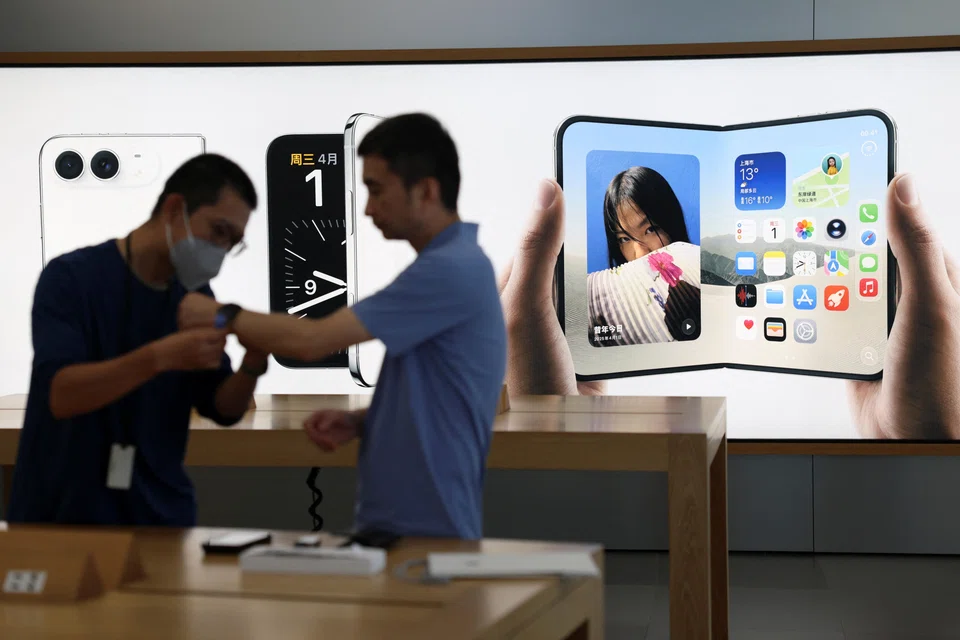
APPLE is rolling out a slew of new products and improved older ones this week, but investors are unsure if it will be enough to boost one of the most expensive stocks in the market that’s largely gone nowhere in months.
The iPhone maker is holding a smart-home products event on Tuesday (Oct 13) featuring an Apple doorbell and Apple thermostat, according to a Bloomberg News report.
Later this month, the company is planning to launch a touchscreen MacBook and a new iPad mini. And on Friday, pre-orders begin for the new foldable iPhone Duo, which represents the biggest design change in the history of Apple’s most profitable device and carries a commensurately hefty price tag.
The stakes are high for Apple shares, which soared to a record in late July amid reports about its push into the smart-home market and skepticism about heavy artificial intelligence spending that Apple has avoided. But the stock is basically flat in the months since.
“For a company of this size, you need super-hit products to move the needle on growth,” said Peter Andersen, who helps oversee US$5.5 billion as chief investment officer of Andersen Capital Management. “I’m just not sure anything we’re getting is exciting enough to lead to an inflection.”
The stock is up 25 per cent this year, making Apple the top performer among the Magnificent Seven tech giants. It trades at more than 35 times earnings estimated over the next 12 months, right around its highest multiple since 2007 and well above its 10-year average of 24.
Apple is among the 50 most expensive stocks in the S&P 500 Index, which is priced at 19 times forward earnings.
Some of that reflects Apple’s unique position within the AI trade, where it isn’t exposed to spending risk but is considered a key beneficiary of the technology’s development.
And it shows investors’ high expectations for new chief executive officer John Ternus and their hopes that he can generate growth by upgrading and expanding its lineup of devices.

That’s a risk, however. The company has cut component orders for some iPhone models due to weaker-than-expected demand, according to a Bloomberg Intelligence report last week.
Meanwhile, consumers are feeling pressured by stubborn inflation, and Apple has had to raise prices due to higher costs for components like memory chips.
“Apple executes its products flawlessly, but it’s hard to expect these will really take off,” said Andersen, who doesn’t own the stock, in part due to what he sees as the company’s lack of innovation. “Not only have there been major players in the home market for years, but Apple is launching these products into a market where consumers are under a lot of pressure.”
What’s more, Apple’s growth rate is lagging its Big Tech peers, making its high stock market valuation stand out even more than it already does.
The company’s fiscal year ended on Sep 30, and it’s projected to post a 15 per cent rise in annual revenue when it reports earnings in a few weeks. But that appears to be a near-peak, with the pace expected to slow to 10 per cent in fiscal 2027 and 7.8 per cent in fiscal 2028.
“Apple doesn’t look like a value stock or a growth stock,” Andersen said. “Given where the multiple is, it seems questionable to expect much additional stock upside from here.”
Of course, Apple isn’t alone in its slowing growth. Overall tech sales are expected to experience a deceleration in the coming years, albeit off a much higher level.
Revenue is projected to climb 37 per cent for the S&P 500 information tech sector in 2026, and 29 per cent in 2027, according to Bloomberg Intelligence.
Whether Apple’s new products will alter the company’s earnings outlook remains to be seen. But Wall Street hasn’t been racing to adjust its projections.
Analysts’ expectations for the company’s fiscal 2027 net income have dipped by 0.6 per cent over the past three months, while their view for revenue has risen 0.7 per cent.
“Apple’s product path seems promising, but I don’t think the first generation of new products will mean much for overall revenue,” said Lu Zhang, founder and managing partner of Fusion Fund, who owns the stock in her personal portfolio. “It remains to be seen whether we will see the kind of new use cases (for the foldable Duo) that will contribute to a broad upgrade cycle.”
Nevertheless, Zhang remains positive on the stock. Apple could improve its AI offerings, she said, but it will continue to benefit from being a gateway for consumers to access the emerging technology.
“All the AI companies are competing with each other, but whenever they launch a new model they need Apple as a key distribution channel, and that’s an area where it essentially has no competitor,” she said. “Even if Duo adoption isn’t high right out of the gate, so long as Apple continues to execute on its hardware, it will warrant a premiere multiple.” BLOOMBERG
Decoding Asia newsletter: your guide to navigating Asia in a new global order. Sign up here to get Decoding Asia newsletter. Delivered to your inbox. Free.
Share with us your feedback on BT's products and services
TRENDING NOW

Malaysian king buys stake in Singapore-listed mining firm expanding into rare earths

Grab CEO’s wife Chloe Tong on life with Anthony Tan and finding her purpose

Once staunchly pro-China, Malaysian Chinese businesses are now distancing themselves from Beijing

Longer wait times expected as S’pore healthcare institutions report system disruptions

