

Lenovo has handed Fifa an AI gold mine, but monetising fandom is a tough sell
Football’s world governing body promises mass personalisation at the World Cup, but experts say poor execution could trigger fan backlash

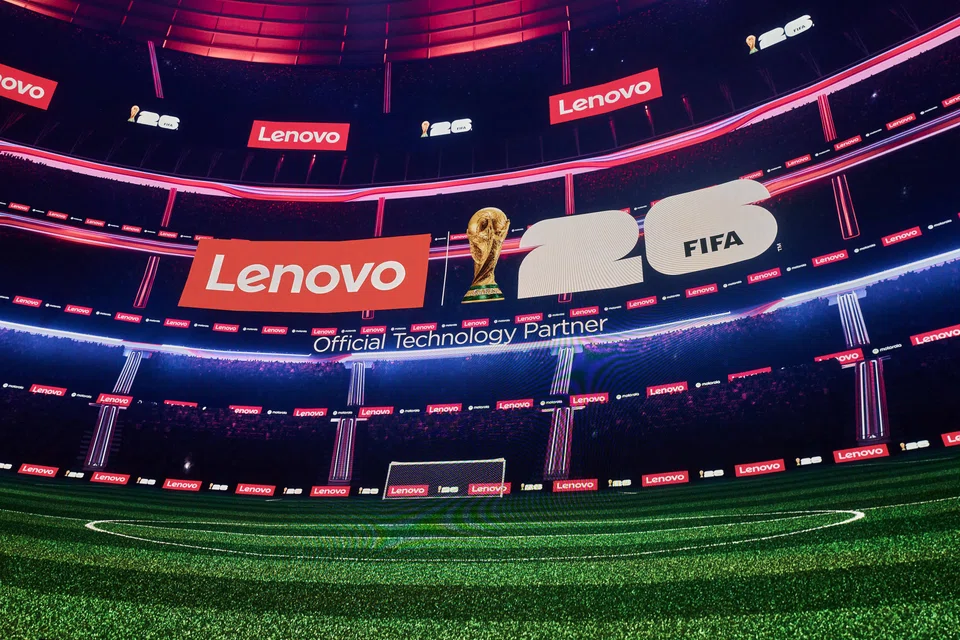
[ZURICH] When the Fifa World Cup kicks off on Jun 11, Chinese tech giant Lenovo will deploy artificial intelligence to deliver a “personal and immersive” experience to about six billion viewers worldwide.
As impressive as the technical challenge is, it is eclipsed by the underlying business challenge: monetising a fiercely passionate fan base without triggering commercial backlash.
Top-tier football clubs such as Arsenal and Manchester City have access to terabytes of behavioural data, but their executives have struggled to monetise it.
Hardcore supporters view their clubs as cultural institutions, and push back against data-based marketing efforts that feel transactional rather than personalised.
Lenovo’s technology, slated for the World Cup’s 16 stadiums across the US, Canada and Mexico, leans heavily on operations and officiating. At the World Cup, it wants to become more than just a hardware maker and instead be known as an “end-to-end” AI technology provider.
Its roll-out includes a ChatGPT-style “Fifa AI Pro” tactical generative AI chatbot, and millimetre-accurate 3D digital avatars of all 1,200 players to aid referees with offside calls.
There will also be stabilised broadcast feeds from body cameras worn by the referees.
The challenge lies in translating that massive operational data pipeline into tailored consumer content.
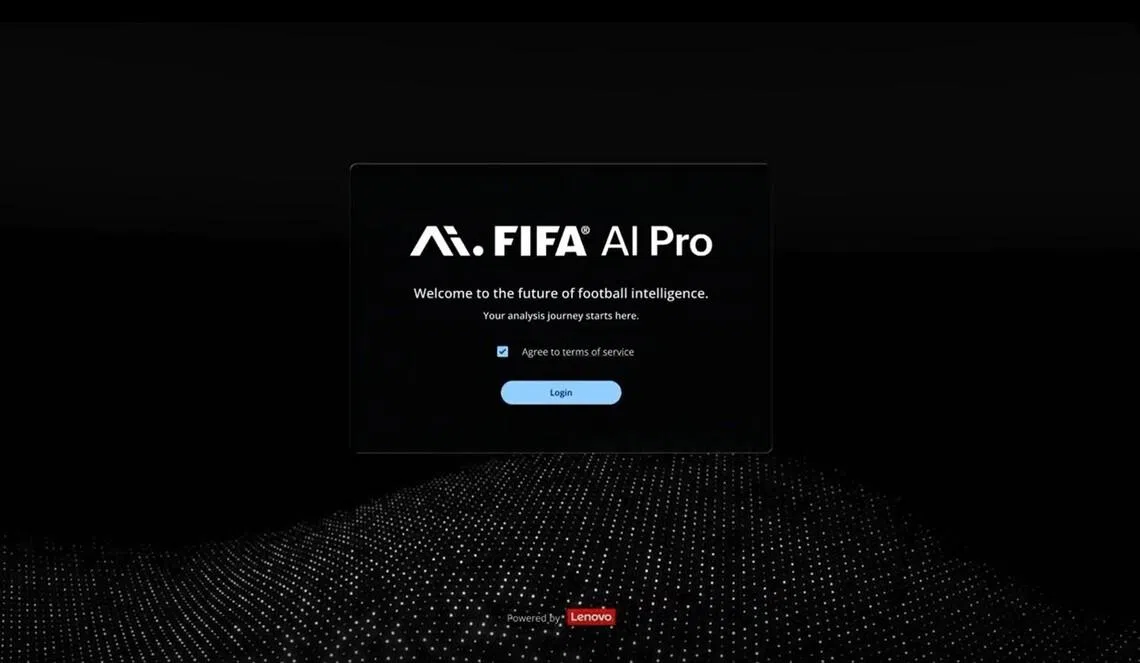
While Lenovo will provide Fifa with the data engines to bridge that gap, the execution risk will still lie with the World Cup organiser, said Santiago Manso, Lenovo’s director of sports and entertainment, during an April tech showcase in Zurich.
SEE ALSO




When pressed on how the partnership would balance broadcast enhancements with fan passion – that is, not exploiting supporters – official representatives for Lenovo and Fifa did not outline a strategy.
Instead, they stated that a list of “frequently asked questions” would be published on the global football association’s website some time in May.
AI must deliver genuine utility
The monetisation tension is also different at the international level compared with the club level, say marketing experts.
While clubs get uninterrupted access to fans every week, Fifa’s primary challenge involves overcoming episodic, four-year engagement cycles to build a stable data profile. This is because the World Cup is held only every four years.
To address this, the international tournament’s governing body has been pushing its streaming platform, Fifa+, along with fantasy gaming products to build a year-round digital footprint.
“Clubs are data businesses in all but name – persistent first-party relationships, authenticated users, and high-frequency behavioural signals,” said Amar Singh, senior vice-president of content and creative at marketing agency MKTG.
He argued that to succeed, Lenovo’s AI-driven personalisations must deliver genuine utility at the World Cup, not surveillance.
“Fans accept data exchange when relevance is obvious or they get some form of utility; they are less keen on surveillance with sponsor logos,” he added.
“AI‑generated ‘personal’ player messages or synthetic punditry will lead to trust plummeting.”
For uses such as Lenovo’s new Smart Wayfinding app for the tournament – pitched as a digital concierge to help fans navigate stadiums to find seats, restrooms and emergency exits – the utility for the user is clear.
In a virtual briefing in May, Asia Sheikh, chief technical officer of sports and entertainment technology innovation at Lenovo, said that its technology will be the “backbone” of Fifa’s provision of such benefits to fans at the World Cup.
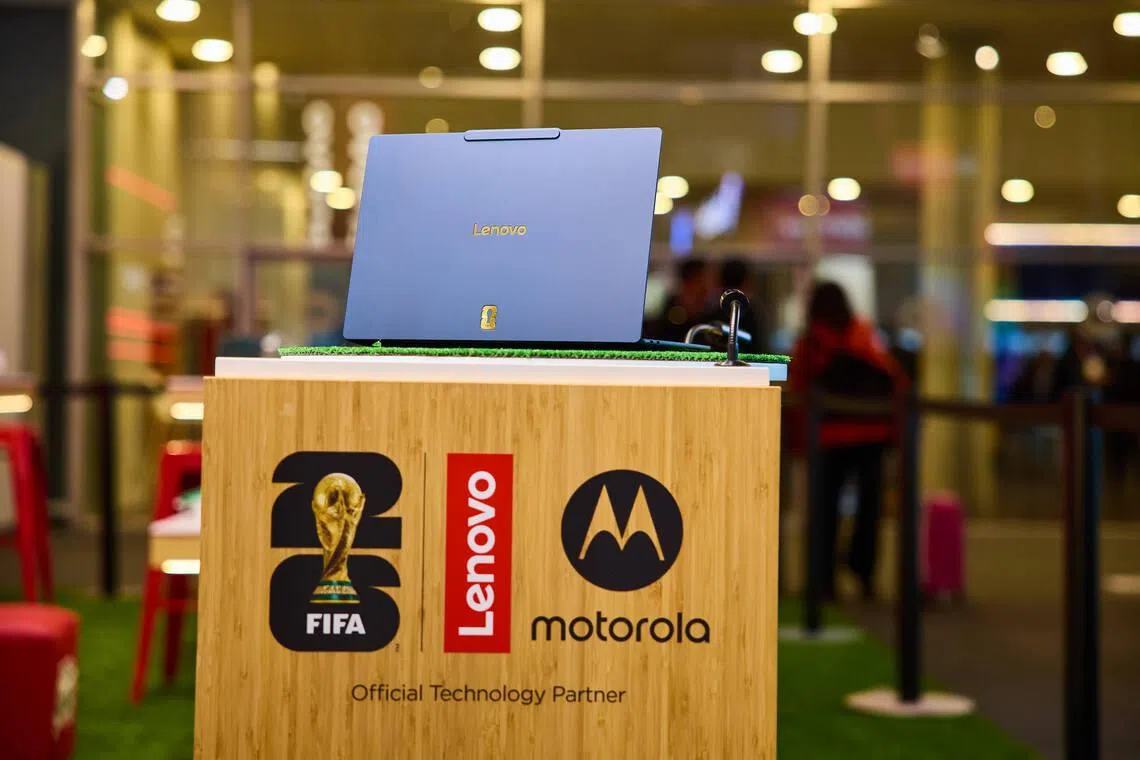
Execution is key
In the US, finding that utility might also mirror existing sports data consumption instead of just complex augmented reality apps.
Tech companies frequently pitch immersive second-screen experiences. But Andy Marston, head of corporate venture at athlete-backed venture firm The Players Fund, noted that because football lacks natural commercial breaks, the true “second screen” for most fans is simply a WhatsApp group chat.
Instead, fans want actionable context. “You only have to look... at how crazy people go for things like the NFL (Scouting) Combine in terms of getting all that physical data,” he said.
The Combine is a week-long showcase in the US’ National Football League, where top college American football players demonstrate their abilities to coaches, managers and scouts.
Marston also pointed to “tasteful” uses of data in other sports, such as broadcasting heart-rate metrics from golfer Rory McIlroy’s Whoop health tracker.
For a World Cup fan, that could translate into flashing a striker’s real-time sprint speed during a counter-attack, or showing the exact distance a midfielder covered by the 89th minute.
Fans treat this match context as additive storytelling rather than targeted advertisements. To capitalise on that, the technology must align with the rhythm of the game.
MKTG’s Singh noted that the real commercial opportunity lies in “moment-based personalisation tied to the emotional arc of a match, rather than a media plan”.
This could mean a push notification for a discounted national team jersey the exact second a player scores the winning goal, or exclusive content related to a player with strong fan interest – such as a debutant.
Lenovo executives envision exactly that.
Manso suggested the ultimate consumer application is an “AI coach” capable of explaining the tactical impact of something such as a live substitution directly to a fan’s device.
Instead of just watching a manager make a late change, a fan could see an instant visualisation of the team shifting from a defensive to an attacking formation.
Ultimately, industry experts argue that the success of the tech roll-out comes down to execution. If Fifa can deliver the bespoke, contextual storytelling Marston of The Players Fund envisions, fans might gladly accept the commercial wrap.
But Singh’s warning remains clear: if the personalisation feels like corporate surveillance, the World Cup’s multimillion-dollar AI gamble risks “destroying the very diversity” of the fandom it was built to capture.
Decoding Asia newsletter: your guide to navigating Asia in a new global order. Sign up here to get Decoding Asia newsletter. Delivered to your inbox. Free.
Copyright SPH Media. All rights reserved.
TRENDING NOW
Companies still in search of AI use cases with worthwhile ROI, says Broadcom’s CEO

Malaysian king buys stake in Singapore-listed mining firm expanding into rare earths

Once staunchly pro-China, Malaysian Chinese businesses are now distancing themselves from Beijing

Singapore’s wealth management success should extend to everyday families

