

Nvidia’s Huang unsure whether China would accept its H200 chips
Allowing H200 sales to the Asian nation would mark a significant win for the world’s most valuable company
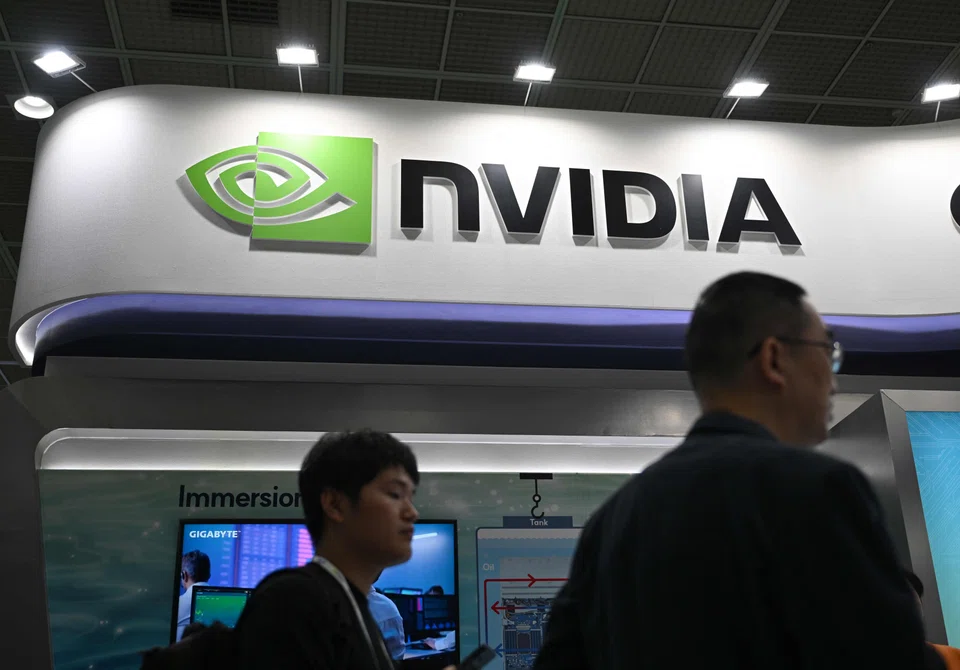
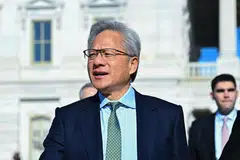
[NEW YORK] Nvidia chief executive officer Jensen Huang said that he’s unsure whether China would accept the company’s H200 artificial intelligence (AI) chips should the US relax restrictions on sales of the processors, following a meeting on Wednesday (Dec 3) with US President Donald Trump.
Addressing reporters at the US Capitol, Huang said that he and Trump talked about export controls but declined to offer specifics. The Nvidia chief’s meeting with the president comes after Trump administration officials discussed whether to allow the H200 to be sold in China. Asked whether authorities in Beijing would allow Chinese companies to buy the H200, Huang expressed uncertainty.
“We don’t know. We have no clue,” Huang said, as he headed into a closed-door meeting with members of the Senate Banking Committee, which has jurisdiction over export controls. “We can’t degrade chips that we sell to China, they won’t accept that.”
A White House spokesperson said the administration does not discuss private meetings.
Allowing H200 sales to China would mark a significant win for the world’s most valuable company, which has pressed the Trump administration and Congress for a relaxation of export controls that keep Nvidia from selling its AI chips in the world’s second-largest economy.
Huang has forged a close relationship with Trump since the November election and has used those ties to make his case that restrictions only boost China’s domestic champions, such as Huawei Technologies.
Asked how often he’s in Washington, Huang said: “Whenever President Trump would like me to be here.”
Huang’s visit to the nation’s capital came as Nvidia neared a major lobbying win in Congress, where lawmakers kept a provision out of must-pass defence legislation that would have limited the company’s ability to sell its advanced AI chips to China and other adversary nations. The so-called Gain AI Act would require chipmakers, including Nvidia and Advanced Micro Devices, to give American customers first dibs on their powerful AI chips before selling in China and other arms-embargoed countries.
As the Banking Committee meeting concluded, Republican Senator Mike Rounds acknowledged Nvidia’s desire to compete globally. “They want the customers around the world,” Rounds, a member of the panel, told reporters. “We understand that. And at the same time, we are all concerned, including Jensen, with regard to having restrictions on what goes to China.”
Republican Senator Cynthia Lummis said that the Gain AI measure did not come up during Huang’s meeting with the committee and described the conversation as “educational”.
Any easing of export restrictions would mark a significant shift from policies imposed starting in 2022 to keep Beijing and its military from accessing the most powerful US technologies. Such a move would provoke sharp opposition from national-security hawks in Washington who have favoured export controls as a way to keep adversaries such as China from gaining ground in the AI race.
This summer, Nvidia won approval to sell its less-powerful H20 chip, designed to fall just below existing export limits, but China promptly told potential domestic customers to shun the product and rely instead on processors made by Chinese companies. More recent efforts by Nvidia to win US permission to export a hobbled version of its most advanced Blackwell-generation chip failed to materialise during an October meeting between Trump and Chinese President Xi Jinping.
The H200, which began shipping to customers last year, is designed to both train and run AI models. The prospect of selling a higher-calibre processor to China bolstered arguments by lawmakers from both parties who have pressed unsuccessfully for the Gain AI Act’s adoption. Senator Elizabeth Warren, the top Democrat on the banking panel, has warned that allowing sales of the H200 to China would “turbocharge China’s military and undercut American technological leadership”.
In a letter on Wednesday to Commerce Secretary Howard Lutnick, Warren urged the administration to maintain limits on sales of Nvidia’s advanced AI chips to China and expressed concern over what she called a lack of transparency in the decision-making on export controls. “We should not allow Big Tech firms such as Nvidia to sell sensitive technology to governments that do not share our values,” Warren wrote, in a letter co-signed by fellow Democrat Andy Kim.
Last month, Huang said that China represented a US$50 billion market for his company, though for now, Nvidia has excluded data centre revenue from the Asian nation from its financial forecasts. “We would love the opportunity to be able to reengage the Chinese market,” he said, adding that China sales would benefit Americans as well as people across the globe, as Chinese open-source models “leave China and are used all over the world”. BLOOMBERG
Decoding Asia newsletter: your guide to navigating Asia in a new global order. Sign up here to get Decoding Asia newsletter. Delivered to your inbox. Free.
Share with us your feedback on BT's products and services






