South Korea exports extend robust growth on AI-fuelled chip boom
In October, the value of shipments is US$115.3 billion, after the previous month’s record US$121.1 billion
SOUTH Korea’s exports maintained strong growth in October, highlighting the strength of an artificial intelligence-driven boom that has powered the economy, even as a recent sell-off in technology stocks raised questions about the durability of the global AI trade.
Exports adjusted for working-day differences climbed 76.1 per cent from a year earlier, based on the Ministry of Trade, Industry and Resources’ data released on Sunday (Nov 1).
The value of shipments reached US$115.3 billion, following the previous month’s record US$121.1 billion.
On an unadjusted basis, exports rose 93.7 per cent, and imports climbed 36 per cent, resulting in a trade surplus of US$42.5 billion. That compared with a revised 83.7 per cent export increase in September.
The robust figures come in the wake of a sharp global sell-off in technology stocks, fuelled by disappointing earnings and outlooks from major US companies, including Amazon.com and Intel, that have reignited concerns over the sustainability of the AI investment boom.
Investors have grown increasingly wary about whether the massive spending on data centres and other AI infrastructure will generate sufficient returns.
The concerns spilled over into Asian markets on Friday, with a Bloomberg gauge of regional chipmakers dropping as much as 4.8 per cent.
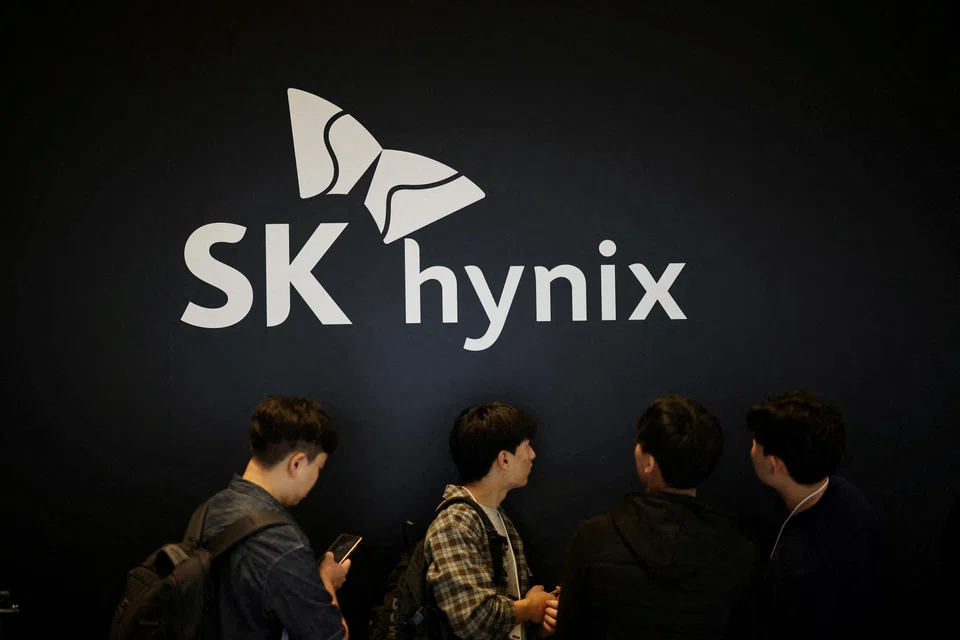
South Korea’s Kospi index, widely seen as a barometer of the AI trade, fell 3.5 per cent, with SK Hynix and Samsung Electronics sliding 7 per cent and 3 per cent, respectively.
The market turbulence followed solid earnings announcements and spending plans from South Korea’s biggest chipmakers earlier in the week.



SK Hynix reported a sevenfold surge in quarterly profit, while Samsung outlined its intention to boost capital spending by more than 60 per cent this year as demand for advanced chips continues to outstrip supply.
Semiconductors continued to be the main driver of the gains in the country’s trade figures, with chip exports surging 259 per cent from a year earlier to US$56.4 billion.
Shipments of computers rose 497 per cent, while petroleum products and cars gained 80 per cent and 18 per cent, respectively.
Calendar effects may have complicated the comparisons. The Chuseok holidays fell in September this year and October last year, making working day-adjusted figures a useful gauge of underlying trade momentum.
Rate outlook
The continued strength adds to the case for the Bank of Korea (BOK) to raise interest rates in November after policymakers stood pat in October to assess the impact of consecutive increases in July and August.
Inflation data due on Tuesday will provide another key input before the BOK’s Nov 26 decision.
The export boom is also putting South Korea on course to exceed US$1 trillion in annual shipments for the first time this year, BOK governor Shin Hyun Song said.
That would make it the fourth economy to reach the milestone after the US, China and Germany, said the trade ministry.
The figures suggest South Korea’s export engine remained strong at the start of the fourth quarter, even as the benefits of the chip boom have yet to spread evenly across the trade-reliant economy.
That divergence complicates the BOK’s task as it weighs strong growth and above-target inflation against weak household demand.
The economy expanded 1 per cent in the third quarter from the previous three months, beating economists’ forecasts for a 0.8 per cent gain.
Facility investment jumped 4.1 per cent, but private consumption fell 0.2 per cent, underscoring the uneven benefits of the semiconductor boom.
The BOK expects growth this year and next to substantially exceed its August projections of 3.3 per cent and 2.9 per cent, respectively.
It has pointed to continued strength in semiconductor exports and investment, while expecting improving incomes to gradually support a broader consumption recovery.
Governor Shin said that monetary policy will remain restrictive until officials are confident inflation will converge to the bank’s 2 per cent target. The BOK will also release updated growth and inflation forecasts with its November rate decision.
Inflation remains a constraint on policymakers even as household demand struggles.
Consumer prices rose 2.9 per cent in September from a year earlier, and core inflation excluding food and energy registered 2.8 per cent. Both eased from August but remained well above the BOK’s target.
The won’s appreciation has helped curb imported inflation. Continued export strength and large trade surpluses could support further currency gains, although the pace of any appreciation will also depend on capital flows and global market conditions.
The country’s exports to China increased about 134 per cent, while to the US they rose 186 per cent. Shipments to the EU and India climbed 56.4 per cent and 84 per cent, respectively. BLOOMBERG
Decoding Asia newsletter: your guide to navigating Asia in a new global order. Sign up here to get Decoding Asia newsletter. Delivered to your inbox. Free.
Share with us your feedback on BT's products and services