

GameStop: The revenge of retail investors
Enabled by social media, mom-and-pop traders are putting the squeeze on short-sellers of struggling companies

IN JULY last year, this column highlighted the huge resurgence of retail investor participation in Singapore as well as around the world. But it struggled to answer the question of whether this phenomenon was cause for celebration or concern.
Events over the past week have cast interesting new light on the whole issue.
Most importantly, with the pervasive reliance on social media for information and inspiration, it seems clear that retail investors today are a more potent force than they were a decade ago.
They may well be the "dumb money", but they have demonstrated the ability to rally one another and bloody the noses of supposedly savvy investors. At least in the short term, they are likely to be a force that other market players ignore at their peril.
Stinking rich hedge fund managers with short positions on a bunch of failing companies should probably run for cover. Retail investors have discovered that short squeezes are lots of fun, besides being profitable.
Even investors who count themselves as part of the metaphorical "99 per cent" - with broadly diversified, long-only exposure to the markets - should probably be prepared for heightened volatility in the weeks and months ahead as hedge funds are forced to cut back on risk.
Meanwhile, retail investors who profited in the recent turmoil in the US market should not assume that they have somehow changed the world - or even the prospects of the companies whose shares they bought.
In keeping with the ethos of the market, everyone is ultimately going to act in their own self-interests. These retail investors should too.
Battling Wall Street
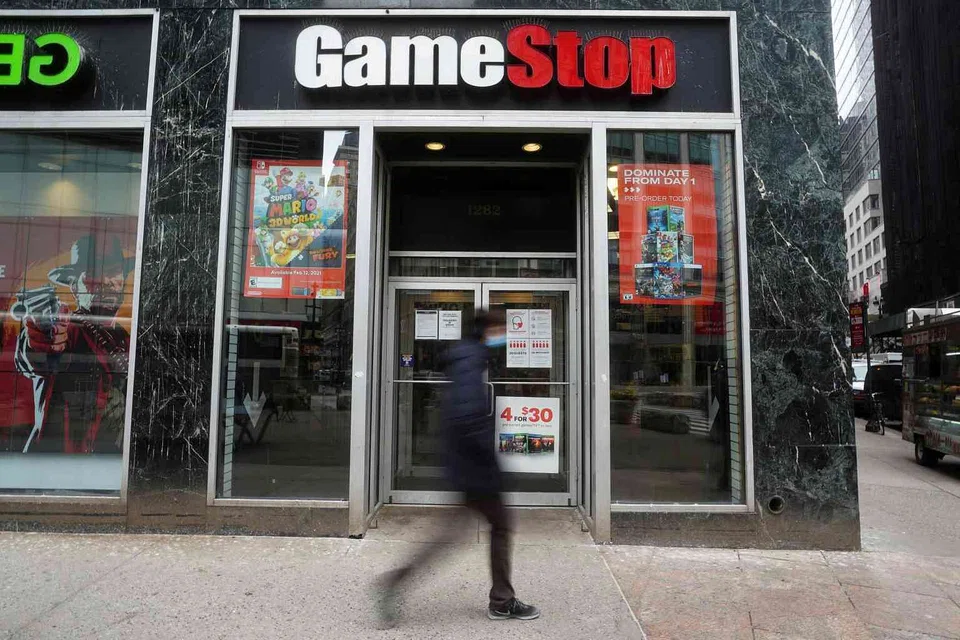
The popular telling of the story of GameStop Corp's spectacular run over the last few weeks is that it was the result of a battle between established Wall Street players and a mob of amateur investors who exchange ideas and information in a Reddit group called WallStreetBets.
Hedge fund Melvin Capital Management reportedly closed out a short position on GameStop recently after being hit with a major loss. This came as shares in the struggling US-listed video game retailer have climbed more than 16 times in value since the beginning of the year. The stock, which started 2021 at US$18.84, closed last Friday at US$325.
Last week, Melvin Capital said its fund had received a US$2.75 billion infusion from the firms of two billionaire hedge fund managers - US$2 billion from Ken Griffin's Citadel, and US$750 million from Steven Cohen's Point72 Asset Management.
Citadel and Point72 now have a "non-controlling revenue share" in Melvin Capital, according to a statement from the three companies.
Melvin Capital's founder and chief investment officer Gabriel Plotkin, who started the firm in 2014, had previously worked for Mr Cohen at SAC Capital Advisors. SAC was shuttered in 2013 after the firm pleaded guilty to insider trading and paid US$1.3 billion in fines.
Interestingly, many retail investors who have been trading GameStop in recent weeks used the Robinhood app, a hugely popular commission-free platform that sells its order flow to market makers, including Citadel Securities.
In effect, retail investors who had driven up the market price of GameStop had been encouraged and enabled by a Wall Street practice often criticised for its lack of transparency.
Savvy amateurs
Yet, it was not the sheer weight of retail investor trading alone that has pushed GameStop's share price skywards.
The Reddit group has been specifically targeting beaten up stocks with strong short interest. Once they get such a stock moving up quickly, the rally is sustained by short covering activity.
GameStop was also said to have been driven up by small investors banding together to buy call options on the stock. This compelled dealers to hedge themselves by purchasing the underlying stock in the market.
And, although GameStop quickly became widely overvalued as it rocketed, it did have some fundamental underpinnings.
The company had been under pressure for months by online pet food retailer Chewy's co-founder Ryan Cohen to reform its business.
On Nov 16, Mr Ryan Cohen's RC Ventures wrote a letter to the board of GameStop demanding that it "immediately conduct a strategic review of the business and share a credible plan for seizing the tremendous opportunities in the rapidly-growing gaming sector".
RC Ventures held a nearly 10 per cent stake in GameStop at the time. By the end of December, it had hiked its stake to nearly 13 per cent.
On Jan 11, GameStop said it had reached an agreement with RC Ventures that provided for the immediate appointment of Mr Ryan Cohen and two former executives of Chewy with extensive e-commerce experience to its board.
Mr Cohen said: "We believe the company can enhance stockholder value by expanding the ways in which it delights customers and by becoming the ultimate destination for gamers."
Populist power
Yet, the drama of the righteous struggle of small-time retail investors against the Wall Street establishment has overshadowed everything.
When Robinhood temporarily restricted trading of GameStop last week, some market watchers saw the move as part of a plan to depress the stock and let the short-sellers off the hook.
US politicians of every stripe jumped on the issue. Democrat Senator Elizabeth Warren, who wants to raise taxes on the super rich, expressed deep concern in a letter to the Securities and Exchange Commission that the "casino-like swings in the value of GameStop and other company shares are yet another example of the gamesmanship that interferes with the fair, orderly and efficient function of the market".
Republican Senator Josh Hawley, who has been trying to overturn President Joe Biden's election win, said on Fox News: "These folks at home, these day traders, retail investors, they've got more criticism, more scrutiny than the people who crashed the entire financial market in 2008."
He added: "It shows you that the fix is in."
Meanwhile, retail investors around the world seem to have been emboldened by what has happened at GameStop. In Malaysia an online community by the name of "Bursabets" has sprung up, rallying support for depressed glove makers. Top Glove and its rival Hartalega Holdings ended Friday up more than 8.5 per cent and 5.4 per cent respectively.
Back at GameStop, retail investors do not seem to have completely thrown caution to the wind. While they continue to urge one another on WallStreetBets to keep the faith, they seem to have stepped back from driving the stock higher as a group.
According to a Bloomberg report last week, which cites trading data from Citadel Securities, retail investors were net buyers of the stock last Monday but net sellers on Tuesday, Wednesday and Thursday by a narrow margin.
It seems that retail investors, enabled by social media, are proving capable of moving the market, not just with the weight of trading activity, but with the influence of their ideas and strategies.
- For more analysis and insight on market trends and corporate issues, listen to the Mark to Market podcast at bt.sg/mark2mkt
READ MORE: Singapore brokerages restrict trading on GameStop, AMC and Koss
TRENDING NOW

Prima to move out of historic Keppel Road flour mill building in 2028

Grab CEO’s wife Chloe Tong on life with Anthony Tan and finding her purpose

OCBC sheds S$8 billion in value as shares close nearly 6% down; analysts cautious on banks

As Asia’s food delivery giants rejig the pie, who will win the market?

