Timeline: DBS’ key milestones under CEO Piyush Gupta

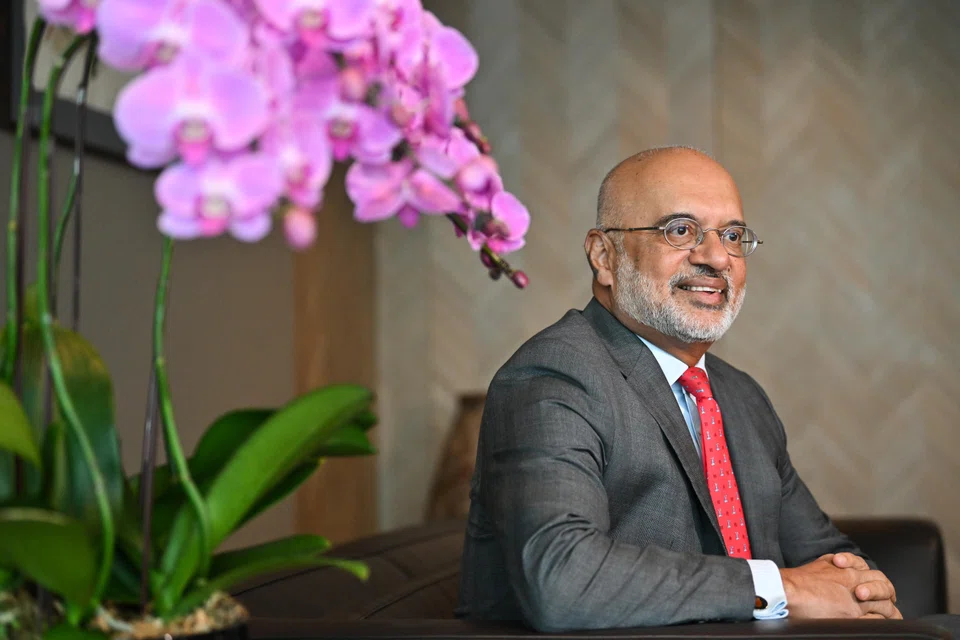
DBS announced on Wednesday (Aug 7) that its chief executive officer will retire at the next annual general meeting on Mar 28, 2025.
Piyush Gupta, who has been with the bank since 2009, will be succeeded by Tan Su Shan, who was appointed deputy CEO on Wednesday, in addition to her current role as group head of institutional banking.
Over the last 15 years, DBS has undergone a transformation under Gupta’s leadership. The bank simplified its management structure, expanded into regional lenders and digitalised its services. However, service was marred in recent years by a spate of online banking disruptions.
The following is a timeline of key milestones under Gupta:
November 2009 – Gupta joins DBS
Gupta joined DBS as its CEO after 27 years at Citi. He had served as Citi’s CEO for South-east Asia-Pacific, covering all of its operations in Asean, Australia, New Zealand and Guam.
The appointment of Gupta, who is India-born and became a naturalised Singapore citizen in 2009, took the industry by surprise. There had been speculation that DBS would pick a local as CEO this time. Others had thought the bank would promote someone from within to the post.
Nevertheless, his appointment brought certainty to the bank, which was facing several challenges at the time.
Gupta’s predecessor, Richard Stanley, died of leukaemia 11 months into the job. The bank had also suffered losses on collateralised debt obligations under Stanley’s predecessor, Jackson Tai.
Efforts to expand into emerging economies, a key ambition for Singapore banks stuck in a small local market, had also stalled.
May 2010 – Gupta’s early revamps of DBS
About six months into his appointment, Gupta made several changes to DBS.
At a management level, he simplified the structure across the group, so that the roles of its executives in each of its markets are clearly spelt out, reducing the potential for conflict or resources going to waste. He also sold DBS’ stake in a struggling joint venture in India.
Gupta also made it a key priority to fix the lender’s consumer banking business, particularly the POSB network, which – plagued by long queues at bank branches and ATMs – had lost market share to rivals that chipped away at its customer base.
Under his watch, DBS added more staff to branches, cut unnecessary work for bank tellers, and installed more ATMs in the busiest locations.
November 2010 – DBS sees rise in lending to consumer and business clients
DBS’ loan books in Singapore saw a rise that year, with lending to consumer and business clients growing. In both segments, DBS took more than a fifth of the market. Its Internet banking platform also saw 20,000 new users joining each month.
That month, Gupta was quoted in a media interview as saying that Asia offered DBS “the best opportunities”.
At the time, most of the bank’s revenue came from Singapore and Hong Kong. Just 11 per cent came from South and South-east Asia, compared to 62 per cent from Singapore and 27 per cent from Greater China.
Gupta identified capturing the wealth management market and servicing small and medium-sized enterprises as the bank’s two main areas for regional growth.
2014 – DBS launches DBS PayLah!
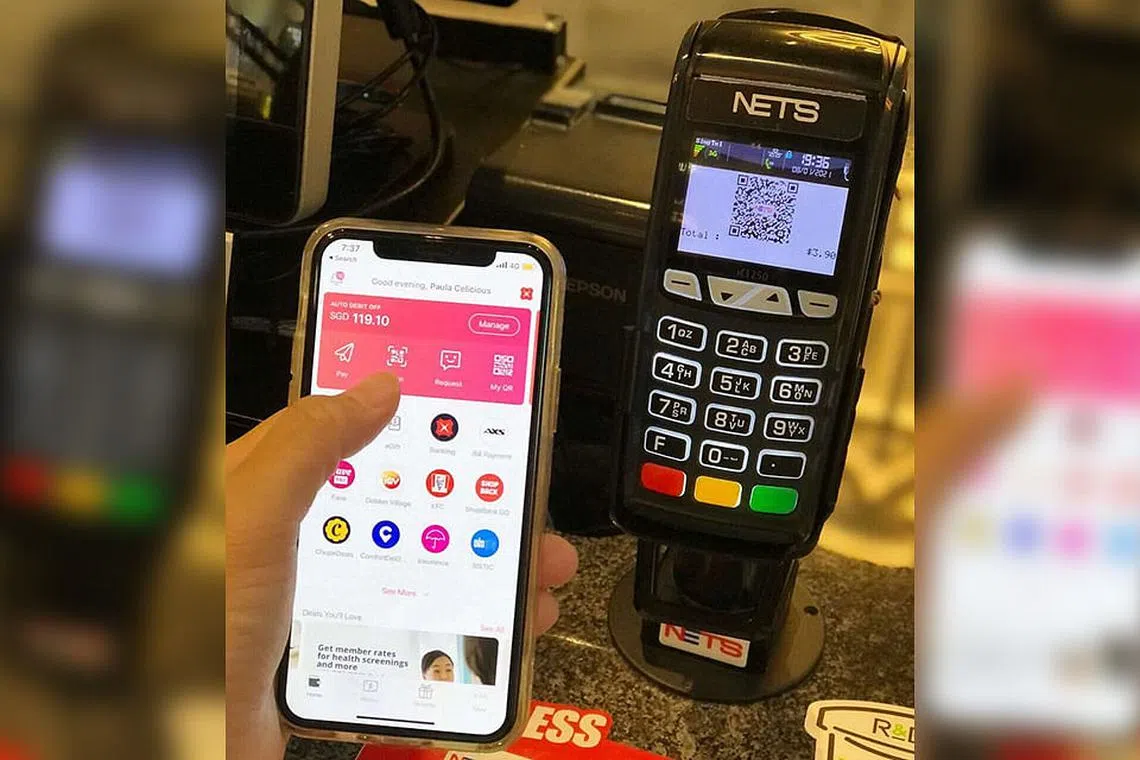
That May, DBS launched DBS PayLah!, an application which lets its customers use their mobile phones to transfer funds and pay for purchases.
The bank had set aside S$200 million the same year to invest specifically in digital banking over the next three years.
It also spent on cleaning up the backend infrastructure to match the speed of larger financial technology companies, and increased its use of cloud technology.
2016 – DBS sees payoff from digital investment
The efforts to digitalise saw DBS named the world’s best digital bank in 2016 by financial magazine Euromoney. The publication also named DBS Asia’s best bank, with the two awards marking the first time a Singapore and Asian bank had won a global accolade from the magazine.
“I think this is the future,” said Gupta on the win. “We’ve been able to create a culture which is all-pervasive. I like to say we’re a 22,000-people startup.”
The same year, DBS also pushed to expand into overseas markets. Gupta announced the launch of India’s first mobile-only bank in April, with plans to add five million retail customers in India over the next three to five years and take in deposits of about S$10 billion. In a period of nine months since the launch, the bank had gained more than 800,000 customers.
Gupta said that DBS was also open to expanding mobile-only banking to other markets in Asia, especially as more countries such as China and Indonesia look into electronic onboarding processes.
2018 – DBS ramps up access to digital banking services
That year, Gupta noted that the future of banking would not be in the pipeline business, where banks push services “from (banks) to the customers”. The future is in embedding banking services in “ecosystems”.
He added that the biggest competition for banks is from non-banking entities such as tech firms which have reinvented banking through their understanding and leveraging on social media.
In May, DBS joined a Series C fundraising round for Carousell, with the retail platform raising US$85 million in total. The bank can plug into Carousell’s network to solve payment pain points, said Gupta.
The bank also made its first foray into the chat commerce space in October, launching a chatbot that allowed customers to order meals through Facebook Messenger and pay with DBS payment channels such as PayLah!.
2020 – DBS launches crypto trading platform
In December that year, DBS launched its DBS Digital Exchange, a members-only exchange available to institutional and accredited investors. The exchange included a crypto trading platform which facilitated spot exchanges from fiat to cryptocurrencies, and vice versa.
The DBS Digital Exchange also included a platform for the issuance and trading of tokenised digital assets, as well as the provision of digital custodial services at its launch.
The launch of the Digital Exchange capitalised on the growing appetite for digital assets among investors.
“I’m quite confident that this will be a very profitable activity; and, if my bet is right, that the world is going to move to a slew of tokenised assets,” said Gupta.
2021 – DBS suffers worst online banking service disruption in a decade
In November that year, DBS suffered a two-day outage during which customers were unable to access the bank’s app and website. It attributed the issue to a problem with its access control servers. Such servers handle both login and payment verification through means such as biometrics, authentication tokens and one-time passwords.
The outage was its worst in a decade. In February 2022, the Monetary Authority of Singapore (MAS) imposed an additional capital requirement on the bank for the disruption, requiring it to apply a multiplier of 1.5 times to its risk-weighted assets for operational risk.
2023 – DBS works on fixing disruption woes
Buoyed by higher interest rates, the bank posted a record net profit of S$8.2 billion in FY2022, alongside the other two local banks, UOB and OCBC.
However, it continued to be plagued by service disruptions. In May that year, DBS set up a special board committee to look into the cause of the disruption to its digital banking services the same month.
Gupta apologised for the disruption and said that the incident was “sobering” for the bank.
“Ensuring uninterrupted digital banking services 24/7 has been our key priority. Unfortunately, we fell short of it and are truly sorry,” he said.
MAS also instructed DBS, along with Citibank, to conduct a “thorough investigation” into their recent disruption of numerous online services, after a technical issue at an Equinix data centre in Singapore led to the disruption of both banks’ services in October.
The banks were unable to fully recover their systems within the required four-hour timeframe, MAS noted.
August 2024 – DBS shares hit all-time high, announces successor to Gupta
Shares of DBS reached an all-time peak of S$36 on May 2 while its market capitalisation crossed the S$100 billion mark, the first time a Singapore-listed company has done so.
The shares hit a high after DBS reported a net profit of S$2.95 billion for the first quarter ended March 2024, up 15 per cent year on year and beating the S$2.5 billion consensus forecast in a Bloomberg survey of five analysts.
On Aug 6, DBS posted a net profit of S$2.79 billion for the three months ended Jun 30, up 6 per cent from S$2.63 billion in the year-ago period. The earnings beat the S$2.7 billion consensus forecast in a Bloomberg survey of four analysts.
On Aug 7, the board announced that Tan will succeed Gupta as CEO when he retires in 2025.