

Changi Airport handled about 70 million passengers in 2025, an all-time high
Passengers at T5 can expect to reach Terminal 2 in four minutes via the airport’s new underground link
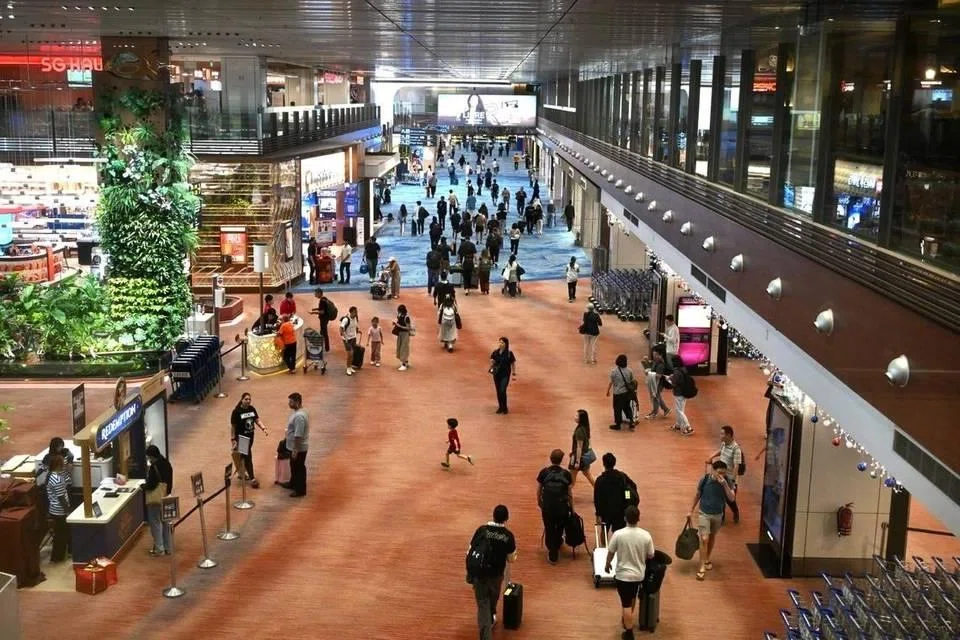
[SINGAPORE] Changi Airport handled about 70 million passengers in 2025, with volumes surpassing pre-Covid-19 levels, said Acting Transport Minister Jeffrey Siow on Monday (Jan 5).
This means passenger numbers at the airport reached an all-time high in 2025, eclipsing the previous record of 68.3 million passengers in 2019, before the Covid-19 pandemic grounded planes and ravaged air travel.
In 2024, Changi Airport handled 67.7 million passengers.
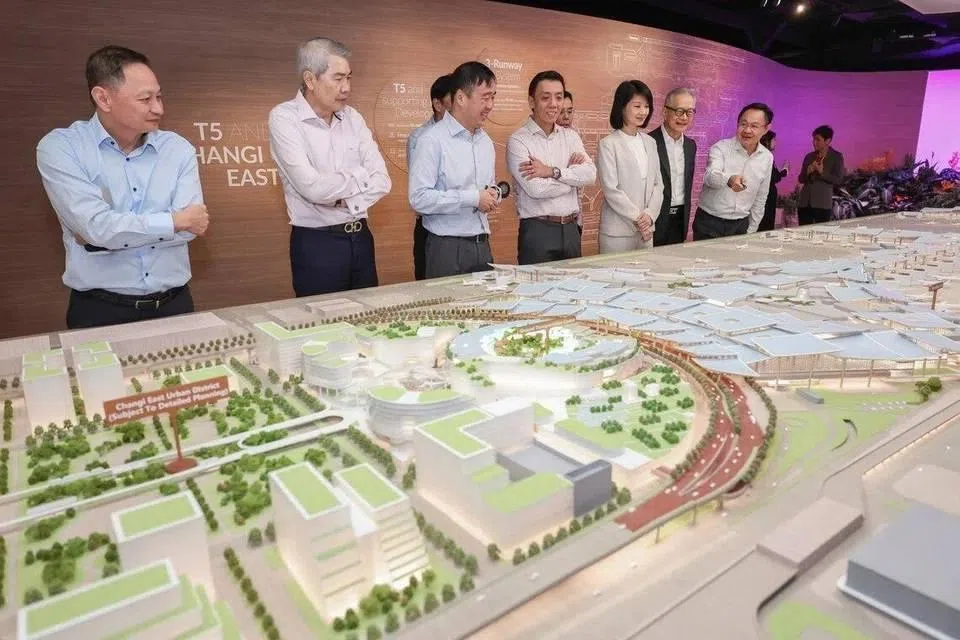
The strong post-pandemic recovery for global aviation shows the government made the right decision to go ahead with plans to build Terminal 5, which were paused during the pandemic, Siow said at the launch of a new exhibition on the future mega terminal.
He added that operator Changi Airport Group (CAG) will launch the tender for T5’s superstructure – the section of the terminal built above ground – in the next few weeks.
Noting that the decision to build T5 was one of confidence in Singapore’s future and conviction in the nation’s ability to secure its place in a competitive world, he said this confidence was shaken when global aviation demand collapsed during the pandemic.
“For a moment, we were not sure what the future of aviation would hold. And we reconsidered deeply whether to continue with T5,” he said.
But the government decided to go ahead, added Siow, and the future now looks bright – global air traffic is expected to double by 2050, with the Asia-Pacific region leading this growth.
With T5 representing the future of aviation for Singapore, it has been designed to be technology-intensive, empowered by automation and artificial intelligence (AI), he said.
For example, autonomous vehicles and robotics are already being tested for labour-intensive processes such as baggage and cargo handling.
Siow added that AI can be used to improve flight planning and passenger services, as well as respond quickly to disruptions to airport operations, such as changing weather conditions.
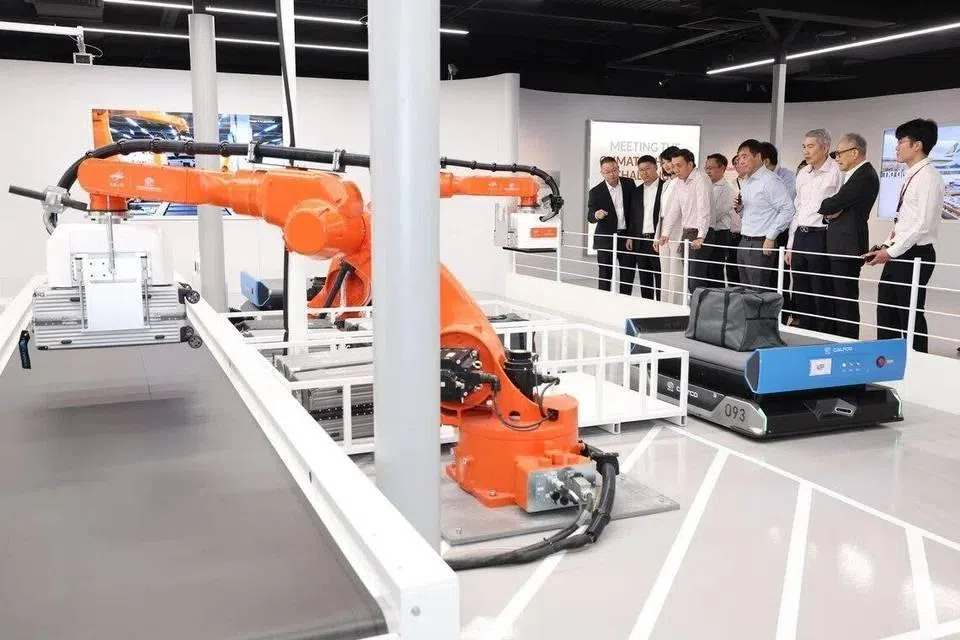
The new mega terminal – scheduled to open in the mid-2030s – will show the way for aviation sustainability, as it will promote the use of sustainable aviation fuel and be fully electrified, he said.
It has been designed to put the customer first, said Siow, with ideas from passengers, airlines and airport tenants being incorporated into the layout of lounges and the design of retail spaces.
For instance, passengers will be able to have seamless journeys from immigration to boarding, with personalised recommendations for dining, retail and transit along the way.
Siow noted that although T5 is a bigger airport terminal, its design reduces walking time, and the result is that transit passengers can make their connections more quickly.
Passengers are not the only group who will stand to gain.
More new jobs will be available in the aviation sector in the fields of data science, systems operations and sustainability – areas that will appeal to young Singaporeans, he said.
“It is imperative that the aerospace or aviation sector continues to attract its share of talent and that we work closely with the institutes of higher learning to make sure that the skills of our workforce remain relevant and future-ready,” added Siow.
The T5 In The Making exhibition, which will be held at Terminal 3’s arrival hall from Jan 6 to March, will bring the story of Changi Airport and Singapore to life, said Siow.
Organised by the Ministry of Transport, the Civil Aviation Authority of Singapore and CAG, the exhibition will give visitors a behind-the-scenes look at the vision, planning and design of the terminal.
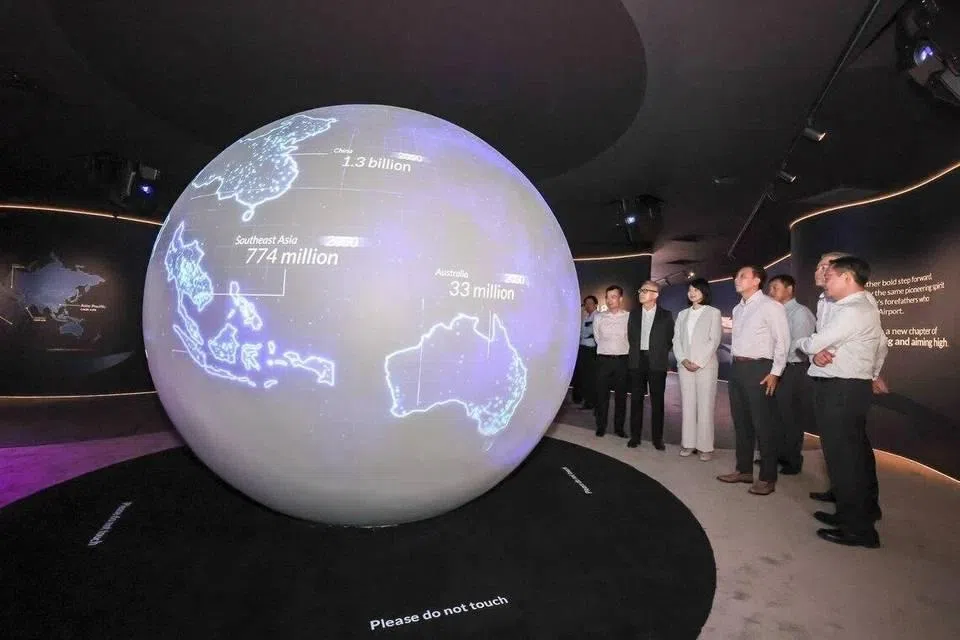
Recounting how the nation’s founding leaders decided to move the airport from Paya Lebar to Changi in 1981, Siow said no expansion of Paya Lebar Airport could have met the needs of international air traffic.
Paya Lebar Airport’s capacity was then only eight million a year, whereas Changi Airport already handles around 70 million passengers yearly.
T5 will raise Changi Airport’s passenger capacity by more than 55 per cent each year, from the current 90 million to 140 million.
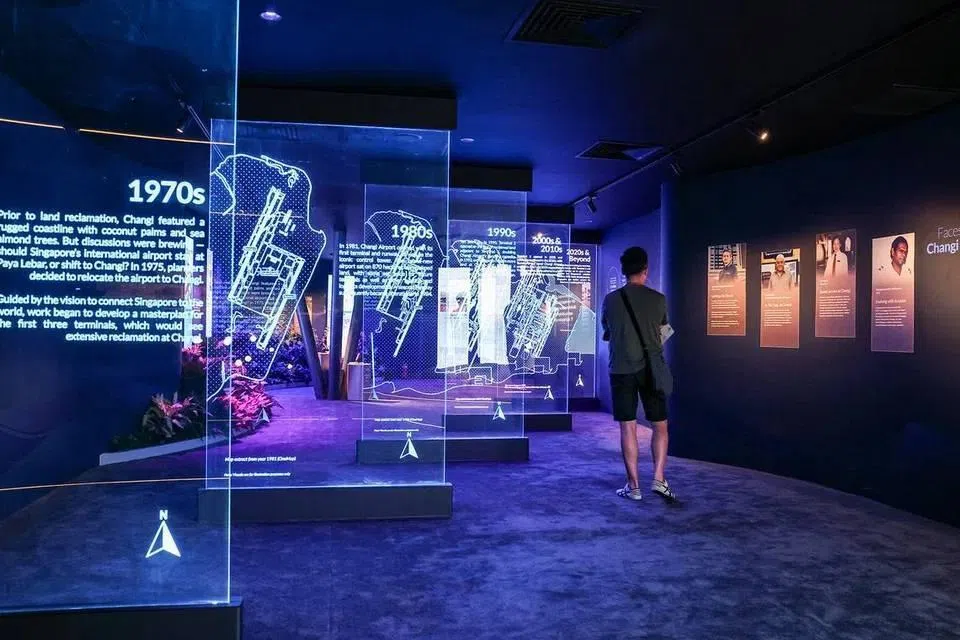
Siow said that over the decades, Changi Airport has fulfilled its potential and gone beyond that.
With the addition of new terminals, refurbishment of existing ones and building of retail and entertainment complex Jewel Changi Airport, he has “no doubt that the world is watching to see what T5 represents for the future of aviation”.
At a media tour of the exhibition on Friday, Ong Chee Chiau, managing director of Changi East at CAG, told reporters that the airport operator will call tenders for the construction of the main T5 building “over the next year or so”.
He added that the operator is in the midst of calling tenders for the terminal’s baggage-handling system and automated people-mover system.
Passengers at T5 can expect to reach Terminal 2 in four minutes via the airport’s new underground link. The people-mover system – similar to the existing Skytrain, which serves Terminals 1, 2 and 3 – will operate at a frequency of four to eight minutes. THE STRAITS TIMES
Decoding Asia newsletter: your guide to navigating Asia in a new global order. Sign up here to get Decoding Asia newsletter. Delivered to your inbox. Free.
Share with us your feedback on BT's products and services
TRENDING NOW

Once staunchly pro-China, Malaysian Chinese businesses are now distancing themselves from Beijing

Looking beyond looming CEO succession, should UOB potentially pursue a transformative merger?

Could stablecoins be the future of money?

Grab CEO’s wife Chloe Tong on life with Anthony Tan and finding her purpose

