

China’s EV industry calls on regulators to curb the back-seat driving
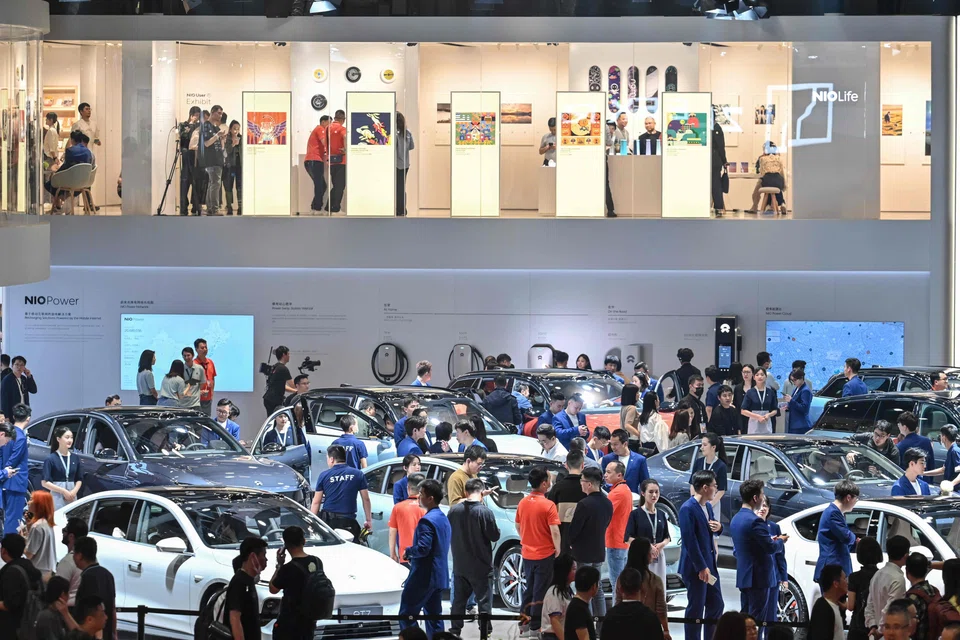
AUTO experts and industry executives in China are calling on regulators to explore a market-based approach to governing electric-vehicle (EV) makers’ manufacturing qualifications, as the sector confronts an influx of inexperienced and ultimately unsuccessful firms amid the country’s push towards electrification.
The success of China’s EV industry has been widely viewed as the result of years of Beijing’s supportive policies, including the use of subsidies to spur demand, and instruments such as a strict permit system to better manage capacity.
However, regulators have been considering tightening rules over carmaking licences, which would effectively prohibit companies from making use of workarounds such as partnering with original equipment manufacturers (OEMs) or acquiring permit-holders, a source close to policymakers told Caixin.
But with EV demand strong in China, many industry executives and experts have said the government should reduce its role and let the market dictate the next phase of EV development.
The tightening of carmaking qualifications can only be used as a short-term measure, the source close to policymakers said. In the long run, there needs to be an overhaul of how firms are allowed to make cars, they said.
The government should take a step back, let willing companies take part in the EV production business and leave the rest to the forces of market competition, said Chen Qingtai, president of China EV100, at a media conference in February ahead of a forum hosted by the industry association.
Instead of erecting barriers as a way to deal with over-investment, the government should work on ensuring companies are adhering to necessary product and technical standards, as well as the careful planning of subsidies, Chen said.
At the same event, former minister of industry and information technology Miao Wei also urged regulators to give companies more freedom, and suggested building a smoother mechanism for companies to enter or exit the EV business.
Concerns of overcapacity
China has for years operated a strict permit system for the EV manufacturing sector, under which any firm wishing to enter the production business needs approval from central government agencies. Still, many firms such as Nio and Li Auto managed to enter the industry by partnering with OEMs or through mergers.
In a regulatory shift, China’s National Development and Reform Commission (NDRC) announced in late 2018 that it would change the approval system of car manufacturing – including that of EVs – into a registration system managed by local governments. It also for the first time clarified rules on how newly established EV-makers can work with OEMs, provided that they satisfy certain sales and vehicle registration thresholds.
“(The measures) provide a new way for carmakers to enter the market,” analysts at China Securities said in an early 2019 report.
While the rules had helped standardise the management of capital flowing to EV projects, it also sparked another round of investment frenzy in the Chinese EV market – which in turn reignited fears of overcrowding and a drain on resources, as many of them had no experience in the auto industry.
These concerns reached a high point in late 2020 when they were confirmed by a nationwide inspection carried out by the NDRC on new-energy vehicle projects that exposed the low efficiency of usage plaguing much of the country’s EV production capacity – essentially, the amount of resources being wasted by inefficient projects.
The NDRC found that from 2017 to 2019, domestic auto companies’ capacity utilisation rates – the relationship between output produced with the given resources and the potential output – dropped nearly 20 percentage points, a senior official from the commission said at a forum in December 2020.
Of the companies covered, around 30 per cent had a capacity utilisation rate of below 20 per cent. These firms occupied a lot of market resources and even wasted a lot of government resources, according to the official at the time. CAIXIN GLOBAL






