Chinese EV maker Farizon appoints distributor for Singapore

Derryn Wong
Derryn Wong

Published Fri, Oct 6, 2023 · 05:00 AM
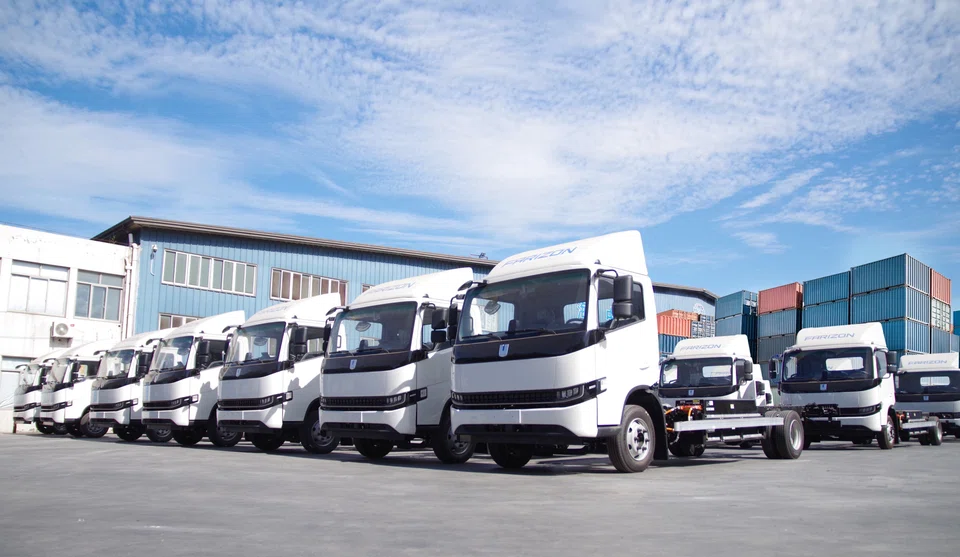
    • Chinese EV manufacturer Farizon has appointed Singapore-based Hong Seh Motors as its distributor for Singapore. The first model for Singapore will be the H9E electric heavy goods vehicle (pictured).
    • Chinese EV manufacturer Farizon has appointed Singapore-based Hong Seh Motors as its distributor for Singapore. The first model for Singapore will be the H9E electric heavy goods vehicle (pictured). PHOTO: FARIZON

    CHINESE electric and hybrid commercial vehicle manufacturer Farizon is increasing its presence in South-east Asia beyond Thailand, with the appointment of Singapore-based Hong Seh Motors (HSM) as its distributor for Singapore. HSM also has priority to be appointed distributor in Malaysia and Indonesia.(See *Amendment note)

    An official signing ceremony will take place in Singapore on Friday (Oct 6).

    A Farizon representative told The Business Times that establishing a presence in Singapore is important as it is a “relatively representative national market in Asia” with close economic and political ties to other Asean countries, which would help establish brand influence in the region.


    Edward Tan, executive director of HSM parent company Hong Seh Group, said that it plans to begin operations in Malaysia and Indonesia “at a later date” if it is appointed as the distributor for Farizon in those countries. The company currently has no presence there and is looking for dealer partners in those countries. (See *Amendment note)

    In Asia-Pacific, Farizon currently operates in Hong Kong, Thailand, Japan, South Korea, Australia and New Zealand. It intends to enter three to five new markets in Asia in the next two years.

    HSM will introduce a range of Farizon models to Singapore, including both light and heavy electric goods vehicles. The first is an electric heavy goods vehicle (eHGV), the H9E, which will arrive in December, followed by an electric van, the SuperVan, in 2024.

    The H9E will be available as a 14-foot, 20-foot, or freezer model, with battery capacities of up to 160 kilowatt hours and a maximum range of 300 km.

    It is too early to predict the pricing now, said Tan. The H9E will be more expensive than a comparable diesel truck, but “competitively priced” for the eHGV market, he said.

    According to industry players, a typical eHGV can cost twice as much as a comparable diesel model, although they are cheaper to operate.

    HSM’s Tan said that operating costs for the eHGV could be up to a third less than that of a diesel truck, and that these savings will allow operators to make up the initial cost difference within a vehicle’s Certificate of Entitlement (COE) lifespan of 10 years.

    Singapore’s eHGV market remains an immature one, as a lack of incentives, the relatively high cost, and a lack of public charging infrastructure have resulted in slow adoption – but more models are entering the market.

    In Singapore, BYD and Scania have established fleets of eHGVs; by early 2024 Volvo, Mercedes-Benz and Fuso will also launch eHGV models.

    Founded in 2016 and owned by Chinese automotive giant Geely Zhejiang Holdings, Farizon leads the Chinese market for “new energy” commercial vehicles – referring to vehicles powered mostly by electricity, which include full-battery electric vehicles (EVs), plug-in hybrid EVs, and hydrogen fuel cell EVs.

    As at February 2023, Farizon had 41.7 per cent and 25.5 per cent market share in the new energy light and heavy truck segments in China, respectively.

    HSM’s Tan said that Geely’s backing and the use of modular vehicle platform technology were key strengths that helped Farizon establish its position in China – and will also help its expansion in Asia.

    The Farizon SuperVan claims more customisation than a conventional van because its body, chassis and powertrain can be configured independently of each other. PHOTO: FARIZON

    The forthcoming SuperVan, for example, claims to offer a higher level of customisation than existing combustion-engine van models. This is because its body, chassis and powertrain can all be adjusted independently. It is also capable of using battery-swapping technology.

    Tan said the SuperVan will allow Farizon to penetrate the medium van segment, where electrified offerings are still rare.

    The company has also developed a semi-articulated heavy truck, the Farizon G – available in electric, hybrid or methanol versions – to rival the electric-only Tesla Semi.

    Farizon is just one of many Chinese EV makers that have launched models and set up production facilities in South-east Asia.

    In Oct 2022, it raised US$300 million in a funding round led by Singapore-based company GLP. In July, Farizon raised a further US$600 million in Series A funding, which it said would be spent on technology, product development, and expansion into markets outside of China.

    *Amendment note: Based on an interview with Hong Seh Motors (HSM), an earlier version of this article incorrectly stated that HSM had been appointed as the distributor for Farizon in Malaysia and Indonesia. Hong Seh Motors has since stated that it has not yet been appointed as distributor for Malaysia and Indonesia, but that it has priority for this appointment. The article above has been revised to reflect this.