

Cold ironing: Is it worth doing?
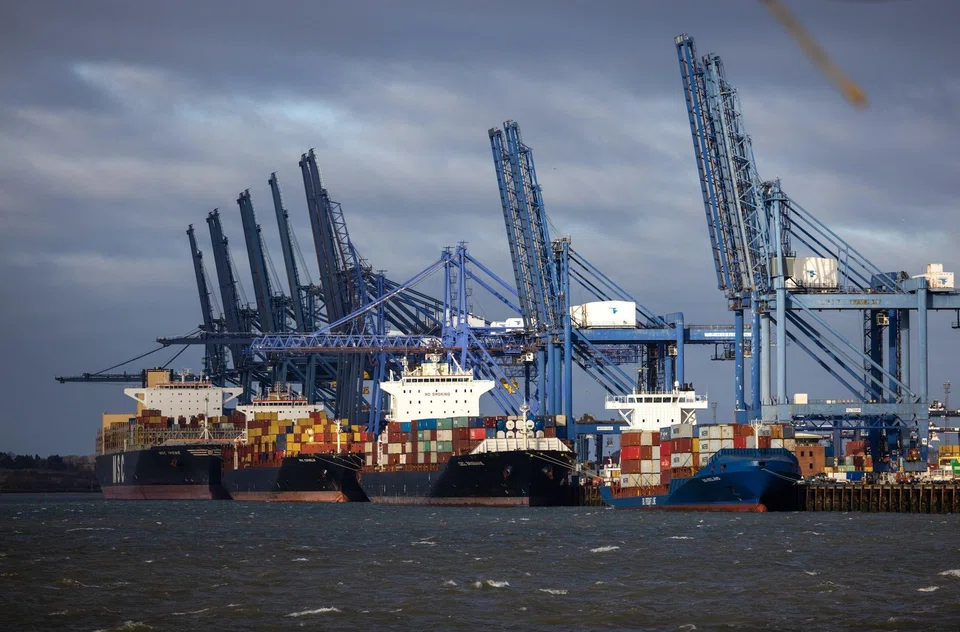
MANY ports around the world are investing in shore power provision for vessels while alongside in harbour, or “cold ironing”. The intention is to cut pollution by stopping ships using their onboard diesel generators for lighting and other requirements.
California has been at the forefront of this trend by making cold ironing mandatory. Other authorities are moving in the same general direction.
It sounds like a really good idea. Diesel generators produce emissions which include various pollutants that threaten human health. Turn off those horrible, dirty, noisy machines and plug into nice, clean shoreside electricity. What could possibly be wrong with that? Well, actually, a few things could be.
For instance, except for ports able to tap into abundant and reliable renewables such as hydroelectric, there is the very big question of how that lovely clean electricity is generated. In the long term, it could be “green” fuels. In the short term, that electricity will, at least in significant part, come from fossil fuels.
Interestingly, the following can be found on California state’s website: “California’s non-carbon-dioxide (CO2) emitting electric generation categories (nuclear, large hydroelectric, and renewables) accounted for 49 per cent of its in-state generation, compared to 51 per cent in 2020. The change is attributable to the continued impacts from California’s (until recently) ongoing drought.”
Most of California’s CO2-emitting generation is from liquefied natural gas (LNG), a fossil fuel of which use contributes to global warming. However, LNG is far less polluting than other fossil fuels generally used for power generation.
Then there is the question of the overall carbon footprint of building the infrastructure required to supply the needs of large vessels, including for example cruise ships, which have the power needs of a small town.
It is important to be clear about why society should want ports to provide cold ironing – it is to reduce atmospheric pollution in the vicinity of ports. That is crucial, because the debate can easily get muddled.
There are two discussions underway. One is about reducing atmospheric pollution. From that perspective, cold ironing makes sense – at least, as long as ships emit pollutants such as particulates. It is expensive to install and the demands on the grid can be prohibitive if you are looking to simultaneously provide shoreside power to multiple large cruise ships. Cold ironing container ships is less of a technical challenge.
The bigger issue, though, is how to reduce global warming.
In general, cold ironing contributes very little to decarbonisation. The exception could be where there is a plentiful local supply of renewable energy sources.
A couple of weeks ago, I attended a forum in the United Kingdom where senior port executives and lawmakers discussed decarbonisation. I hasten to add that I was just an observer.
While there was a lot of talk about renewable generation and carbon capture, it was interesting to see that cold ironing was being treated as if it was an important part of decarbonisation. There seemed to be an intention to provide shoreside electricity to most vessels by 2040. It was clear that achieving this aim would involve eye-wateringly large amounts of money.
The risk when committing to massive long-term investment of this sort is that it can be overtaken by events. To some extent, that is already happening. More vessels are being fuelled by LNG, which weakens the case for cold ironing. The chances are that by 2040, many vessels could be fuelled by hydrogen or electricity and have no polluting emissions while in port.
This is no longer far-fetched. New technologies and techniques are being developed all the time. Carbon capture from emissions is coming on apace, as is pre-combustion carbon capture from LNG. The latter is particularly exciting because it uses fuels and technology that are readily available today.
The propulsion design is based on combining LNG with steam in a gas reformer to split LNG molecules into hydrogen and CO2. Hydrogen is then directly used to fuel internal combustion engines and fuel cells. The capture of carbon atoms directly from the LNG molecules serves as a pre-combustion technique, and the cryogenic separation of CO2 from a stream of reformed gases rather than from exhaust emissions results in much smaller installation on board. This in turn eliminates the use of chemicals and the penalty in energy consumption, which are needed for post-combustion carbon capture.
Recently, Italian classification society Rina announced that the general arrangement for a LNG/hydrogen-fuelled very large crude carrier (VLCC) has been developed by China’s Shanghai Waigaoqiao Shipbuilding. The design is based on the result of a joint project with the Liberia Administration, Wartsila, ABB, Helbio, and Rina.
Rina’s executive vice-president Giosue Vezzuto said: “One of the challenges for shipowners in meeting International Maritime Organization carbon emission targets is knowing what the future holds. The industry is considering many options using different technologies and new fuels, aiming to minimise the energy consumption and the resulting CO2 emissions on board. Shipowners need to be confident that onshore bunkering facilities and other supporting infrastructure will be available before investing in new vessels.
“This LNG/hydrogen fuelled design for VLCCs is modular and scalable, and provides a practical solution that can adapt over time to meet increasingly stringent emission reduction targets and ensure their investment is optimised throughout the natural lifespan of the vessel. The design only requires LNG bunkering, which is widely available today.”
To return to the subject of cold ironing, knowing what the future holds is very much, as Vezzuto noted, a challenge. The risks of investing in a technology that could be obsolete almost as soon as it has been widely installed look rather high.
Decoding Asia newsletter: your guide to navigating Asia in a new global order. Sign up here to get Decoding Asia newsletter. Delivered to your inbox. Free.
Share with us your feedback on BT's products and services
TRENDING NOW

US dollar falters after Iran’s offer to reopen Hormuz sends oil lower

He built the Vingroup empire. Now South-east Asia’s richest man is handing some key roles to his sons
Floods compound Philippine growth woes from public-works scandal

Tokyo reverses baby bust with AI matchmaking and generous subsidies

