SQ321 final report: A timeline of the 2024 turbulence incident
The aircraft ran into ‘sudden extreme turbulence’, leaving dozens injured and one dead
Therese Soh &
Jermaine Fok
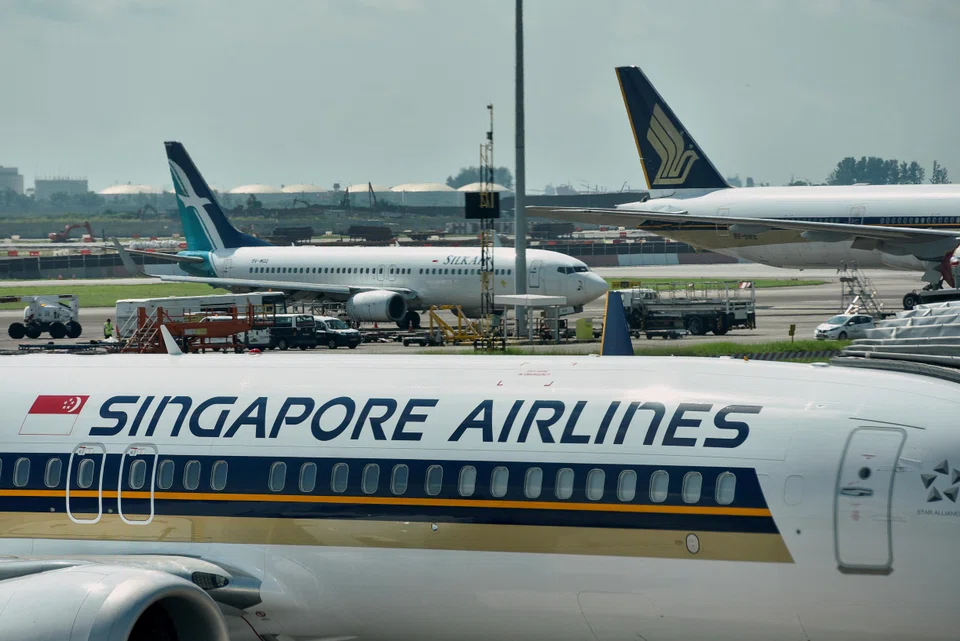
[SINGAPORE] Two years ago, a Singapore Airlines (SIA) flight on its journey home from the UK was struck with sudden turbulence, which sent it plunging over 50 m, leaving dozens injured and one dead.
The incident on Flight SQ321 occurred on May 21, 2024, when the aircraft ran into “sudden extreme turbulence” around 10 hours after leaving London, while travelling some 37,000 feet above southern Myanmar.
It marked SIA’s first aviation accident resulting in a fatality in more than two decades and the third in the carrier’s history. In October 2000, the Los Angeles-bound Flight SQ006 from Singapore crashed in Taiwan, with 83 fatalities. In 1997, Flight 185 operated by SilkAir, an SIA subsidiary which ceased operations in 2021, crashed in Sumatra, killing all 104 on board.
A final report on the SQ321 incident, released by Singapore’s Transport Safety Investigation Bureau (TSIB) on Tuesday (May 19), said that it “cannot be ruled out” that the aircraft’s weather radar failed to accurately depict a storm cell or issue fault warnings.
Such an occurrence could have left pilots completely unaware of severe vertical drafts from a rapidly forming cumulonimbus storm cloud, a type of storm cloud.
The events on Flight SQ321, which carried 211 passengers and 18 crew members, led to 104 people requiring medical care, with affected passengers experiencing skull and brain injuries, spinal injuries, and bone, muscle and other injuries.
The flight’s passengers included 41 Singaporeans, 56 Australians, 47 UK citizens and 16 Malaysians, among other nationalities.
Two years after the tragedy, The Business Times traces the sequence of events surrounding one of SIA’s most harrowing aviation incidents in recent history.
May 21, 2024
At 3.49 pm Singapore time, sudden turbulence hits Flight SQ321 during breakfast service, as the plane nears the close of its roughly 13-hour, non-stop journey from London to the city-state.
SEE ALSO


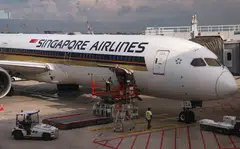
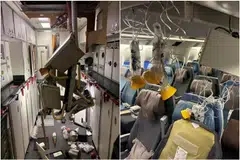
The Boeing 777-300ER climbs and descends rapidly in 62 seconds, unleashing chaos in the cabin. It rises from a cruise altitude of 37,000 ft to 37,400 ft, then falls to 36,975 ft before returning to cruise altitude.
Seventeen minutes after the turbulence, the pilots begin to descend and divert their course to Bangkok’s Suvarnabhumi Airport. At 4.45 pm, the aircraft makes an emergency landing in Bangkok.
SIA confirms via a post that multiple injuries and one fatality occurred on board the aircraft. Airports of Thailand confirms that the passenger who died was a 73-year-old Briton, Geoffrey Kitchen, who was suspected to have suffered a heart attack during the turbulence.
The airline confirms that 18 individuals have been hospitalised, with another 12 receiving treatment in hospitals. SIA says the remaining passengers and crew are being examined and receiving treatment at Suvarnabhumi Airport.
At 8.30 pm, a flight carrying 50 SIA staff is sent to aid affected passengers in Bangkok, reported Chinese-language daily Zaobao.
Investigators from TSIB arrive in Bangkok that night.
May 22, 2024
At 5.05 am, a total of 131 passengers and 12 crew members who were aboard Flight SQ321 arrive at Changi Airport via a relief flight.
Another 79 passengers and six crew members remain in Bangkok, including those receiving medical care and their loved ones on the flight.
May 23, 2024
Twenty people remain in the intensive care unit in Bangkok.
Several patients suffer potentially life-altering injuries, doctors reveal. Some passengers experience paralysis, 22 receive treatment for spinal and spinal cord injury, and six are treated for skull and brain trauma.
A lawyer specialising in aviation litigation estimates that those who suffered spinal and brain injury could potentially seek eight-figure payouts, Bloomberg reports.
SIA announces new measures to adopt greater caution for turbulence management. These include halting all in-flight meal and drink services, and having cabin crew stay seated with their seat belts fastened when the seat-belt signs are lit.
May 24, 2024
Transport Minister Chee Hong Tat says a TSIB investigation is examining data from the aircraft’s cockpit voice recorder and the flight data recorder, according to The Straits Times.
Forty-eight individuals remain in three Bangkok hospitals, says Bloomberg.
May 29, 2024
Preliminary findings from the TSIB investigation show that, at the time of the incident, the plane was passing through an area of “developing convective activity”, which refers to weather phenomena such as thunderstorms.
The plane’s movements may have resulted in rapid changes in gravitational force that likely caused injuries to unbelted passengers and crew, said TSIB.
Jun 11, 2024
SIA announces compensation sums of US$10,000 or more for all passengers on board SQ321 who were injured during the incident.
The airline says on Facebook that it has extended compensation offers to all injured passengers, with the amounts beginning from US$10,000 for those who sustained “minor injuries”.
For those medically assessed to have sustained “serious injuries requiring long-term medical care, and requesting financial assistance”, SIA offers an advance payment of US$25,000 for their “immediate needs”.
This is to form part of the final compensation for these passengers, whom the airline says it invited to discuss a compensation offer to meet their specific circumstances.
SIA also announces a full airfare refund for all passengers on board the flight, including those who were uninjured, and notes that it provided each passenger with S$1,000 to cover their immediate expenses upon departure from Bangkok.
May 26, 2025
Components of the weather radar system on board the flight are sent to the US for examination and testing.
May 19, 2026
According to a report released on Tuesday, of the 229 people on board, 79 were injured and one died.
The injuries ranged from fractures, compressions, lacerations and dislocations to the head, neck and spine.
Thailand’s Aircraft Accident Investigation Committee notes that the official certificate from the Thai police stated that the cause of death for the single fatality was heart failure and lung edema.
The report also notes that there was no evidence of pre-existing defects in the cockpit and cabin seat structure. Both the cockpit and cabin seat belts were found to be in working condition.
Official analysis of the incident finds that there were significant vertical air movements associated with turbulence, and “the actions of the flight crew are understandable and appropriate for the situation”.
At the time of the incident, four aircraft were operating in the Myanmar airspace, the report notes. The four aircraft deviated from their planned routes to avoid weather cells. They also experienced “light to moderate” turbulence during the deviations.
Decoding Asia newsletter: your guide to navigating Asia in a new global order. Sign up here to get Decoding Asia newsletter. Delivered to your inbox. Free.
Copyright SPH Media. All rights reserved.