First plug-in hybrid car signals strategy shift at Lexus
Published Sun, Jun 13, 2021 · 09:50 PM

    Singapore

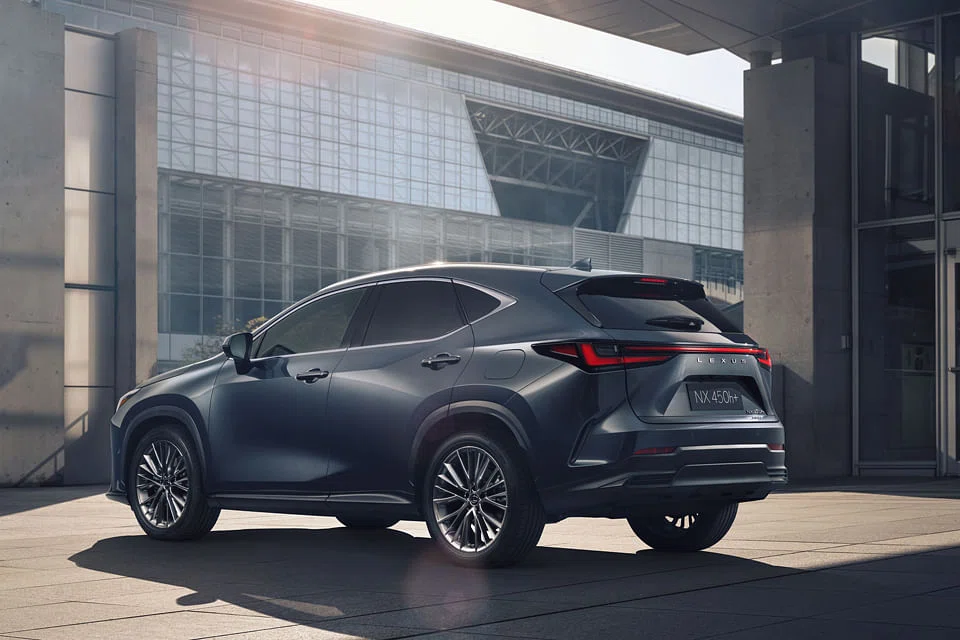
    THREE months after declaring it would pick up the pace on electrifying its cars, Lexus has unveiled its first plug-in hybrid electric vehicle (PHEV), which can travel around 75km on battery power but has a petrol engine for longer distances.

    Toyota's luxury division revealed the NX 450h+ online on June 12 as part of a virtual launch for its revamped NX, a sport utility vehicle (SUV) model. Borneo Motors is planning to put the plug-in on sale here in the fourth quarter of this year. The local Lexus agent will also sell a petrol-electric hybrid NX that doesn't rely on external charging and a 2.4-litre petrol-only version.


    The brand had earlier championed hybrids and has put more than two million of them on the road worldwide, but now has to play catch-up with rivals in the plug-in and full electric game. Its first pure electric car, the UX 300e, arrived here this year, nearly seven years after BMW launched its battery-powered i3 in Singapore.

    In other markets, BMW started to sell its first plug-in hybrid in 2015, while Mercedes-Benz has at least 14 PHEV models available today.

    Lexus is responding with a product offensive. It announced in March that it is rolling out around 20 new or improved models by 2025, and that "more than 10" will be hybrids, PHEVs, full electric cars and "other electric vehicles", implying that it will also start selling hydrogen fuel cell models.

    Takeaki Kato, the chief engineer of the new NX, said in a virtual press conference that Lexus is striving to respond "promptly" to customers' diversifying needs, but admitted that tastes are changing faster than the company could imagine.

    He said Lexus chose the new NX as its first PHEV because it is a core model for the brand, with nearly a million units of the car on the road in 95 countries. Its roll-out is "in preparation for the upcoming full-scale use of electric vehicles," he said.

    The redesigned NX heralds other shifts for Lexus. Its cars have persisted with a small, sometimes cumbersome touchpad controller for the infotainment system, but the new SUV does away with it. Instead, the dashboard has a 14-inch touchscreen, along with touch-sensitive pads on the steering wheel for the driver to control various features without taking his hands off the wheel.

    Symbolically, the NX has no Lexus logo on the back. Now the brand name is spelt out in large letters that stretch across the tailgate. Lexus' design chief Koichi Suga said he sees the upcoming product offensive as a chance to reinvigorate the brand's styling efforts. "With design, we believe that electrification is an opportunity for a major shift in direction, and a chance to level up," he said.

    Lexus has reinvented itself before. Stung by comments a decade ago that the brand's cars were boring, Toyota president Akio Toyoda demanded bolder designs and sharper handling cars from the division. He greenlit the unprofitable LFA, a supercar that could rival the performance of Ferraris and Lamborghinis, to fire up Lexus' engineers.

    The reset helped lift global sales to a record 765,330 cars in 2019 (Covid-19 brought a 6 per cent drop last year) but a rapid, industry-wide shift to electrification means Lexus will need more plug-in and full-electric models to avoid losing sales to rivals.

    If the first Lexus was created to disrupt the German and British hegemony of the luxury car market, the brand is now in a fight to avoid being disrupted by market forces.

    READ MORE: