

Ford’s landmark deal with China EV battery maker CATL shows way for Trump, Xi to deepen ties
The two leaders have much else to discuss, from tariff rates to America’s attack on Iran and the energy crisis it’s caused
[BEIJING] Construction machines are still roving around Ford Motor’s new factory in Marshall, Michigan, but their work is almost done – and it’s a scene to warm US President Donald Trump’s heart.
An iconic US company is poised to cut the ribbon on its first wholly owned domestic greenfield plant in half a century, and bring manufacturing jobs and money to a slice of small-town America that’s been starved of both.
The twist in the tale: All this comes with a big assist from China, where Trump is headed this week to meet his counterpart Xi Jinping.
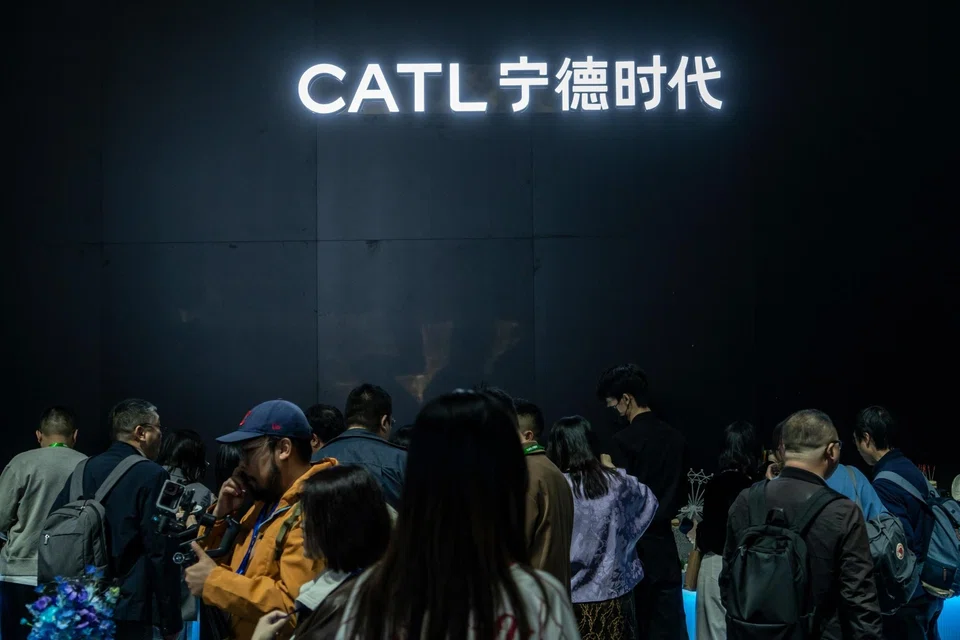
For its US$3 billion BlueOval Battery Park Michigan, Ford linked up with Contemporary Amperex Technology Co Limited, or CATL, the Chinese behemoth that leads the world in battery tech. Antagonism between the superpowers has made this kind of partnership increasingly rare – and controversial enough to draw flak, from the streets of Marshall to the halls of Congress.
The plant got built anyway. On a sunny April afternoon, crews were installing a few last bits of equipment and prepping parking lots for some 1,700 employees who are slated to start production of electric-vehicle batteries within months.
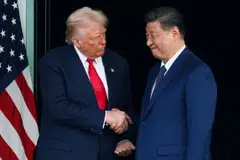
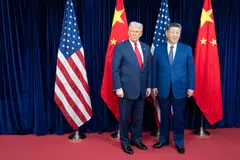
One possible question for Trump and Xi, at their May 14 to 15 summit in Beijing, is whether this collaboration could be a blueprint for more.
The two leaders have much else to discuss, from tariff rates to America’s attack on Iran and the energy crisis it’s caused. Still, Chinese investment in the US, which has slowed to a trickle since Trump’s first term, has been a key background issue in previous talks.
Beijing pushed last year for a rollback of national-security restrictions on Chinese deals in the US – floating the potential for the kind of big-dollar capital flows that Trump likes to tout in his second term, worth as much as US$1 trillion. But there’s little sign of progress since then on a mooted investment board.
For Chinese firms, the hurdles are especially high in the auto sector, where US manufacturers worry they will be unable to compete. Electric-car makers such as BYD and Xiaomi are effectively frozen out of the American consumer market by 100 per cent tariff rates. That has not stopped rumours swirling: only last month, Ford denied reports it held talks with Geely Automobile about bringing Chinese car technology to the US market.
SEE ALSO

Industry bosses have come out against opening the door too wide, including Ford’s own CEO Jim Farley. “We should not let them into our country,” he told Fox News last month, though he’s expressed openness to expanding Chinese partnerships. Commerce Secretary Howard Lutnick says there’s no need for companies such as BYD in the US. Bipartisan legislation was recently proposed to tighten restrictions on Chinese vehicle tech.
‘Inherently threatening’
A wild card in this debate is Trump himself. The president has said that he’s open to Chinese car plants getting built in the US – in fact, he’d “love that”.
“The American collective psyche, with the exception of President Trump and a few business people, appears to have decided that there’s something inherently threatening about Chinese investment,” says Kurt Tong, a former US consul general in Hong Kong and managing partner at advisory firm The Asia Group.
China’s Commerce Ministry and CATL did not reply to requests for comment. White House spokesperson Kush Desai said that while the US “is always seeking more investment into America’s industrial resurgence, any notion that we would ever compromise our national security is baseless and false”.
Ford’s venture with CATL is structured to allay concerns. The US carmaker owns the plant, land and equipment and hires the workers. CATL, which holds no equity, offers lithium iron phosphate battery chemistry under a licensing agreement and dispatches Chinese engineers to train Ford employees. It’s an arrangement with echoes of the deal that allowed Chinese social media app TikTok to remain operational in America, after ByteDance agreed to license its prized algorithm to a new US-based entity.
Both sides have reason to like this setup. Use of CATL batteries by US automakers could help them become the industry standard, and boost market share. TikTok’s technology was seen as carrying security risks, but CATL’s CEO Robin Zeng has joked his battery cells are “dumb as bricks”, ie no use for espionage or any other unintended purpose.
While Ford has scaled back its EV plans due to a shifting regulatory environment and tepid demand at home, the new plant shows the broader potential for CATL in the US market. The plant will eventually produce batteries not only for EVs but also for energy storage.
Data centres that electricity-strained America needs to support the rapid growth of artificial intelligence could be another huge area for collaboration.
For Ford, it gets to close a gap in battery tech. “It probably would have taken us a decade to catch up” through internal R&D alone, executive Lisa Drake told reporters last year. Ford sees no tension between this kind of collaboration and its desire to shield the US market, a company official told Bloomberg.
‘On the cusp’
For Marshall, the plant offers an economic lifeline – even if not everyone sees it that way.
The town of some 6,800 people is dotted with striking examples of 19th- and early 20th-century architecture, winning the status of National Historic Landmark District. But times have been tougher lately, with 2,000 jobs vanishing since the 1990s.
“When you do not have population growth, you have shrinking revenues, you have a city that struggles keeping up with providing public services,” says James Durian, CEO of the Marshall Area Economic Development Alliance, which helped attract Ford to the town. That’s happened elsewhere in Michigan, he says, and “Marshall was kind of on the cusp.”
Now it’s on the up. New housing developments are underway at a rate not seen in decades. Local businesses such as Dark Horse Brewing and Pastrami Joe’s Deli are hiring, in anticipation of a sustained boost once the plant opens.
They are already doing good business from the influx of construction workers like Dominic Tromley, who’s working on the fencing around BlueOval. Tromley says he’s making at least double the US$29 an hour he got from his last job in Tennessee, and likes living in Marshall because it helps him save: “You are not home partying, you’re not spending the money.”
Chinese experts are already in town too, to run training courses for incoming employees, says Scott Davis, chief executive of BlueOval in Marshall.
A pair of Chinese engineers strolled down Michigan Avenue, where two Chinese restaurants offered Americanized take-out fare. They said that they’d be in town for around six weeks and had not encountered any issues, though they were aware of some tensions in the community.
There’s been a smattering of local opposition since early on. Demonstrators tend to gather around the town centre’s Brooks Memorial Fountain Park, which is modelled after the Temple of Love in Versailles, on Wednesday and Saturday afternoons. Just two people were there with signs on the day Bloomberg visited, though several passing cars honked approvingly.
The China factor is among the objections cited by protesters like Barry Wayne Adams – “CATL is a creation of the Chinese Communist Party”, he says – but does not seem to be the dominant one.
“We are objecting to the catastrophic environmental destruction and the loss of a projected 3,000 acres of the most productive farmland in the county,” the 71-year-old Adams says. BlueOval is only one part of a bigger campus that local officials are targeting for greenfield investments.
A final ruling in a years-long legal dispute about the rezoning of the land is still pending. There’s been close scrutiny in the nation’s capital, too – and there, it’s all about China.
Back in February 2023, when the plant was first announced, then Senator Marco Rubio asked the Biden administration to review the deal, saying it would “only deepen US reliance on the Chinese Communist Party for battery tech”. Such concerns still linger.
In a January letter to Ford, John Moolenaar, chairman of the House Select Committee on China, called on the carmaker to provide detailed information about the deal with CATL, and to disclose any planned expansion in ties. A Ford official said the company did not share the requested documents for competitive reasons, but had engaged in dialogue with the committee to answer its questions.
While the Washington debate over Chinese investment often revolves around national security or supply-chain dependence, the bigger risk is pretending American companies can go it alone, according to Bill Russo, a longtime China auto analyst and former Chrysler executive now based in Shanghai.
“There is no road to the future of electric mobility that does not involve the Chinese supply chain,” Russo says. Batteries are the most expensive piece of an EV, and China has about 80 per cent of world capacity – half of that through CATL alone, he says. “You need to be able to put a little bit of the DNA of that global supply chain into your own backyard.”
That need has triggered debates in many places – Canada and Europe, as well as the US – about how to harness the tech know-how of Chinese auto firms so that local ones can learn from it, and avoid losing markets to more sophisticated rivals.
In some ways, it’s the mirror image of a dynamic that played out decades ago. Back then, many Asian economies were trying to build their own car industries through tie-ins with top Western firms, which had the cutting-edge tech. The challenge was to figure out models for collaboration that would help local producers in Asia close the gap. Now the shoe’s on the other foot.
China itself became an auto giant by leaning on foreign technology, requiring carmakers such as Ford and BMW to form joint ventures with domestic businesses if they wanted access to the Chinese market.
On the US side, there’s some precedent in the case of Japanese automakers. Initially seen as a mortal threat after they made inroads into the American market, many ended up building factories there. Some Chinese firms already have a presence in the US, including Geely, whose affiliate Volvo Car – purchased from Ford – has a factory in South Carolina.
With all the hurdles, many analysts doubt there’s much prospect of a rebound in Chinese FDI in the US. A recent report by Rhodium Group predicted it’s unlikely to happen even if the Trump-Xi summit leads to a resumption of negotiations on investment.
Still, a Ford official said in response to questions that the US and China will ultimately have to co-exist, and the Marshall plant offers a potential model for how to do it. Alongside investment and jobs, it’s bringing the technology American firms need, in a way that enables learning and the eventual development of their own intellectual property, the official said.
As Marshall’s city manager, Derek Perry has his own view of the project: It’s a chance to revitalise the town and give young people reasons to stay there. “If you have children or grandchildren, it seems like you would want to create opportunities and give them a legacy of prosperity,” he said. “So you do not have to fly across the country to visit them.” BLOOMBERG
Decoding Asia newsletter: your guide to navigating Asia in a new global order. Sign up here to get Decoding Asia newsletter. Delivered to your inbox. Free.
Share with us your feedback on BT's products and services






