The fossil fuel way to net zero
THE COP27 environmental conference in Sharm El Sheik, Egypt has come and gone. It did not have the feel of a momentous occasion. Certainly, a read of the draft final document that was circulating last week failed to give the impression of a world truly committed to decarbonisation.
The optimists pointed to a commitment to assist countries most affected by climate change. There were some strong words on phasing out coal, but less so on oil. Still, there was no doubt that eliminating the use of fossil fuels has become the over-riding goal for those who want to stop global warming.
We do have to be careful about words. “Working towards net zero”; “decarbonisation” and “phasing out fossil fuels” are often used interchangeably as if they mean exactly the same. They do not – at least not necessarily. To get back to basics, the objective must surely be to – as far as possible – stop greenhouse gas (GHG) emissions and – also as much as possible – capture carbon from the atmosphere through increased biomass or, possibly, technology.
So yes, we are “working towards net zero”. Perhaps “decarbonisation” is less useful. It could mean “phasing out fossil fuels”, but it could also just mean not emitting carbon dioxide (CO2) into the atmosphere. Even then, we are not looking at the whole picture.
There are other GHGs. Methane is a powerful GHG, and methane slip is an issue if LNG is being used as a shipping fuel. How big an issue it is, continues to be contentious. Why does this matter to the shipping industry? The answer is that technologies are being developed that will allow fossil fuels to continue to be used without emitting CO2.
This development is going on at the same time as a whole range of new fuels are emerging which could be net zero, depending on how they are produced. It is anybody’s guess which pathway will turn out to be in general use in a decade or two. Much will depend on relative costs. The scene is confusing, but exciting. There is a lot going on right now.
However, let’s return to continued use of fossil fuels. The very mention of that is anathema to most of the green lobby. There is a company, Climeworks, that is now operating a commercial carbon capture plant in Iceland, powered by renewable energy. It has big plans to set up carbon capture worldwide, but when I contacted the company last year, I was left in no doubt those plans did not include putting the equipment on ships and using the waste energy from burning fossil fuel to take CO2 from the atmosphere.
That was definitely not seen as being “green” (another word that is used very loosely). However, onboard carbon capture (OCC) is becoming technically feasible. The Maersk Mc-Kinney Moller Center for Zero Carbon Shipping (CZCS) has recently produced a report on the role of onboard carbon capture in maritime decarbonisation.
It notes that OCC is being considered as a technology that will play a role in decarbonising shipping, in combination with energy efficiency and alternative fuels. The study says: “OCC can be applied to all carbon-containing fossil, electro and biofuels and – as a result – could play a mid- to long-term role in maritime decarbonisation. However, the applicability of OCC depends on several factors including OCC technology development, commercial viability, alternative fuel prices and availability, and future emission-related regulatory requirements.”
To gain a better understanding of the role of OCC in maritime decarbonisation and assess OCC’s business case for different vessel types and sizes, CZCS analysed the applicability of OCC to the largest shipping segments (container, bulk, and tanker), main carbon-based fuels and full and partial application as part of a retrofit or newbuild.
The report concludes: “Although OCC technologies are still in development, they will be commercially available soon and can provide significant emission reductions. As a result, ship owners aiming to decarbonise should assess their mid-term emission reduction targets and consider including OCC if it is an option for their vessel types, sizes and trades.”
Classification society ABS has also discussed the current regulatory landscape surrounding this new technology. It outlined the methods of OCC – including incorporation into existing equipment such as scrubbers – in a new publication, Insights into Onboard Carbon Capture.
It noted: “Current industry research indicates that OCC will be an important factor in reaching the IMO’s (International Maritime Organization) 2030 and 2050 emissions reduction targets. Although OCC systems are still being piloted, we expect increased activity over the course of the next decade, especially as discussions on global carbon markets advance.”
The first pilot OCC installations are starting to go to sea. Technology company Alfa Laval said it will be a technology partner in a joint project initiated by the Global Centre for Maritime Decarbonisation (GCMD) and the Oil and Gas Climate Initiative (OGCI). Stena Bulk is undertaking the world’s first project aimed at demonstrating end-to-end shipboard carbon capture at scale. It plans to test a carbon capture unit onboard one of its tankers to assess the operational challenges on a ship at sea and identify potential cost reduction measures for future commercial applications.
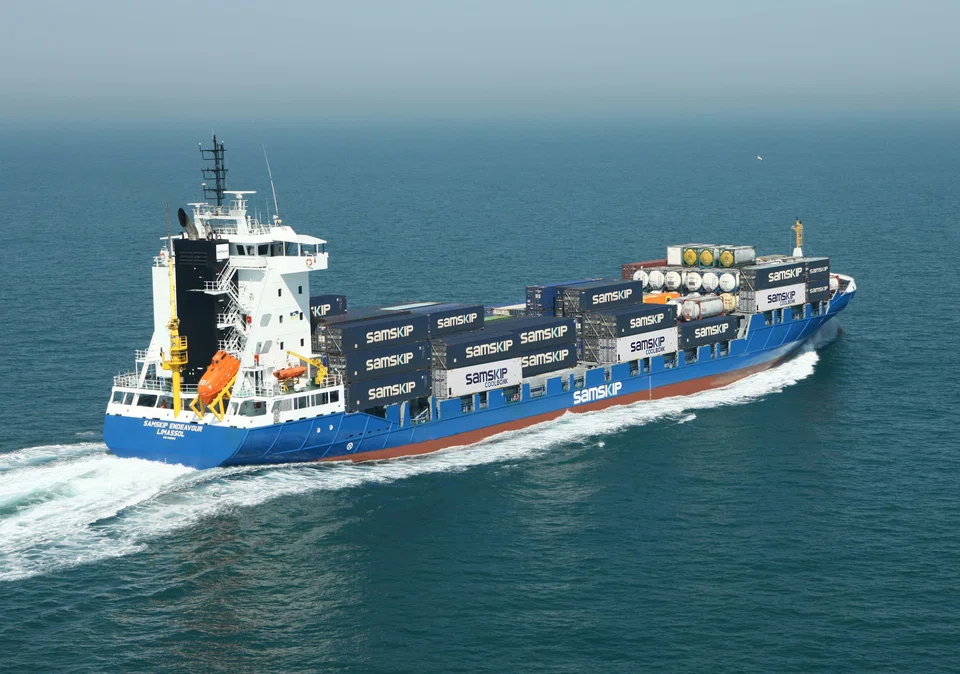
Meanwhile, North European short-sea container ship operator Samskip said it is installing the Value Maritime’s Filtree gas cleaning system on its container ships Samskip Innovator and Samskip Endeavour. This system is expected to capture 30 per cent or more of CO2 emissions. Separately, Danish scrubber manufacturer PureteQ Group said it is developing a system that will both capture carbon from emissions and also produce hydrogen.
Hydrogen technology company Rotoboost is collaborating with ABS for the marine introduction of what it describes as “a first of its kind for pre-combustion carbon capture system based on thermocatalytic decomposition (TCD) process”.
One interesting development takes a very different approach from the others just mentioned. ABS has awarded Rotoboost an approval in principle for its thermocatalytic decomposition technology for continuous hydrogen production and carbon capture onboard ships.
ABS vice-president of global sustainability Georgios Plevrakis said: “Decomposing methane into hydrogen and solid carbon is an intelligent way to implement a carbon capture and storage (CCS) solution onboard gas-fuelled ships. This method reduces the storage need onboard, and the solid carbon can be used in the production of fuel cells and batteries and can be recycled again and again. This technology is one that promises to accelerate the energy transition.”
Whether carbon capture does become widely used sea at depends on price and politics. The cost of OCC should become clearer fairly soon – but as to politics, who knows. Continuing to use fossil fuels could be a hard sell to the green lobby, even if offers a viable way to net zero.
Decoding Asia newsletter: your guide to navigating Asia in a new global order. Sign up here to get Decoding Asia newsletter. Delivered to your inbox. Free.
Share with us your feedback on BT's products and services