

Fuel switch incident, surging fuel prices put Air India’s turnaround under fresh test
Rising fuel costs amid escalating Middle East tensions are compounding its challenges
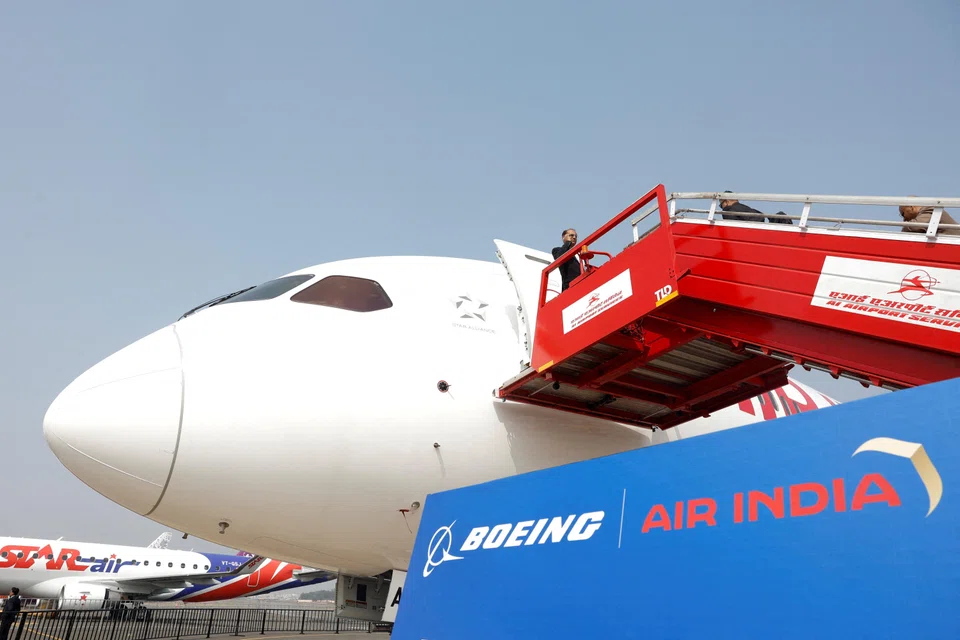
[NEW DELHI] A fuel switch incident involving an Air India Boeing 787 Dreamliner has renewed scrutiny of the Indian full-service carrier’s operational reliability at a delicate period in its turnaround efforts, even as rising fuel costs and tensions in the Middle East add fresh uncertainty for airlines globally.
Rising jet fuel prices triggered by the Middle East crisis compound the pressures facing airlines. With the region critical to global oil supply and aviation routes, industry executives have warned that crude prices nearing US$90 a barrel are weighing on airline economics.
Airlines are also adjusting operations across parts of the Gulf as tensions affect travel flows and airspace access.
Air India said it was closely monitoring the situation while maintaining connectivity to key destinations in the region. The airline group added that Air India and Air India Express would operate 32 ad-hoc flights between Indian cities and the United Arab Emirates (UAE) on Mar 10, subject to slot availability and prevailing operating conditions.
The Middle East is the biggest destination region for India’s international passenger traffic, accounting for roughly 40 per cent of outbound travel, according to the International Air Transport Association. UAE alone accounts for about one-fifth of India’s international passenger traffic, highlighting the strategic importance of Gulf routes.
Whither airline’s turnaround hopes?
Air India is in the middle of an ambitious multi-year turnaround under one of India’s biggest conglomerates Tata Group, after decades of losses and operational setbacks under state ownership.
But separate data points suggest the carrier is still grappling with execution issues, with technical incidents such as fuel and oil leaks rising to a 14-month high in January, according to Reuters.
Much of the challenge stems from integrating multiple fleets and operating systems following the merger of Air India, Vistara and AirAsia India, a process that typically takes years to stabilise.
Tata Sons chairman Natarajan Chandrasekaran has described such mergers as periods of change, when distinct cultures are brought together to build something new and lasting, and said they “take time to play out”.
Meanwhile in February this year, an Air India aircraft, which took off from London and landed in Bengaluru, was briefly grounded after the fuel switch failed to latch onto the “run” position in two attempts before engaging on the third. Britain’s aviation regulator subsequently sought a detailed report, although Air India and the Directorate General of Civil Aviation said no defects were found.
There are early signs of improvement in parts of the group. Air India Express, the low-cost arm, is set to report its first operating profit in the second half of this fiscal year under Tata ownership, based on highlights of an internal town hall memo reported by Reuters.
Separately, Air India chief executive Campbell Wilson recently told employees that fleet reliability is improving as spare parts and components become more available.
More than 50 per cent of the wide-body fleet is expected to be modernised by the end of 2026, with the programme due for completion by December 2028. The airline group is also planning a major expansion, aiming to grow its fleet from about 300 aircraft to more than 500 by 2030.
The overhaul is also being backed by strategic partnerships and fresh capital. Singapore Airlines, which holds a 25.1 per cent stake in the merged Air India, has invested more than 6,300 crore rupees (S$871,000) in Air India’s recapitalisation, marking one of the largest capital infusions into an Indian airline in recent years.
Meanwhile, Tata Sons has brought in former civil aviation secretary Pradeep Singh Kharola as an adviser to its aviation business, according to media reports, in a move seen as strengthening regulatory engagement as the airline navigates its transformation.
Even with these investments, Air India is operating in a fiercely competitive market.
Budget carrier IndiGo, India’s largest airline by market share, controls roughly two-thirds of the domestic market, compared with about 27 per cent for the full-service and low-cost airlines under the Air India Group, underlining how much ground the Tata-owned carrier still has to make up.
The stakes are high in part because India’s aviation market itself is expanding rapidly, with the sector entering what analysts and experts describe as a multi-decade growth phase, driven by rising incomes, urbanisation and a young population.
Passenger traffic has grown faster than gross domestic product over the past decade, and industry forecasts indicate total traffic could exceed 420 million passengers by 2030, up from about 240 million in 2025.
According to civil aviation ministry data cited by ICICI Securities, passenger demand is holding up, with about 94 per cent of seats on Air India flights filled in December and roughly 91 per cent in January data.
In such an environment, analysts said airlines with large aircraft orders and strong execution will be best placed to capture growth, especially on international routes. For Air India, the next two to three years will be crucial as it tries to turn heavy investment into operational reliability and stronger yields.
Against that backdrop, the fuel switch incident is a reminder of the narrow margin for error as Air India seeks to reset its operations.
With demand holding up and investment accelerating, analysts say the turnaround will hinge on whether India’s oldest operating airline can translate capital and scale into consistent day-to-day execution, even as rising fuel prices and geopolitical tensions in the Middle East add fresh uncertainty.
TRENDING NOW

Once staunchly pro-China, Malaysian Chinese businesses are now distancing themselves from Beijing

Looking beyond looming CEO succession, should UOB potentially pursue a transformative merger?

Could stablecoins be the future of money?

Grab CEO’s wife Chloe Tong on life with Anthony Tan and finding her purpose

