

New airline hubs will be the gainers as travel reroutes from the Middle East
As the US-Israel-Iran conflict rages on, East-West travel will seek fresh routings, and domestic travel in Asia will continue to grow
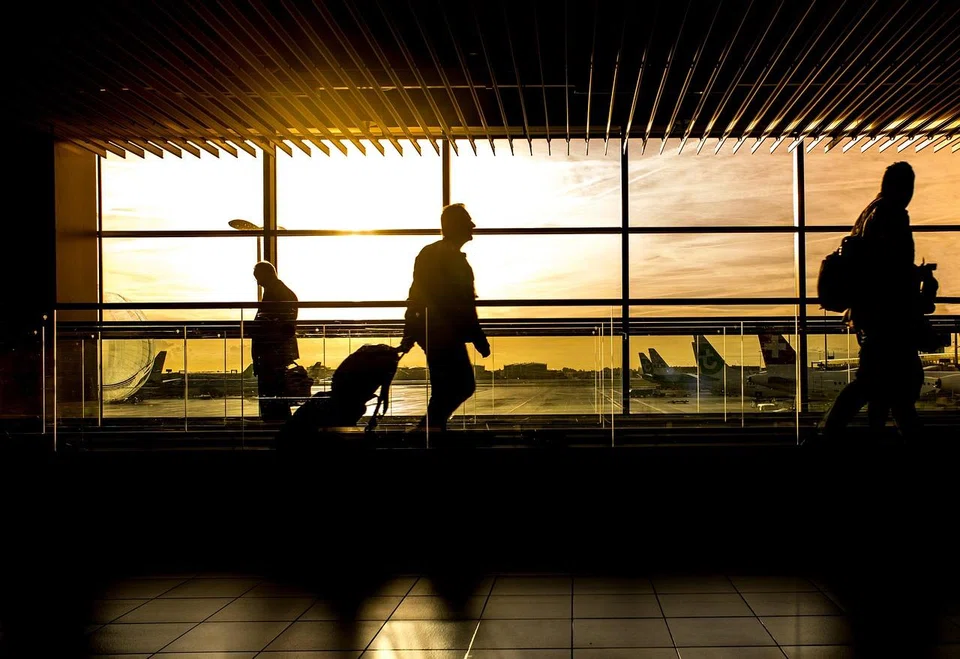
AS MIDDLE Eastern airports shuttered down following the attack on Iran and the swift counter-strikes across the region, skies over a vast swathe of West Asia suddenly went silent as smoke rose from Dubai to Doha.
A quick scan of FlightAware showed zero activity around Imam Khomeini International Airport. Iran was off the flight map. And the United Arab Emirates and Israel airports went dark on Feb 28, stranding thousands of passengers and tossing a massive wrench in the works of some of the world’s busiest transit airports.
Whatever the outcome of the US-Israel-Iran conflict, it will take a while for travel to recover from the shock. There is no clean or fast exit from this sordid theatre.
The strikes launched by the US will likely set in motion fresh sectarian strife and political vendettas as socio-ethnic-religious fault lines emerge in the ensuing free-for-all. There will be retaliation – sponsored and freelance – against US interests elsewhere, further muddying the travel waters.
US President Donald Trump’s call for the Iranian people to rise up is misguided. Urging unarmed civilians to go against a well-trained Revolutionary Guard is irresponsible and dangerous. In his words: “When we are finished, take over your government, it will be yours to take. This will be probably your only chance for generations.”
Yet, without boots on the ground – which opens up another can of worms – this is a recipe for disaster. And given the various ethnic groupings and split regional loyalties, who would rise up and successfully assume power?
Regime change is not effected by mere whim. It needs definable provocation, a moral raison d’etre, and more than just some hastily cobbled emperor’s-new-clothes consensus – the United Nations (UN), of course, would never mandate such an action.
And if history is anything to go by, successful revolution and change happens ground up, never top down. Casual head-of-state assassination sets a dangerous precedent. It will strengthen the hardline hand and pose serious risks for future travellers keen on exploring the country’s storied past.
Iran has strong institutions that will likely carry what remains of the government through the tumult until the next phase presents itself. This opens up the possibility of another round of even greater repression.
But it will take clear heads, not global vacillation, to manage the Iran crisis while also putting the brakes on Israel’s overt demands for “lebensraum” (German for living space) – a sad twist on its own dark past and echoing an ugly Nazi playbook of territorial expansion.
New routes, long-haul hesitancy
What does all this augur for travel?
First, the huge UK-Australia route is in a shambles and traffic is going to have to find a way around, likely through Hong Kong, Bangkok or Singapore. These are the well-oiled transit points that are already handling some of this traffic.
But even Mumbai or New Delhi might pitch their hats in the ring, with Air India seeking to make a comeback.
In the short term, Cathay Pacific, Thai Airways International and Singapore Airlines will benefit from this diversion. Passengers can expect to pay higher fares for this, though competition between the major hub cities may bring prices down later.
This switch in routing will come with better offers on stopovers and city tours – Hong Kong and Singapore are always hungry for this – while Bangkok, already filled to bursting, is on everyone’s bucket list. Middle East destinations that have worked hard for decades burnishing reputations as safe and exciting tourism havens will need to rebuild their tattered brands.
For now, there will be passenger hesitancy in committing to long-haul flights.
People know war gets trigger fingers itching. Memory is short but the ghosts linger of Iran Air (flight 655 shot down in July 1988 by the USS Vincennes over the Persian Gulf), Korean Air Lines (flight 007 shot down in September 1983 by Soviet fighter jets over Sakhalin), Siberia Airlines (flight 1812 shot down in October 2001 by Ukraine over the Black Sea), and Malaysia Airlines (MH17 shot down in July 2014 over Eastern Ukraine by Russian forces according to UN investigators).
As with the great U-turn in travel to the US following the emergence of the Great Immigration Firewall, many travellers will prefer to focus on domestic markets (especially in China, India and Europe), with much travel switching from the US to favour Japan, South Korea, Taipei, Hong Kong, Thailand and other parts of South-east Asia.
In much of Asia, international political uncertainty and travel barriers have translated into vibrant self-discovery.
That mood of self-discovery will sustain business in several markets, boosting hotel occupancies and building national awareness for travellers. As the global village untangles, the go-domestic trend is likely to amplify, a trend set in motion by Covid staycations.
The unpredictable nature of the world economy in the heat of the tariff tirade has left consumers overly cautious and sensitive to price. Thrift is the order of the day. Yet amid this seeming chaos, deals will emerge as airlines and hotels race to adjust to changing market realities.
Unpredictability makes for a stronger bargaining position for travellers who should be on the lookout for fast-moving short-term deals.
Airline seats and hotel beds are perishable. Hotels, already stampeded into best-price click-and-book overreach by Google and social media, will be more receptive on flexi rates.
Travel can be at its most rewarding when disruption is afoot, not when the machine is greased and humming. And this is where a genuine travel revolution may happen to correct the post-Covid price spikes. Ground up.
The writer is a Hong Kong-based journalist and editor of the online magazines AsianConversations.com and SmartTravelAsia.com
TRENDING NOW
LTA proposes combining car COE categories, adding rebate-surcharge system

StarHub to acquire MyRepublic’s mobile business amid ongoing telco consolidation

DBS, OCBC, UOB rout lops billions off STI as inflation, rate concerns spook investors

Grab CEO’s wife Chloe Tong on life with Anthony Tan and finding her purpose

