

High ambitions on show at Singapore Maritime Week
 Add BT as a preferred source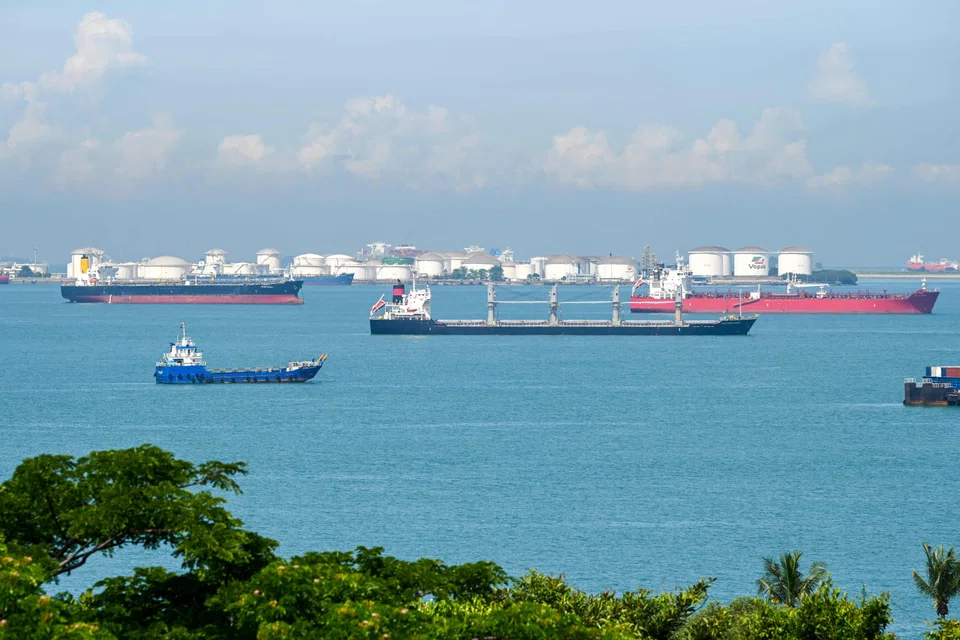
THE theme of Singapore Maritime Week (SMW) was “Ambition Meets Action”. The comprehensive package of events of various sorts was intended to bring together the international maritime community, to take collective action on achieving the goals of decarbonisation, innovation, talent and services through thought leadership conferences, exhibitions and events held throughout the week.
Organised by the Maritime and Port Authority of Singapore (MPA) in collaboration with industry stakeholders and the research community, SMW 2023 comprised almost 50 events, and some 20,000 participants were expected. No doubt attendance figures will be available in due course. But the overwhelming impression is that SMW has again been a resounding success in terms of attracting top shipping people from around the globe.
It is not possible to comment here on more than a few of the events that took place last week. Material from SMW events is likely to feature in this column for several weeks.
When launching SMW 2023, Singapore’s Minister for Transport and Minister-in-charge of Trade Relations S Iswaran emphasised three areas of ambition for continued growth and success in the maritime industry: ensuring steady progress for maritime decarbonisation, aligning international standards in the move towards greater digitalisation, and redoubling efforts to attract and nurture talent. He said: “The journey ahead for the maritime sector is not without its uncertainties and challenges, but it also holds the promise of new and interesting opportunities. Our collective mission must be to work together, navigate our path through choppy waters and stay the course.”
All three of those sub-themes were prominent last week, and all present major issues for the international shipping industry.
However, it is probably fair to say that decarbonisation is the biggest technical and political challenge. Much of the week was devoted to exploring how to reduce shipping’s carbon footprint. SMW highlighted that Singapore is supporting the development of a range of alternative fuels and new technologies aimed at achieving that.
Underscoring the political dimension, in a keynote address the secretary-general of the International Maritime Organization (IMO), Kitack Lim, highlighted that IMO member states are currently actively engaged in upgrading IMO’s strategy on the reduction of greenhouse gas emissions from international shipping by July this year. He added that collaboration, information sharing, and capacity building are key to ensuring that no one is left behind in the push for decarbonisation. He also stressed that IMO member states must be ambitious and bold enough to elevate the vision and levels of ambition, to accelerate the decarbonisation of shipping.
In this vein, the SMW opening ceremony was followed by the SMW Leaders’ Perspectives panel discussion on “The Maritime Green Transition in the Current Global Economy”, where industry leaders and experts discussed current realities on the state of the green transition, actions needed to make progress on the decarbonisation ambitions, identify green finance and growth opportunities, and how the industry can rally together to achieve net-zero emissions.
In keeping with the SMW theme of ambition and action, the week saw several major announcements on decarbonisation. These included the April signing of a memorandum of understanding (MOU) between MPA and technology group Wartsila, aimed at collaborating in mutually beneficial areas to enable the introduction of next-generation renewable fuels, optimise digital port operations and develop future talent.
Under the MOU signed in April, MPA and Wartsila will explore renewable fuel technologies and seek partnerships with various stakeholders to develop green fuel safety concepts and procedures, to ensure safe handling and operation of future fuels. Insights gained will support the development of global standards for maritime fuel safety. The intention is to make port operations more efficient through developing reliable, secure, and cost-effective data exchanges between vessels and port operations.
Kenneth Lim, assistant chief executive for Industry and Transformation at MPA, said: “As a major bunkering and a maritime hub port supported by a robust R&D and startup ecosystem, Singapore is at the heart of marinetech innovation and at an exciting phase for the potential introduction of maritime fuels such as methanol, hydrogen and its derivatives such as ammonia. MPA looks forward to our partnership with Wartsila, to unlock our collective potentials and develop solutions that can be scaled to benefit (the) global maritime community.”
Singapore’s approach – outlined by Lim – of pursuing a range of alternative fuel options makes sense. It is far too early to judge how decarbonisation will proceed.
Another important announcement last week was that MPA and eight members of the International Association of Classification Societies have signed a letter of intent to collaborate in the areas of maritime digitalisation and decarbonisation.
MPA and the classification societies will “strive to work together” to develop standards and technical references for maritime digitalisation and decarbonisation, with a focus on meeting Singapore’s requirements as a start. This could cover zero or low-carbon marine fuels such as methanol, ammonia and hydrogen as well as marine electrification.
In another significant development, MPA, Port of Los Angeles and Port of Long Beach, with the support of C40 Cities Climate Leadership Group, signed an MOU to establish a green and digital shipping corridor between Singapore and the San Pedro Bay port complex, to support the decarbonisation of the maritime industry and improve efficiencies through digitalisation. C40 Cities is a group of 96 cities around the world that represents one-twelfth of the world’s population and one-quarter of the global economy
Meanwhile, highlighting work underway to decarbonise Singapore’s domestic maritime sector, the Coastal Sustainability Alliance (CSA), an industry collaborative effort led by Kuok Maritime, took the opportunity to formalise the addition of 11 new members at SMW’s MarineTech Conference, bringing the total number of members to 18. CSA said contributions from the new members would accelerate its efforts to electrify, digitalise and decarbonise Singapore’s coastal vessels by 2050, strengthen marine supply chains and build Singapore’s next-generation maritime ecosystem.
So there was a lot of ambition on display last week. In the sense of making commitments, there was also plenty of action. But really, we are talking about action points that need to be fulfilled. In many ways, SMW was an ambitious to-do list covering a wide range of tasks. There was a lot of confidence on show as well as a realistic approach to pending decarbonisation challenges. SMW was a notable success. However, the hard work of achieving the tasks it identified lies ahead.
Decoding Asia newsletter: your guide to navigating Asia in a new global order. Sign up here to get Decoding Asia newsletter. Delivered to your inbox. Free.
Share with us your feedback on BT's products and services
TRENDING NOW

Japan Home closing outlets; staff say Valu$ taking over operations
Timah Partners lands S$60 million facility from lenders including UOB, RHB
ComfortDelGro’s Zig to buy S$10 million worth of BYD cars for private-hire fleet
How BYD disrupted Singapore’s car market – and why the strategy is turning on itself

