

More freight, bad weather cause delays in Singapore port
PSA observes higher vessel arrival volumes, says conditions are expected to be temporary

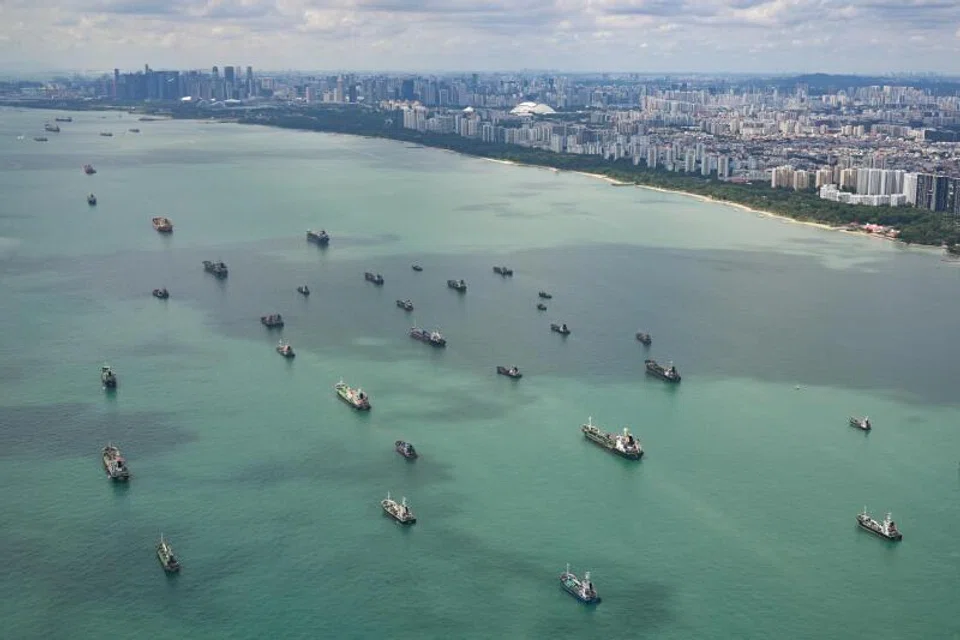
[SINGAPORE] Port operator PSA Singapore has reported a surge in vessel arrival volumes in the Republic, attributing the cluster of arrivals to a mix of regional weather disruptions and mounting delays in global trade lanes.
The higher volumes observed come “due to a combination of factors, such as weather-related disruptions in the Far East as well as compounding delays upstream on some east-bound vessel routes”, a spokesperson said on Friday (Jun 26) in response to queries from The Business Times.
PSA Singapore said that these conditions are expected to be temporary, adding that is working closely with customers and partners to manage arrivals, minimise potential delays and maintain reliable operational efficiency.
Logistics operator Kuehne+Nagel’s weekly port operational update as at Tuesday showed the average waiting time for Singapore in the last seven days was around 1.25 days.
“PSA remains busy, with general waiting times of more than one day for all carriers,” it said. “Yard utilisation also stays at a high level, with density around 80 to 85 per cent.”
Data from logistics platform GoComet showed vessels could expect delays of 1.67 days or 40 hours at the Singapore port as at Thursday, due to congestion and queues. But this is better than the nearly two days of delay the week before.
Freight intelligence company project44 noted in an article published on Thursday that the Republic has absorbed 2 per cent of shipments originally bound for Jebel Ali, the Middle East’s busiest port.
The diversions happened after the US and Israel started attacking Iran on Feb 28, making calling at ports in the Gulf challenging.
The impact on Singapore, however, was not immediate, as there were no significant changes in vessel arrivals in March, according to the Maritime and Port Authority of Singapore.
Project44 commented that diverted volumes are subsiding, but that this has not cut congestion.
“Every week of elevated diversions adds to the backlog at receiving ports, and that backlog cannot clear until ship calls normalise and handling capacity catches up,” it noted.
Still, Singapore’s congestion levels show more variation week to week, reflecting the port’s greater operational flexibility and capacity depth, project44 said.
Container port congestion has “worsened” globally in the last two weeks due to a surge in freight volumes, noted Tan Hua Joo, analyst at container shipping intelligence provider Linerlytica. As a consequence, freight rates have sharply increased.
In 2024, container ship operators used Singapore as a transhipment port as schedules were hit when Europe-bound ships had to reroute through South Africa to avoid rebel attacks in the Red Sea.
In doing so, container ships were able to unload shipments bound for Asian ports beyond Singapore and free up vessels to return to Europe more quickly.
TRENDING NOW

DBS, OCBC, UOB rout lops billions off STI as inflation, rate concerns spook investors

Grab CEO’s wife Chloe Tong on life with Anthony Tan and finding her purpose

OCBC sheds S$8 billion in value as shares close nearly 6% down; analysts cautious on banks

Deal between tycoon friends sparks scrutiny of Philippine power sector

