More insurance plans for EVs, but charging-specific coverage remains rare

Derryn Wong
Published Tue, Sep 12, 2023 · 05:00 AM
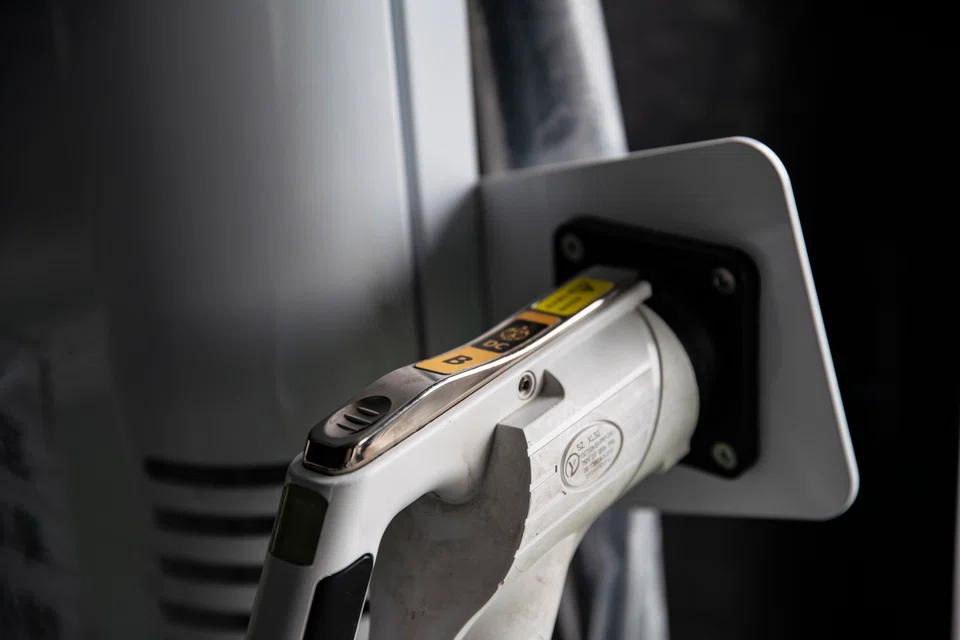
    • Two insurers now offer coverage for electric vehicle charging-related injuries and damage, though industry experts say complexities surrounding EV charging still exist.
    • Two insurers now offer coverage for electric vehicle charging-related injuries and damage, though industry experts say complexities surrounding EV charging still exist. PHOTO: BLOOMBERG

    MORE insurers in Singapore are providing plans for electric vehicles (EVs), but specific policies that cover charging risks remain rare.

    Checks by The Business Times (BT) found that out of 15 car insurers in Singapore, nine offer car insurance for EVs – but only one, Singlife, offers additional coverage for EV-specific risks.

    Separately, on Sep 6, OCBC ’s insurance arm Great Eastern introduced an EV-specific insurance plan: Great EV Protect. It is said to be Singapore’s first policy to cover medical claims and damage arising from a privately owned EV charger.

    The plan covers outpatient medical claims due to electric shock from an EV charging station of up to S$1,000; home contents damage due to fire from an EV charging station, of up S$20,000; and accidental damage to a charging station of up to S$5,000.

    This provides an “additional layer” of protection for EV owners, on top of existing home or personal accident insurance, said Great Eastern managing director of general and group insurance Jimmy Tong.

    Donovan Tan, head of business development for regional charging solutions provider Interwell, said such a move helps to widen coverage for EV owners and operates as “double protection”.

    Singapore’s only other insurance plan covering EV charging-related risks is Singlife’s EV-specific insurance policy. This covers damage, loss or theft of the battery; personal EV charger damage; and total loss of the EV arising from a fire or explosion.

    It also covers the loss, damage, or theft of charging cables, as well as related third-party claims, such as an injury from tripping over a charging cable attached to the owner’s vehicle.

    Complexities and liabilities

    Last year, BT reported that insurance premiums for EVs are generally higher than those for an equivalent petrol-powered car, with relatively few insurers offering such coverage. Even as more insurers get on board, complexities remain, say industry watchers.

    More insurance coverage helps to raise awareness of EVs, said Alvin Seet, president of the Electric Vehicle Association of Singapore. But the risk, he added, is that potential buyers may be put off by the additional cost, and have the impression that EV charging is so risky that it requires its own standalone insurance.

    Seet said that EV charging is “very safe” due to Singapore’s stringent certification requirements on both chargers and their installation, as long as owners observe all requirements and do not use unapproved chargers.

    Most major car insurance providers contacted by BT did not respond to queries on whether they might introduce EV-specific plans. One provider said it was considering such a move, while another said it had no near-term plans. Both declined to be named, citing business confidentiality concerns.

    EV-specific insurance is more complex than insurance for normal cars, said industry observers. This is because the EV itself and its charging station are considered separate in terms of liability. EV chargers in homes also have the potential to cause damage or incidents.

    Both Great Eastern and Singlife treat EVs and EV chargers as separate for motor insurance purposes, and have specific guidelines for investigating EV charging-related incidents to determine liability.

    Pan Jinglong, head of general insurance for Singlife, said it is common to regard EV chargers not as an integral part of the vehicle, but rather as separate equipment or property.

    But he added that “classification varies significantly from one insurer to another, and may be influenced by the unique circumstances surrounding the coverage”.

    “Liability and root-cause analysis are crucial aspects of EV insurance, especially when dealing with fire or explosion incidents,” he said.

    This “can be quite intricate because there are numerous factors at play, including the vehicle itself, the charging equipment, the installation, and even the power supply”, he added.

    Singlife encourages policyholders to claim under their motor insurance policy for vehicle damage, and under their home insurance policy for damage arising from EV chargers.

    Interwell’s Tan said that for home-installed EV chargers, consumers should consider the need for public liability insurance: if their charger causes damage to property or people. Interwell’s chargers have public liability insurance of up to S$1 million, he added.