‘No one wants to do that role’: Singapore aviation looks to F1 tactics for lessons amid labour crunch
Sats CEO Kerry Mok argues that the sector can no longer afford decade-long development cycles
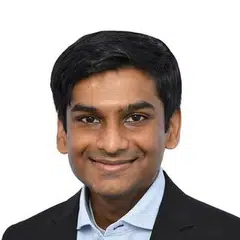
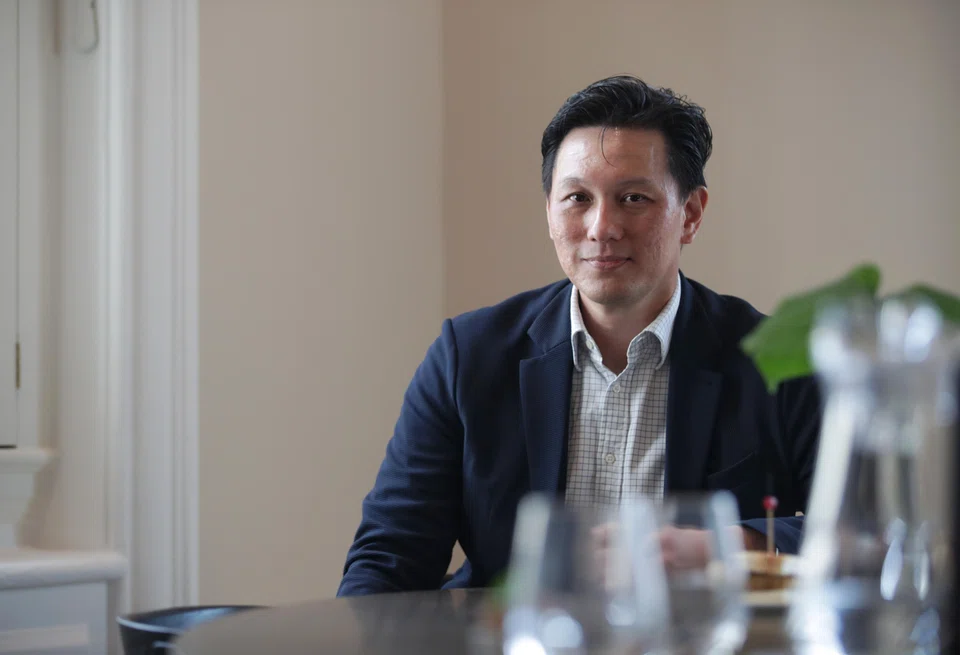
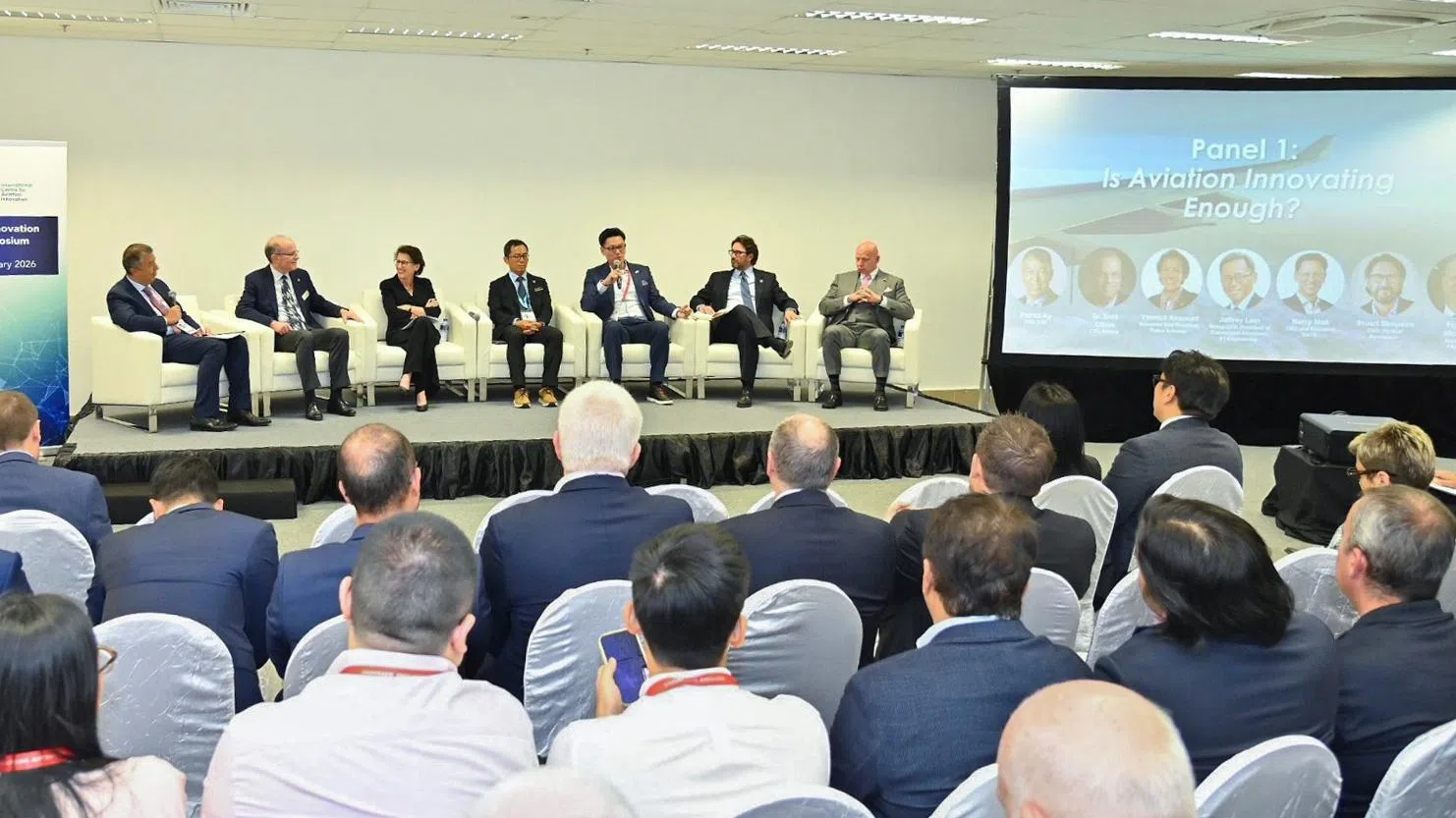
[SINGAPORE] The aviation industry must change more quickly and adopt the relentless “race-by-race” innovation cycle seen in Formula 1 (F1) if it hopes to survive a deepening manpower crisis, said Sats president and CEO Kerry Mok on Wednesday (Feb 4) at the Singapore Airshow 2026.
He was speaking at a panel at the International Centre for Aviation Innovation (ICAI) symposium, where he exhorted industry leaders to fundamentally rethink how they deploy technology on the tarmac.
“I look at F1 technology as the place where we all need to get (to),” Mok said, though he acknowledged it as a costly endeavour. “If you could take the lessons around how F1 utilises technology innovation to improve the performance on a race-by-race basis… I think we have a lot more that we can do.”
He warned that the traditional aviation mindset, where updates can take years, risks becoming an operational liability.
“At the start of the F1 (season), the car performs at a certain level,” he added. “If they don’t continue to innovate to improve the car, by the end of the season, your car will be several seconds behind. They innovate just to keep up.”
F1 has had a track record in inspiring other industries, such as medicine. The Williams F1 team in 2016 helped the neonatal team at the University Hospital of Wales in the UK to improve its resuscitation processes by learning from F1 pit stops.
In 2001, two doctors at London’s Great Ormond Street Hospital also learnt from the speed and communication in F1 pit stops to improve their neonatal intensive care unit that had been struggling with chaotic baby handovers from operating theatres.
Shrinking manual workforce
To emulate the F1 model, Sats has been moving away from static rostering to a dynamic, high-speed system. Mok described a shift where ground staff function less like fixed teams tethered to specific flights and more like “gig workers” directed by artificial intelligence algorithms.
“We used to assign our tasks based on planes coming in and out,” Mok explained. “But these days with AI... we actually assign tasks to the individual agents... They are not tied to an aircraft or flight anymore.”
SEE ALSO

This reduces idle time for ground staff and equipment, which previously just had to wait for flights to come in even if they were an hour or more late.
His call for high-velocity adaptation is driven by an industry-wide existential threat to ground handling – the disappearance of the traditional manual workforce.
Mok noted that as societies become more affluent, the pool of workers willing to perform physically demanding “below-the-wing” tasks, such as loading baggage in tropical heat or rain, is shrinking rapidly.
“No one wants to do that role,” he said, arguing that automation and process innovation are no longer just about efficiency, but also about keeping airports functioning. “We have to innovate out of this issue.”
In January, Changi Airport announced that it deployed its first fleet of fully autonomous tractors for tarmac operations following almost a year of trials. Senior Minister of State for Transport Sun Xueling said this could ease manual labour strain and add all-weather resilience to Changi’s operations.
Innovation is speed
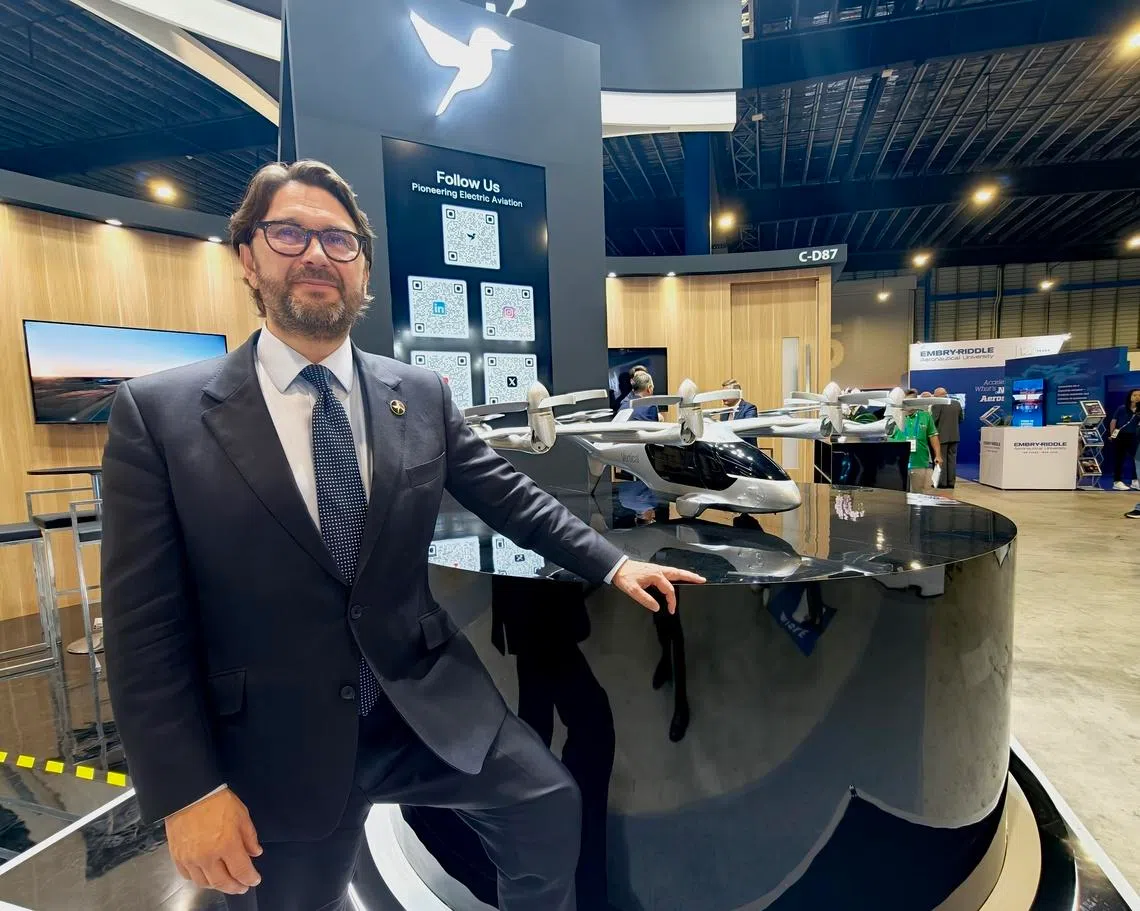
The sentiment that aviation is moving too slowly was echoed by other panellists, particularly from the emerging tech sector. Stuart Simpson, CEO of electric vertical aerospace company Vertical Aerospace, reinforced Mok’s motorsport analogy, revealing that his own company’s “fast-learning” culture is directly inherited from F1.
“Our heritage was F1, we came out of an F1 team,” said Simpson. “Our first nine employees were from the F1 industry.”
He argued that the aviation sector’s fear of failure often stifles progress, contrasting it with the “fast-failing” psychology of elite racing teams that allows them to iterate rapidly.
Earlier on Wednesday, Vertical Aerospace announced that it won a Singapore grant to research air taxis for emergency medical use.
Jeffrey Lam, group chief operating officer for operations excellence and president of commercial aerospace at ST Engineering, was equally blunt about the pace of change in the maintenance, repair and overhaul sector.
“We are innovating much too slowly,” Lam admitted, citing the lag in adopting collaborative robotics and AI for inspections. He noted that in a world demanding greener, more efficient travel, the industry’s survival depends on faster technological insertion.
Moving fast can break things
However, legacy players cautioned that aviation’s unique safety constraints make “moving fast and breaking things” a dangerous philosophy.
Todd Citron, Boeing’s chief technology officer, and Franklin McIntosh, chief operating officer of the US Federal Aviation Administration’s Air Traffic Organization, both highlighted the tension between innovation and safety infrastructure.
“If you can’t certify, you’re just a science experiment,” Simpson conceded, acknowledging that while speed is critical, the “one in a billion” safety standard remains crucial and a point of pride – especially for his company in the electric vertical takeoff and landing space.
Sats’ Mok acknowledged these constraints but noted that Singapore’s unique “ecosystem” offers a way to accelerate change without compromising safety.
He cited the collaborative recovery efforts during the pandemic between Sats, Singapore Airlines , Changi Airport Group and the Civil Aviation Authority of Singapore as proof that different stakeholders can move quickly when aligned.
“We have a privileged position in Singapore,” he said, adding that other places in the world lacked the Republic-styled ecosystem that allows different aerospace and aviation parties to “really talk about issues together”.
Decoding Asia newsletter: your guide to navigating Asia in a new global order. Sign up here to get Decoding Asia newsletter. Delivered to your inbox. Free.
Copyright SPH Media. All rights reserved.