

Oil supertanker rates soar to record on Middle East conflict
The cost for booking a tanker from the US Gulf Coast to China also hit a record
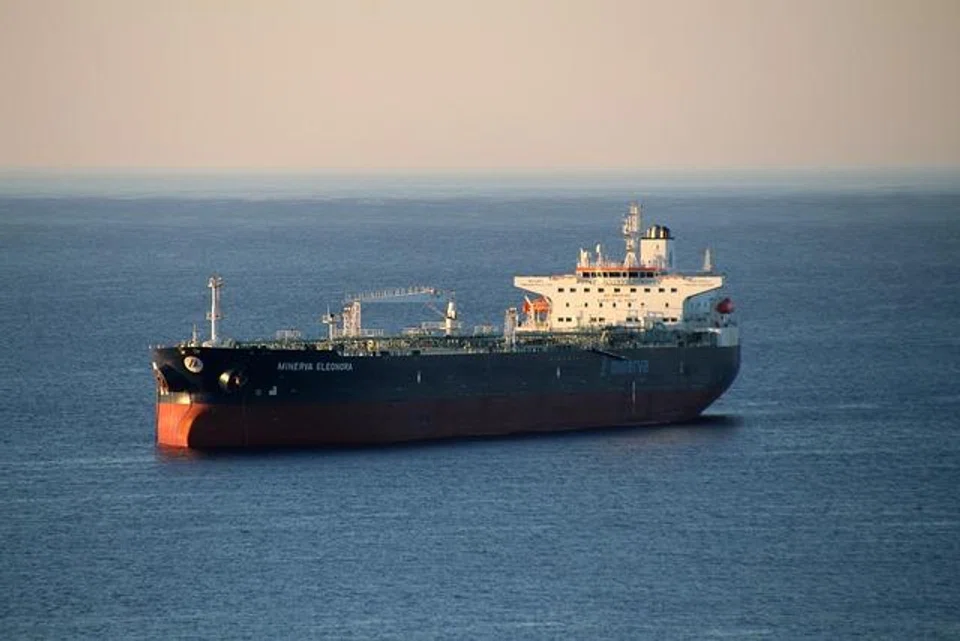
[LONDON] The cost of hauling crude oil from the Middle East to China soared to the highest level on record, as war between the US and Iran disrupts shipping through the Strait of Hormuz.
Earnings on the industry’s benchmark route climbed to US$424,000 a day, according to data from the Baltic Exchange in London. Those fees are for the biggest oil-hauling ships that can carry two-million barrels of crude. The cost for booking a tanker from the US Gulf Coast to China also hit a record of more than US$21 million for the whole voyage.
Alongside a jump in oil prices, runaway freight is one of the most tangible market responses to a conflict that began on Saturday (Feb 28) and culminated with the vital Strait of Hormuz chokepoint all but closing to tanker traffic. Traders are now watching what comes next at the waterway, which handles about a fifth of the world’s oil and similar proportions of liquefied natural gas.
Earlier in the day, South Korean firm Sinokor, a venture that took a dominant position on the global market for oil tankers, was said to be asking for sky-high charter rates to deliver Middle Eastern crude. Its request at the time was the equivalent of about US$20 a barrel to transport crude from the Middle East to China.
The company on Monday indicated to shipbrokers that its going rate to haul Middle East oil to China, the benchmark route for VLCCs, is 700 industry standard Worldscale points, a more than three-fold increase from Friday, according to sources with knowledge of the matter, who asked not to be identified because the information is not public. The Baltic Exchange’s assessment on Monday was about 410 points.
Worldscale is a pricing system allowing shipowners to calculate vessel earnings and oil companies to estimate their costs when negotiating rates.

The Baltic Exchange earlier said that it was consulting panellists who help it to determine benchmark those rates about how to respond to the current situation in Hormuz.
While some smaller tankers have been provisionally booked at high rates, there’s been a hiatus in the hiring of very-large crude carriers that dominate shipments from the Middle East, according to Halvor Ellefsen, a London-based director at Fearnley’s Shipbrokers UK.
“Right now, there are no willing buyers or willing sellers of physical freight at these levels,” Ellefsen said. “So this is really shipbrokers’ best estimates for where the market is at.”. BLOOMBERG
Decoding Asia newsletter: your guide to navigating Asia in a new global order. Sign up here to get Decoding Asia newsletter. Delivered to your inbox. Free.
Share with us your feedback on BT's products and services
TRENDING NOW

Could stablecoins be the future of money?

Vietnam’s northern provinces, not Hanoi or Ho Chi Minh City, are powering near 10% GDP growth

The Assembly Place expands beyond co-living as it targets 10,000 keys by 2030

Once staunchly pro-China, Malaysian Chinese businesses are now distancing themselves from Beijing

