Qantas’ premium shift to Singapore: analysts weigh A380 strategy as US demand cools
Sydney to Singapore continues to justify high-capacity A380 deployment, says OAG’s regional sales director

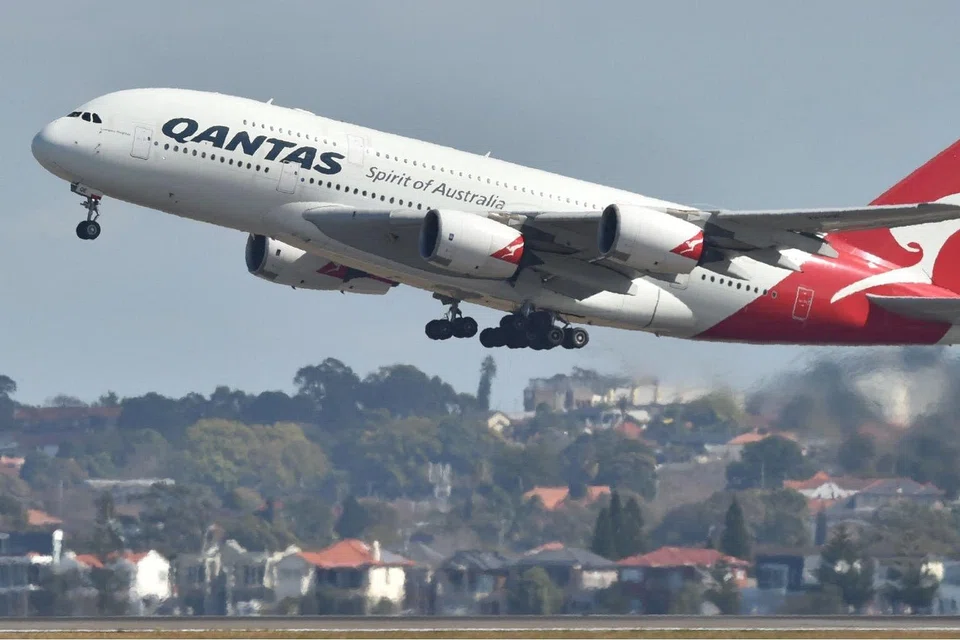
[SINGAPORE] Qantas Airways’ recent moves in Singapore highlight a significant strategic pivot from the mass-market budget sector to high-yield corporate travel.
Less than a year after the exit of its low-cost affiliate Jetstar Asia, the Australian carrier announced in late February that it will substantially increase premium capacity on the Sydney-Singapore route as it prepares to redeploy its largest aircraft to the city-state.
Driven by a softening US market and a weaker Australian dollar, Qantas plans to redirect six weekly Airbus A380 flights from Los Angeles to Singapore, supported by a new base for 650 cabin crew in Singapore.
The move signals a shift in priorities, with the high-demand Asian corporate corridor taking precedence over stagnating US routes.
During the airline’s half-year results briefing in February, Qantas CEO Vanessa Hudson confirmed the Republic’s importance.
“Singapore is our busiest hub outside of Australia,” she said, adding that the new crew base will improve operational resilience and ensure “Qantas international costs remain competitive”.
Hudson also acknowledged that the A380 redeployment was a direct result of softening economy demand on US routes, driven by a weak Australian dollar.
“Our aircraft are mobile assets... we are going to see one of the A380s redeploy from the US and from LA onto Singapore because we’re seeing really good demand there,” she added.
Following the volume
For investors, the swop of a budget subsidiary for a premium bulwark represents a welcome fiscal discipline.
SEE ALSO
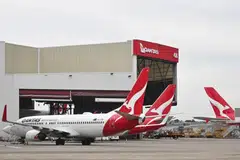

Josh Gilbert, a market analyst at eToro, said that while optically negative, the retreat of Jetstar Asia was financially necessary.
“Jetstar Asia was bleeding, having only been profitable in six of its 21 years of operation,” he said. “The Singapore crew base is the exact opposite. It’s about doubling down on Qantas’ premium international product, where yields and margins are significantly higher.”
Gilbert noted that Singapore’s high-cost environment is fatal for low-margin budget carriers, but manageable for premium airlines.
“What investors are seeing here is disciplined capital allocation at work,” he added.
Data from aviation consultancy OAG supports this pivot to premium volume. The Sydney-Singapore corridor solidified its position as Australia’s No 1 international city pair for 2025, with nearly 1.2 million seats annually. In contrast, the Melbourne-Los Angeles route, from which the A380s will be withdrawn, fell to 41st place.
The premium gamble
“The fleet adjustment shows a clear distinction in Qantas’ network planning,” said Mayur Patel, regional sales director at travel data provider OAG.
“Melbourne to Los Angeles will rely on right-sized twin-engine aircraft, while Sydney to Singapore continues to justify high-capacity A380 deployment.”
By replacing the smaller Airbus A330 with the A380 on its daily QF81 and QF82 services, Qantas is increasing its business-class capacity between Sydney and Singapore by 37 per cent and first-class capacity by 86 per cent.
This expansion places Qantas in direct competition with Singapore Airlines, matching the incumbent’s focus on the higher end, even if it cannot match its 40-flights-per-week frequency.
The Australian carrier said that it is banking on a continued corporate recovery to fill this expanded front cabin.
Addressing investor concerns, Hudson pointed to a “6 per cent revenue growth across both small-to-medium and large corporate business” travel in the most recent half-year as justification for the premium-heavy expansion.
May not be permanent
However, not all analysts are convinced that Singapore is the permanent new home for these superjumbos.
Brendan Sobie of Sobie Aviation cautioned against viewing the capacity boost as a long-term strategic pivot, suggesting it is primarily a reaction to US market headwinds.
“This latest adjustment is not really driven by Singapore, but more by the need to downgauge some Qantas flights to the US due to weakness in that market,” Sobie said.
He warned that the double-daily A380 footprint “should not be viewed as permanent”, implying that if the Australian dollar recovers or US demand rebounds, the aircraft could easily be shifted back across the Pacific, leaving the Singapore route to revert to smaller wide-bodies such as the Airbus A330.
Regardless of the long-term fleet plan, the investment in human capital is significant. Qantas plans to hire 650 Singapore-based cabin crew over the next five years.
Linus Benjamin Bauer, founder of consulting firm BAA & Partners, noted that while Singapore wages are high, the base offers critical “labour risk diversification”.
By establishing an offshore division, Qantas reduces its exposure to Australian industrial relations risks and rigid enterprise bargaining agreements, creating a more flexible workforce to serve its Asian network.
For now, though, Qantas’ efforts in Singapore seem to be betting on the higher-margin world of corporate travel instead of the low-margin volatility of Jetstar.
Still, analysts noted that the success of this realignment will depend on whether the Singapore-Australia business sector is robust enough to absorb the influx of premium seats and whether the A380s remain in Changi Airport long enough to justify the investment.
Decoding Asia newsletter: your guide to navigating Asia in a new global order. Sign up here to get Decoding Asia newsletter. Delivered to your inbox. Free.
Copyright SPH Media. All rights reserved.