

Shipping's wish list for pandemic recovery
 Add BT as a preferred source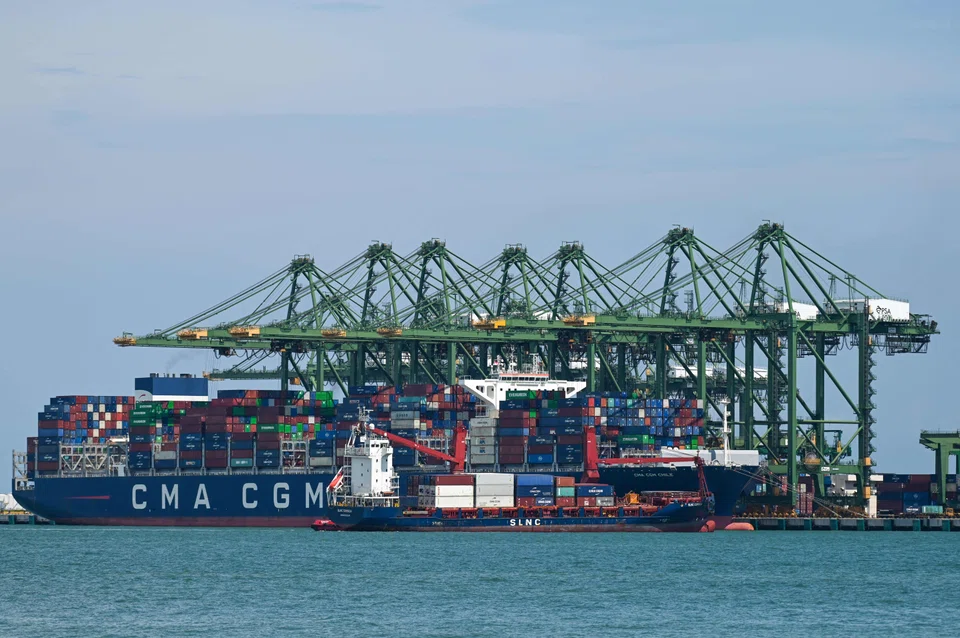
IN CASE anybody has forgotten, the International Chamber of Shipping (ICS) has just reminded us in a statement that 90 per cent of world trade is carried by sea. That means international trade, of course.
The global trade association for shipowners has published a paper entitled Shipping Policy Principles for Pandemic Recovery. It sets out 10 calls to action (CTA) to governments as national economies seek to recover from Covid-19.
According to ICS, the pandemic has highlighted the vital importance of maintaining collaborative, multilateral structures, and upholding principles of international shipping policy, to ensure the continuing provision of efficient maritime supply chains.
Warming to the theme, ICS adds: “Shipping is the lifeblood of the global economy. Throughout the pandemic, in the face of travel restrictions and an international crew change crisis, shipping has kept supply chains moving, transporting the energy, food and raw materials, as well as manufactured goods and products, on which 21st century life depends. This includes the transportation of billions of vaccines and other critical medical supplies.”
“The pandemic is not yet over,” ICS notes. It asserts that “the disruption to trade has clearly demonstrated the vulnerabilities of our globalised economy and its absolute dependence on an efficient maritime transportation system”.
Actually, that lesson was also rammed home by last year's brief but highly disruptive grounding of the container ship Ever Given in the Suez Canal.
ICS says its “manifesto” for pandemic recovery and its CTA, if acted upon by governments, could help ensure that the global shipping industry can play its full part in the pandemic recovery, contributing to the further improvement of global prosperity as the world’s population continues to grow.
A glance over the CTA does not reveal anything really new. ICS is restating its views on a wide range of issues that affect international shipping. Underlying pretty much all of them is a desire for free - or at least as near as possible free - trade and a level playing field.
My first reaction was a rather sceptical: “Good luck with that, you'll need it.” If we look at each of those CTA, we can see major conflicts of interest. It is, for example, not going to be easy to get rid of subsided shipbuilding. In fact, it difficult to even prove such subsidisation takes place. And the European Union is riding roughshod over the International Maritime Organization's authority as global regulator when it comes to decarbonisation.
However, ICS believes it is being listened to at this week's World Trade Organization (WTO) Ministerial Conference (MC12) in Geneva.
ICS notes that the WTO conference takes place against the backdrop of ongoing conflict in Ukraine, which has forced WTO economists to reassess expectations of merchandise trade growth downward to 3 per cent in 2022, from previous forecasts of 4.7 per cent.
Now, it transpires that WTO director-general Ngozi Okonjo-Iweala has proposed a formal dialogue between the WTO and the maritime transport sector.
According to ICS, the dialogue will serve as an opportunity for senior government officials and industry to exchange views on critical issues and challenges confronting the multilateral trading system, including the ongoing conflict in Ukraine, global energy crises and recovery from Covid-19.
ICS secretary-general Guy Platten comments: “We were very encouraged and fully support Dr Okonjo-Iweala’s message to the shipping industry proposing a formal dialogue between the WTO and the maritime transport sector. There have been a number of developments which have further emphasised the need for WTO and industry collaboration this past year. ICS and the WTO, as the facilitators of free trade throughout the world, are united on many issues but none more so than our shared values and principles of open and unimpeded access to international markets.”
He concludes: “We are committed to engaging with the WTO in this comprehensive dialogue, and hope that our ICS Shipping Policy Principles will provide a building block for discussions between the shipping industry and governments.”
This all sounds very promising, but each of those 10 CTA represent a very deeply entrenched problem. They are not going to be resolved easily.
Decoding Asia newsletter: your guide to navigating Asia in a new global order. Sign up here to get Decoding Asia newsletter. Delivered to your inbox. Free.
Share with us your feedback on BT's products and services
TRENDING NOW

Yeoh Pei Xien: YTL’s third-gen scion with a pastor’s heart

Singapore banks’ battle for wealth talent goes beyond private bankers

Car dealer charged in S$1.1 million tax evasion case involving Porsches, Ferraris, Rolls-Royces

Vietnam’s island megaproject races towards Apec deadline, but demand test looms

