

Slash airline emissions to meet Paris targets: report
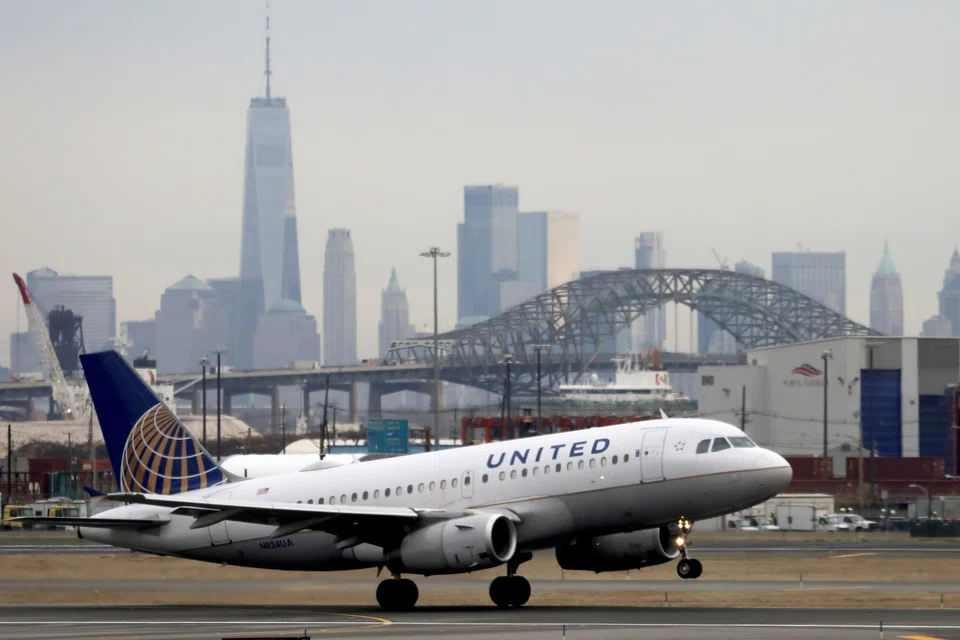
THE world needs “early, aggressive and sustained” government intervention to cut aviation emissions if Paris Agreement temperature goals are to be met, a think tank said on Thursday (Jun 9).
Airlines must start to slash emissions before the end of the decade and by 2025 if possible, said the International Council on Clean Transportation (ICCT) in a new report.
The 2015 Paris climate treaty enjoins nations to cap global warming at “well below” 2 degrees Celsius, and 1.5C if possible.
Earth’s average surface temperature has already risen 1.2C above pre-industrial levels.
To project aviation sector emissions, the ICCT ran 3 models assuming different levels of traffic, fuel efficiency and other factors.
All of them improved on a baseline “business-as-usual” scenario, which would emit nearly 50 billion tonnes of CO2 by mid-century - more than annual emissions from all sources today.
The most optimistic model - which assumes “widespread investments in zero-carbon aircraft and fuels, peaking fossil fuel use in 2025, and zeroing it out by 2050“ - would see a reduction of 22.5 billion tonnes of emissions by 2050.
That would put aviation on course to cut greenhouse gas emissions by “an amount consistent with a 1.75C warming”, said the ICCT. “But it would require aggressive policies to peak emissions by 2030 at the very latest.”
These findings were more positive than anticipated but remain very ambitious, commented lead author Brandon Graver.

“The all-in strategy to deploy clean planes and fuels cuts emissions even deeper than we expected,” he said. “But public policies will be needed to peak emissions as early as 2025 to put aviation on a 1.75C pathway.”
The International Air Transport Association (Iata), which represents 290 airlines accounting for 83 per cent of global air traffic, pledged last October to achieve net-zero carbon emissions by 2050.
The aviation industry is among the fastest-growing sources of greenhouse gases, and one of the most difficult sectors to decarbonise.
Many experts are counting on innovations in hydrogen fuels or so-called sustainable air fuels (SAF) made from non-fossil fuel renewable source to meet industry targets.
Improvements in operational efficiency also hold potential for reducing the sector’s carbon pollution.
Iata has put the cost of such improvements at US$1.55 trillion over 30 years.
Iata projects continued growth in air travel. The industry expects to carry 10 billion passengers by the middle of the century, more than double the 4.5 billion in 2019, the most recent full year unaffected by the Covid pandemic. AFP
Decoding Asia newsletter: your guide to navigating Asia in a new global order. Sign up here to get Decoding Asia newsletter. Delivered to your inbox. Free.
Share with us your feedback on BT's products and services
TRENDING NOW

S$8 billion wiped off OCBC value as shares slide 5.8% in heavy trade

Grab CEO’s wife Chloe Tong on life with Anthony Tan and finding her purpose

Brookfield denies accusation it cut Soilbuild out of Mapletree deal

8 public officers referred to police over property buys near unannounced MRT stations: Chan Chun Sing

