
Some progress on decarbonisation at IMO, but new rule makes global warming worse
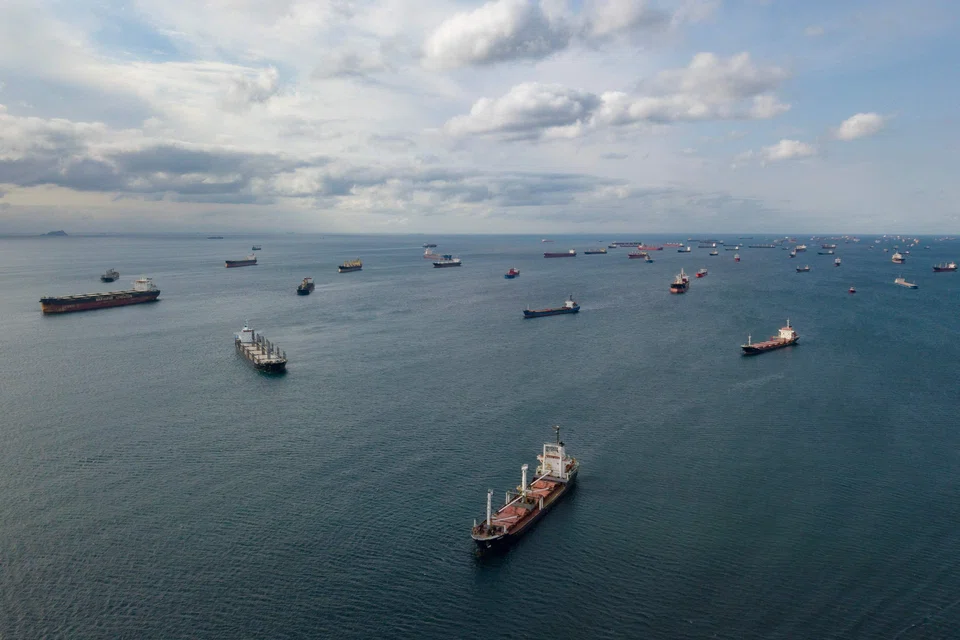
TWO weeks ago, the 79th session of the Marine Environment Protection Committee (MEPC 79) of the International Maritime Organization (IMO) met in London. The big issue that dominated most of the week-long meeting was decarbonisaton – how the shipping industry will play its part in eliminating greenhouse gas (GHG) emissions.
If one is being charitable, it could be said IMO made some progress on decarbonisation, and I will come back to that later.
There were various other issue that were tackled and where real progress was made. In particular, the MEPC session adopted amendments to designate all of the Mediterranean Sea, as a whole, as an Emission Control Area (ECA) for sulphur oxides and particulate matter, under The International Convention for the Prevention of Pollution from Ships (Marpol) Annex VI. This will be the sixth such ECA worldwide where the limit for sulphur in fuel oil used on board ships is 0.1 per cent mass by mass (m/m), while outside these areas the limit is 0.5 per cent m/m. The amendment is expected to enter into force on May 1, 2024, with the new limit taking effect from May 1, 2025.
An IMO statement said: “This move will ensure cleaner air for populations in the Mediterranean Sea area.” And that is quite correct, it will. However, ironically and as noted in a recent Strait Talk, new research from the UK’s Oxford University has confirmed that particulate matter in emissions from shipping not only reflects sunlight, reducing global warming, but also that the effect is significantly greater than previously thought.
So, while the world is focused on reducing global warming, IMO has been busy making the planet warmer. OK, that sounds very harsh. IMO has been working very hard to reduce the harm particulate matter in emissions can do to human health. It is difficult to criticise IMO’s motives (although as the old saying goes “the road to hell is paved with good intentions”). The harsh reality is that decarbonisation is complex. IMO has implicitly taken the decision that it is more important, for now at least, to safeguard human health than combat global warming.
However, to put this in context, the Oxford study was only carried out on shipping because it was possible to collect and analsye the data in a way that could not be done for the much larger land-based particulate emission sources. As long as fossil fuels continue to be used by power stations and industrial plants, policymakers worldwide will have to decide whether or not to cut back particulate emissions further, in the knowledge that doing so exacerbates global warming. That is not an easy or comfortable balancing act.
Navigate Asia in
a new global order
Get the insights delivered to your inbox.
Now, let us go back the the main item on MEPC’s agenda. What progress was made on decarbonisation? Here is the official IMO answer: “The committee reaffirmed its commitment to: adopt a revised IMO GHG Strategy, in all its elements including with a strengthened level of ambition by MEPC 80; continue its work on identifying the candidate GHG reduction measures to be developed in priority as part of a basket of measures consisting of both technical and economic elements by MEPC 80 in accordance with the Work plan; and undertake a comprehensive impact assessment of the basket of candidate measures ahead of their adoption in accordance with the Work plan and the revised Procedure for assessing impacts on States. MEPC 80 (July 3 to 7, 2023) is expected to adopt the revised IMO strategy for reduction of GHG emissions from ships.”
If you want to find out what that means in plain language, visit the website of the International Bunker Industry Association (IBIA) where the association’s director, and IMO representative, Unni Einemo, shares her observations from the latest MEPC session. Incidentally, her coverage of several important technical issues, ranging from flashpoint regulations to black carbon in the Arctic, makes her report essential reading for anybody in the bunker industry.
But on decarbonisation, she noted: “There are two main discussion points on the subject: the level of ambition for reducing GHG from shipping, and the ‘basket of measures’ we will need to support that ambition...
SEE ALSO
“At present, a large share of IMO member states want GHG emissions from shipping to be phased out by 2050, but there is significant opposition from member states that are concerned this is not realistic and could have disproportionately negative impacts on developing countries. There are also diverging views on adopting interim GHG reduction targets in the period between 2030 and 2050.”
Einemo noted that the issue needs to be resolved in time for MEPC 80 in July next year, when the IMO is due to adopt a revised GHG strategy. Progress therefore needs to be made at two working groups to be held in March and in the week prior to MEPC 80.
She said: “Regarding the ‘basket of measures’, we see convergence of views towards combining market-based measures (MBMs) with technical elements in the form of a GHG fuel standard (GFS). The most favoured types of MBM seem to be a bunker levy scheme putting a price on carbon emissions, or CO2 equivalents (CO2e) to cover other GHGs such as methane and NOx, potentially combined with a rebate system to reward early movers.”
According to Einemo, there is majority support for the GFS to take well-to-wake (full lifecycle) emissions into account. She said: “It means it looks likely we will get a well-to-wake GHG intensity fuel standard, phasing in requirements for ships to use a growing portion of fuels that emit less CO2e than fossil fuels.”
She added: “IBIA supports this direction of travel, but we are concerned about the complexity of documenting well-to-wake emissions.”
Given that carbon capture projects are now proliferating and the concept is rapidly moving to the practical implementation stage, it is disapppointing to learn MEPC 79 only had a brief discussion of proposals related to onboard carbon capture technology.
Einemo noted: “There are two core issues: the technical perspective; and how captured CO2 can be accounted for under MARPOL Annex VI as a GHG reduction measure. On the latter point, a question is how to make sure the captured CO2 is correctly handled and doesn’t just end up being released back into the atmosphere. The subject was deferred to MEPC 80 for further discussion, but given the need for MEPC 80 to adopt a revised strategy and make progress on the ‘basket of measures’, it seems unlikely that meaningful progress will be made on this during 2023.”
While there are still many uncertainties surrounding the economic viability of carbon capture, it has the potential to be a game changer. Ignoring it now could mean the revised GHG plan will be quickly outdated, even if it can be agreed at the July meeting in London.
Decoding Asia newsletter: your guide to navigating Asia in a new global order. Sign up here to get Decoding Asia newsletter. Delivered to your inbox. Free.
Copyright SPH Media. All rights reserved.

