

South-east Asia’s budget airlines eye recovery but fuel scars linger
Efforts to recoup soaring fuel costs through higher fares fall short, the latest quarterly results of regional carriers show
[HONG KONG] South-east Asia’s budget carriers are hoping the worst of the Middle East-driven fuel shock is behind them but face a difficult second half as margins remain under pressure and strained household budgets threaten demand, airline executives and analysts said.
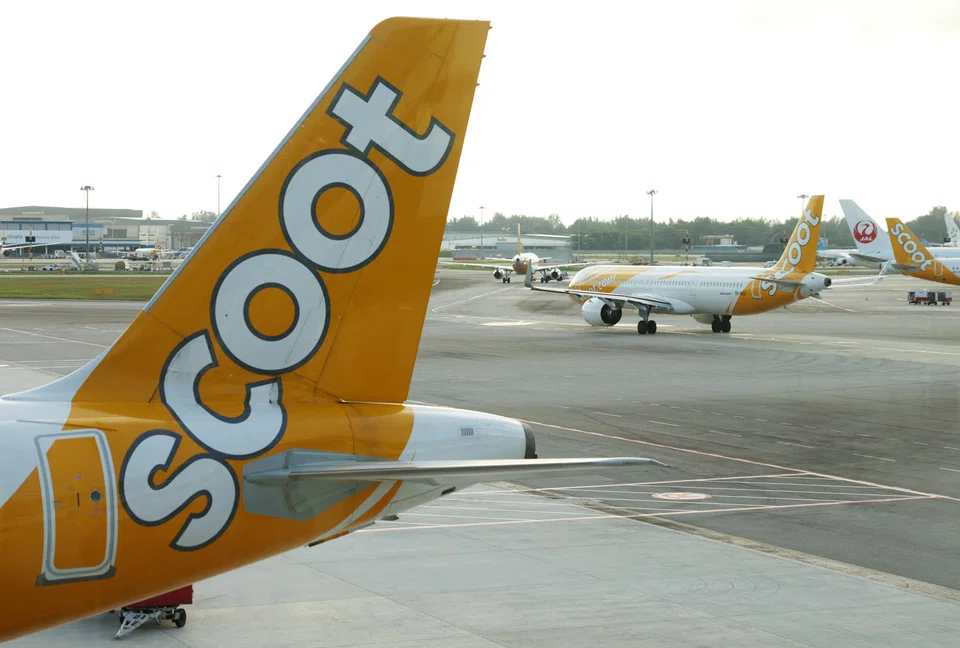
The latest quarterly results from Malaysia’s AirAsia, Singapore Airlines’ budget arm Scoot and the Philippines’ Cebu Pacific showed that efforts to recoup soaring fuel costs through higher fares fell short.
AirAsia and Cebu Pacific reported net losses, while Scoot’s operating loss nearly doubled.
The results exposed a squeeze at the heart of the low-cost model: fuel makes up a larger share of expenses than at full-service airlines, but price-sensitive passengers leave carriers less scope to lift fares without weakening demand.
Currency declines added to the pressure as the Malaysian ringgit, Thai baht, Indonesian rupiah and Philippine peso weakened against the US dollar, increasing fuel and aircraft leasing costs typically priced in the US currency.
“The second quarter was the most challenging operating environment Cebu Pacific has faced post-pandemic,” chief executive officer Mike Szucs said on an earnings call in August.
The airline’s fuel expense more than doubled from a year earlier, another executive said, with the impact magnified by an 8 per cent weakening of the peso.
Cebu Pacific has hedged about 30 per cent of its third-quarter fuel needs at below US$120 per barrel to secure near-term protection.
Full-service airlines have been better protected by strong post-pandemic demand from premium passengers, said Nathan Gee, head of Asia-Pacific transportation research at Bank of America Global Research.


Budget carriers have benefited less because of their more basic products and smaller loyalty programmes, he noted.
Betting on a Q4 recovery
AirAsia is bracing for a weak third quarter, which it says is typically the softest for regional travel.
The airline plans to cut seat capacity by 20 per cent to 25 per cent year on year in the quarter, return 25 older aircraft to lessors during 2026 and suspend its Sydney to Kuala Lumpur route from October as part of a broader network recalibration.
CEO Bo Lingam said in a statement that the airline was taking a “deliberate, tactical approach” to protect its bottom line after average jet fuel prices reached US$183 a barrel in the second quarter.
AirAsia also recorded a net foreign exchange loss of about US$82 million.
Lingam pointed out that the airline expects to restore capacity to pre-war levels in the fourth quarter, with forward bookings tracking in line with 2025.
Scoot has continued to add capacity as demand remains strong. But its passenger unit costs rose 21.7 per cent in the three months to June, pushing its operating loss to S$32 million from S$17 million a year earlier despite higher fares and coverage under parent SIA’s fuel-hedging programme.
The cost increase lifted Scoot’s break-even load factor to 100 per cent, meaning that it would have needed to fill every seat to cover its passenger operating costs, against an actual load factor of 90.6 per cent.
Scoot chief commercial officer Calvin Chan told Reuters that the carrier’s fare adjustments had not fully offset higher fuel prices, while the Middle East conflict continued to cloud the outlook.
A decline in fuel prices would ease immediate cost pressures but could encourage airlines to restore capacity and compete more aggressively on fares, Gee said.
Intra-Asian routes were particularly exposed because supplies of narrowbody aircraft were recovering faster than those of widebody jets, he noted. That additional capacity could run up against weaker demand.
Independent aviation analyst Brendan Sobie said that strained household budgets could curb travel by South-east Asia’s middle class during the rest of 2025 and the crucial peak season.
“The short-term outlook is rather bleak,” he added. “While there is hope of improvement in the fourth quarter, it is too early to really gauge.” REUTERS
Decoding Asia newsletter: your guide to navigating Asia in a new global order. Sign up here to get Decoding Asia newsletter. Delivered to your inbox. Free.
Share with us your feedback on BT's products and services
TRENDING NOW

Government to bring forward raising of retirement age, give employers more financial support to create flexi-load jobs

If Europe goes to war, the fallout will be felt in East Asia

Indonesia stocks suffer worst plunge in nearly 30 years as MSCI proposes standalone status

Vietnam’s northern provinces, not Hanoi or Ho Chi Minh City, are powering near 10% GDP growth

