SQ321 final report: Radar issue may have left pilots blind to severe turbulence in 2024 incident
Despite intermittent issues, the report notes SIA followed published maintenance procedures for the plane’s weather radar
 Add BT as a preferred source
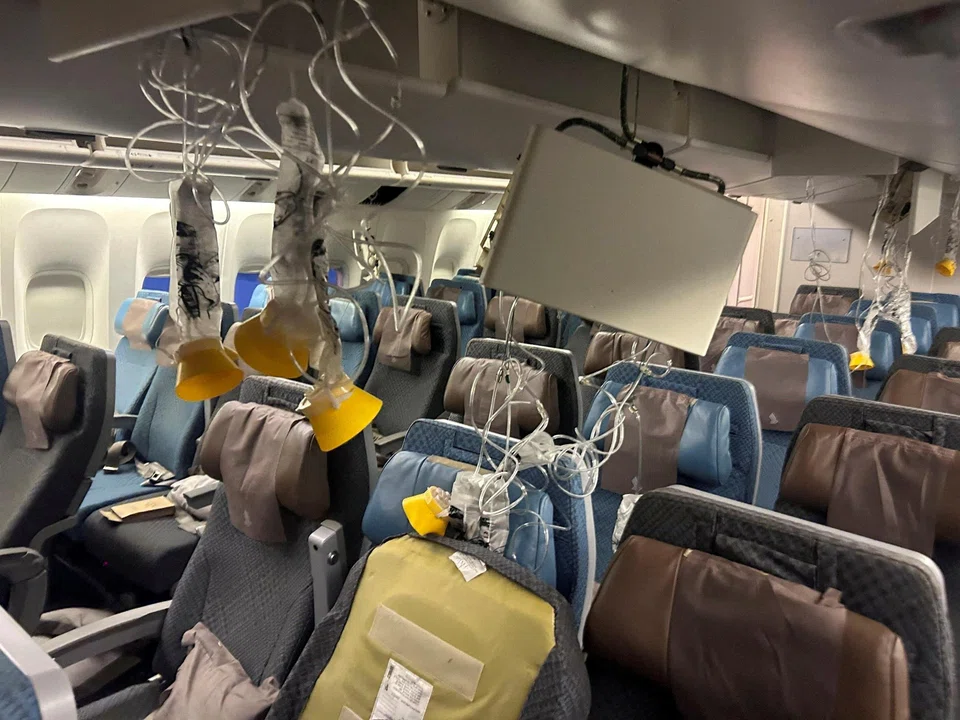
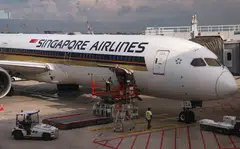
[SINGAPORE] The SQ321 Singapore Airlines (SIA) flight in May 2024 may have flown into severe turbulence after the jet’s weather radar possibly failed to display a rapidly forming storm cloud, said Singapore’s transport-safety investigator.
Released on Tuesday (May 19), the final report of the Transport Safety Investigation Bureau (TSIB) concluded that it “cannot be ruled out” that the Boeing 777’s radar failed to paint a storm cell or issue fault warnings.
Such an issue could have left pilots completely unaware of severe vertical drafts from a quickly forming cumulonimbus cloud, a type of storm cloud.
While the TSIB declined to name the weather radar system’s manufacturer, previous media reports indicated that the aircraft may have used a Honeywell radar.
Honeywell did not immediately respond to requests for comment regarding the findings.
A spokesperson for the airline said: “SIA has fully cooperated with the relevant authorities throughout the investigation. Since the incident, we proactively reviewed our in-flight turbulence management processes and enhanced them.”
Navigate Asia in
a new global order
Get the insights delivered to your inbox.
The incident, which left one passenger dead and 56 seriously injured, highlights a systemic vulnerability when intermittent radar failures go undetected.
Because aviation weather radars struggle to depict certain moisture-lacking vertical clouds, a blank display does not immediately signal a malfunction. This can create a false sense of safety, an active US airline pilot told The Business Times.
Surprised despite preparation
The pilot in command of Flight SQ321 had his radar sensitivity – or “gain” – turned to its maximum setting. Sharing the cockpit with him was another captain, the augmenting pilot on the flight, who had his radar display set to “auto”.
SEE ALSO
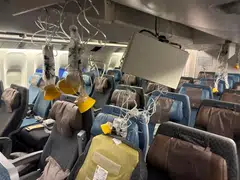

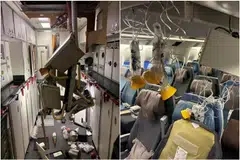
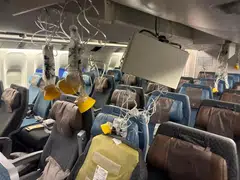
Following the turbulence encounter, the cockpit voice recorder captured the pilot in command saying: “I was on MAX... I don’t see anything here.”
Four other nearby aircraft, using different radar models at varying altitudes, successfully detected weather ahead and sidestepped it. While satellite data and these flights indicated widespread cloud coverage, the SQ321 crew maintained that their immediate path was clear.
“The investigation team is unable to understand why the flight crew of the occurrence flight did not see the widespread clouds,” the report stated.
Flight data showed the encountered cloud grew vertically at 1,200 feet a minute, reaching cruising altitude faster than the equipment could paint the threat.
The resulting turbulence was severe. Despite being pitched 5 degrees nose-down, the Boeing 777 was forced upwards at more than 2,000 feet a minute. SIA and Boeing independently calculated that the jet hit a massive updraft of roughly 9,000 feet a minute.
This external force triggered a catastrophic sequence inside the cabin. In just over half a second, passengers went from experiencing a 1.35 G force – 1.35 times the normal force of gravity – to a negative 1.5 G.
This unseated passengers who did not have their seatbelts buckled and flung them, crew members and cabin objects into the ceiling as the aircraft dropped about 180 feet (54 m).
An active widebody pilot, speaking on the condition of anonymity, told BT that he has not encountered a localised updraft of that speed in the year he has been flying. On most of his flights, there had been enough time for pilots to warn cabin crew and passengers to be seated, he added.
Weather radar functionality disputed
As indicated by the TSIB report, maintenance records showed that 0.36 per cent of SIA’s Boeing 777 flights between May 2023 and July 2025 logged radar issues. This included 20 cases of blank screens amid inclement weather. SQ321’s specific aircraft logged a similar “no-painting” fault just six days before the incident.
Still, the final report stated that the airline had fully complied with all required troubleshooting procedures and maintenance protocols spelt out in the aircraft maintenance manual to address this and two other weather radar logs.
Post-incident testing yielded differing conclusions. The equipment manufacturer found “no evidence” that the hardware failed to detect weather during the flight.
TSIB, maintaining reservations about the manufacturer’s conclusions, also noted unusual behaviour during testing. This included erratic antenna scanning at extremely cold temperatures and unexplained display anomalies.
Noting the limitations of recreating high-altitude freezing conditions in a ground-based aircraft maintenance manual test, TSIB stated that such standard ground tests were insufficient to rule out an intermittent radar failure.
The weather radar manufacturer, which also conducted in-flight tests, concluded that there was no evidence that the weather radar on the SQ321 aircraft “did not accurately detect and display the weather the flight encountered”, said the report.
Honeywell’s RDR-4000 radar line, also likely used on the SQ321 aircraft in question, has faced recent European regulatory scrutiny over identical “under-painting” vulnerabilities.
A 2025 report from Germany’s aircraft investigators said Honeywell and Airbus identified severe software and hardware anomalies within the system that cause an “undetected loss of weather display” completely hidden from on-board automated fault alerts.
System glitches were found to misclassify and erase genuine weather returns from cockpit displays. This forced Airbus to formally alter flight manuals to warn crews of late radar detections beyond 80 nautical miles.
Safety actions recommended
SIA has since overhauled pilot weather radar training and integrated predictive applications such as SkyPath.
TSIB has also urged Boeing to upgrade maintenance manuals, noting that standard ground tests fail to replicate cruising altitude conditions. It also recommended that radar manufacturers develop image-recording for weather displays to help diagnose “under-painting” issues.
“We are reviewing the TSIB’s recommendations and remain in regular contact with our customer,” Boeing told BT.
Boeing and Honeywell have 90 days to respond. Regulators, including the Civil Aviation Authority of Singapore and the US Federal Aviation Administration, will also review the findings to determine whether mandatory airworthiness directives are required.
Compensation and liability
The findings will likely feature in ongoing passenger compensation claims. Under the Montreal Convention, airlines are strictly liable for injuries up to US$170,000, though courts can award higher damages if claimants prove the carrier failed to take reasonable precautions.
SIA initially offered US$10,000 to passengers with minor injuries and US$25,000 advance payments for serious injuries. However, a group of passengers sued SIA in the UK High Court on May 6, pursuing elevated damages for severe spinal injuries.
TSIB’s conclusion of a potential silent hardware issue could now shift liability dynamics in these cases from the airline to equipment manufacturers.
The 2024 incident follows previous regional encounters. In October 2011, an older SIA Boeing 777 experienced severe turbulence over Vietnam, in which 21 passengers were injured by drafts just outside the radar’s moisture-detection limits.
These limitations are compounded by changing weather patterns. Following a 2022 incident, TSIB noted that a warming atmosphere is contributing to rapidly developing storms that challenge traditional forecast models.
Combined with intermittent radar faults, this narrows the window for crews to take evasive action, the US pilot said.
Decoding Asia newsletter: your guide to navigating Asia in a new global order. Sign up here to get Decoding Asia newsletter. Delivered to your inbox. Free.
Copyright SPH Media. All rights reserved.