‘Trust the founder’? Grab’s super-voting share proposal raises governance questions for investors
Shareholders would have to be content as passengers in a vehicle ‘with a permanent driver’, observer says

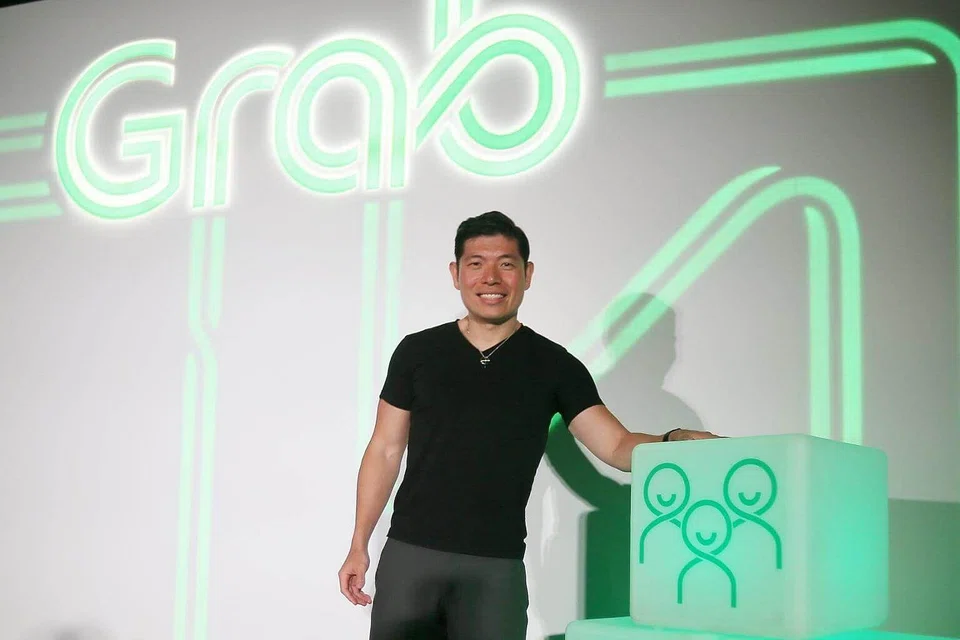
[SINGAPORE] Grab’s proposal to boost the voting power of founder Anthony Tan raises questions for shareholders on the company’s corporate governance, and how far they are willing to embrace a “trust-the-founder” mindset, observers told The Business Times.
The ride-hailing and delivery player will seek shareholder approval at an extraordinary general meeting (EGM) on Tuesday (Mar 24) to double the votes attached to its “super-voting” Class-B shares.
This could lift Tan’s voting power to as much as 74.9 per cent – up from 59.1 per cent as at Jan 31 and 60.4 per cent five years ago.
Grab expects that if the resolution is passed, other parties with the super-voting shares – such as the company’s former president Ming Maa – will convert their holdings into ordinary shares. This would still result in Tan having 69.4 per cent of the total voting power.
That level of voting power would effectively mean that he can pass resolutions that require a two-thirds majority – suggesting a further entrenchment of founder control.
Investors who support the move will have to accept the governance risks, said Mak Yuen Teen, an accounting professor at the National University of Singapore (NUS) Business School.
“It’s interesting that (Grab is) doing it at this time, because (Tan) already has close to 60 per cent of the voting power,” he said.
The EGM proposal means that investors have to adopt a “trust-the-founder” mindset, said Professor Lawrence Loh, director of the Centre for Governance and Sustainability at the NUS Business School.
“The proposal... is not just a financial tweak; it is a move to entrench founder control where Tan is formalised as the enduring person to have assured oversight of the company’s future,” he said.

Minority shareholders would be “buying into the vision of the founder” while having “no say in the most critical matters of the company”, he noted.
In effect, “they should be content to be permanent passengers in a vehicle with a permanent driver”, added Prof Loh.
Not the only way to meet regulations
Grab’s board has recommended that shareholders vote in favour of the resolution, citing that “it is in the best interests of the company to solidify its capital structure to preserve (its) focus on long-term growth”.
It also highlighted the need to “maintain a majority Singaporean control” over GXS Bank – Grab’s digital bank, a joint venture with Singtel – to meet the domestic regulatory requirement.
That said, the proposed move is not the only way to meet such requirements.
The Monetary Authority of Singapore (MAS) requires that digital full banks be anchored and headquartered in Singapore, and controlled by Singaporeans, said a spokesperson in response to BT’s queries.
However, the spokesperson added that “there can be different ways to meet this requirement”.
In a column for BT on Monday, Chew Sutat, a former senior executive at the Singapore Exchange, questioned why Tan’s supermajority would be needed for the licence when Temasek-backed Singtel owns 40 per cent of GXS.
Grab itself has acknowledged this. In an additional statement to its shareholder circular, the company said that the MAS requirement “can be satisfied with a range of ownership and governance arrangements”.
Grab chose to meet the regulatory requirements via Tan “maintaining his majority voting control” of the group, it added.
BT has asked Grab whether it considered other options to meet the regulatory requirement, as well as how it is going to address its shareholders’ concerns.
Chew also pointed to another rationale cited in the circular – to provide “a buffer against potential dilution from future corporate events, such as mergers and acquisitions or financings”.
“Are there changes afoot at the joint-venture level, or impending corporate actions coming at Grab itself? If so, investors cannot complain that the breadcrumbs have not been laid,” he said.
Scrutiny of super-voting shares
Grab’s move has also reignited debate over dual-class share structures.
Dual-class structures are common among tech companies, where founders “retain stronger voting control to maintain strategic continuity”, said Li Jianggan, chief executive of Momentum Works. “Grab is still expanding its ecosystem across South-east Asia, so the move can be seen as a way to preserve leadership stability while the company executes its long-term strategy,” he said. But such arrangements have also faced criticism. Under Grab’s dual-class share structure, its Class A shares carry one vote per share; the Class B ones carry 45 votes a share – which would double to 90 votes a share if the resolution passes.
Tan owned just 3.7 per cent of the shares, but had 63.2 per cent of voting power as at end-2024, based on the company’s annual report.
“His economic interest is quite low. So the alignment of interest, in a way, is quite low, but he has so much power,” Prof Mak noted.
He also highlighted that there are tech entrepreneurs who have realised their vision without a dual-class share structure. The founders of Amazon and Microsoft are examples.
“In the end, it is (about) how founders are able to convince investors about their long-term vision and the business model... You don’t need dual-class shares to do that,” said Prof Mak.
Decoding Asia newsletter: your guide to navigating Asia in a new global order. Sign up here to get Decoding Asia newsletter. Delivered to your inbox. Free.
Copyright SPH Media. All rights reserved.