UltraGreen.ai faces new competition in US market, possible pricing pressure
It previously had no competition for its ICG dye after Akorn Pharma filed for bankruptcy in February 2023

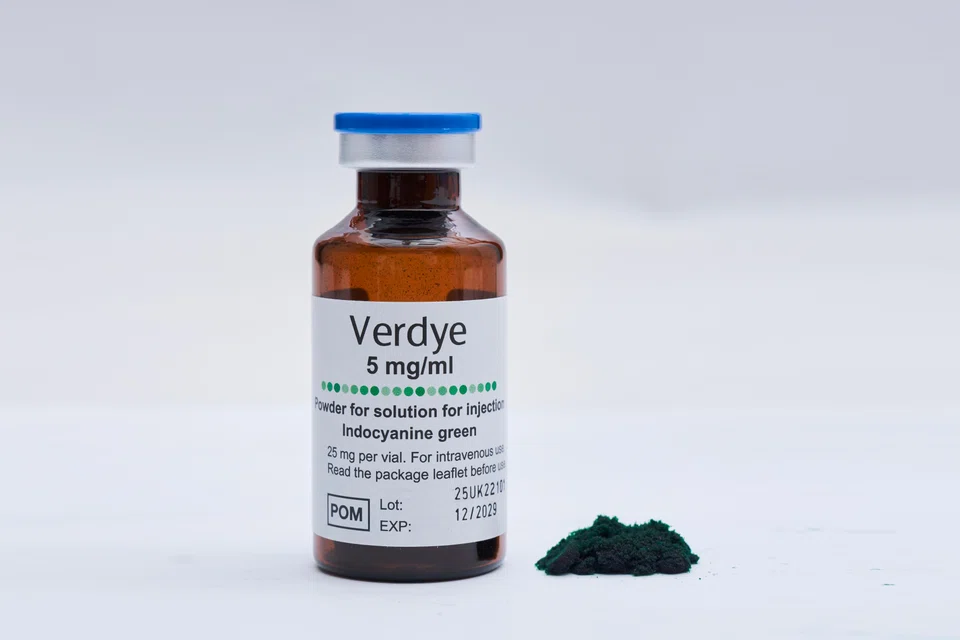
[SINGAPORE] UltraGreen.ai will soon face competition in the US market, its largest revenue contributor, as pharmaceutical company Zydus Lifesciences secures regulatory approval for its indocyanine green (ICG) dye.
In its recent first-half 2026 results, Americas made up 75 per cent or US$65.4 million of its total US$87.2 million revenue. This makes any new competition in the US market significant for UltraGreen.ai.
The company has about 83 per cent of the ICG market share in the US, said Jamal Aliyev, an independent analyst, in a report, and has benefited from substantial pricing power in the US.
UltraGreen.ai’s dominant position in the US was mainly due to the only other approved ICG dye producer in the US, Akorn Pharma, filing for bankruptcy in February 2023, he noted.
This allowed UltraGreen.ai to increase the price of its ICG dye by 60 per cent in 2023, 30 per cent in 2024 and 22 per cent in 2025, noted Aliyev. The US average selling price is now about US$158 per vial.
Zydus said on Aug 4 that it had secured a 180-day Competitive Generic Therapy (CGT) exclusivity approval from the US Food and Drug Administration (FDA), opening the window for it to launch the product in the US.
The pharma company already has established distribution infrastructure in the US, making it a key competitive threat to UltraGreen.ai, said Aliyev.
Aside from Zydus, Provepharm, a medical dye specialist, also has its own ICG dye product going through the US FDA approval process.
Analysts noted that there will be some pricing pressure, bringing down the current average selling price of UltraGreen.ai’s ICG dye as well as some market share headwinds in the US.
Zydus’ 180-day CGT exclusivity provides some breathing room for UltraGreen.ai, noted FSM Global analyst Adeline Gao, as it is intended to introduce generic competition to drugs with limited competition. “Once the approved CGT applicant commercially launches, the 180-day exclusivity period limits approval of additional (generics) for the same drug during that period,” she said.
This would result in UltraGreen.ai facing competition from one generic ICG dye rather than multiple generic suppliers at once. This, however, does not stop Zydus from competing directly with UltraGreen.ai on pricing, said Gao.
In response to queries, UltraGreen.ai replied that it remains focused on driving adoption of fluorescence-guided surgery and expanding market penetration. “The company will continue to compete on the strength of its established market position, product quality, clinical support and global commercial reach,” said a spokesperson.
Meaningful buffer
UltraGreen.ai also has a buffer in its high gross margins, which has grown from 85 per cent in FY2025 to 87 per cent in H1 2026. This was driven by the price increase in the US in the second half of 2025.
“This gives the company meaningful room to compete on price before lower average selling prices translate into a substantial deterioration in gross margin,” said Gao.
A recent study on FDA CGT approvals found that entry of generics was associated with a median 18 per cent reduction in drug prices, while maintaining overall market demand, Gao noted. Higher unit volumes were observed after a CGT entry as well.
This provides a reference point of a 10 to 20 per cent potential price erosion, but she noted that it might not necessarily apply to UltraGreen.ai due to ICG dye being a specialised surgical product, with different competitive dynamics.
Using the 87 per cent gross margin as a proxy for the underlying cost structure, a 10 per cent reduction in average selling price would reduce gross profit per vial by about 12 per cent, while a 20 per cent reduction would lower it by around 23 per cent, said Gao.
“This illustrates that the high starting margin provides a meaningful buffer, but that the impact on gross profit dollars becomes increasingly significant as prices decline,” she added.
A sustained price drop of 20 per cent or more will be material to earnings, if accompanied by market share losses. A more severe combination of pricing pressure and volume erosion would pose a significantly greater risk to the bottom line, explained Gao.
UltraGreen.ai also has a higher cost base as it produces the dye out of Europe while Zydus gets it from Gujarat, India, said Aliyev.
There are some positive factors for UltraGreen.ai even as it deals with new competitors.
Incumbent advantage
UltraGreen.ai has some advantages as the incumbent in the US market, noted analysts. For instance, switching suppliers in hospital settings is not necessarily automatic, noted Gao.
New suppliers of ICG dye will need to be assessed and qualified by hospitals, as well as establish supply arrangements and make procurement decisions.
Surgeons, too, might value familiarity, product reliability as well as continuity of supply, she added.
“UltraGreen.ai’s established surgeon relationships, supply track record, imaging-system ecosystem and group purchasing organisation relationships should therefore provide some protection against an immediate loss of market share,” said Gao.
The company’s product ecosystem is also a competitive advantage, noted DBS Group Research analyst Amanda Tan, who believes that additional ICG approvals will not necessarily translate into rapid substitution.
UltraGreen.ai is better positioned to defend its current market share having already been established and approved as a supplier to hospitals.
As for its immediate competitor, Zydus, “its generic positioning is likely to introduce price competition”, but “the relatively small size of ICG within Zydus’ broader portfolio may limit the commercial resources it commits to aggressively taking share”, she added.
The underlying ICG market is also still growing, which means that UltraGreen.ai is not competing for a shrinking pool of demand, said Gao. Even if some market share is lost, the growth in overall ICG usage could partially offset the impact on volumes.
UltraGreen.ai’s quantification platform could differentiate it from other dye producers, reducing the subjectivity of interpreting fluorescence, and addressing a limitation of conventional ICG imaging, said Tan.
By providing this objectivity, the company could embed itself deeper into the surgical workflow and extend its proposition beyond ICG dye, she added.
This is something that UltraGreen.ai noted as well, “quantification capabilities are expected to become increasingly important as the market moves towards standardisation and objective perfusion assessment”.
The company’s competitive differentiation extends beyond supplying ICG and includes clinical education, surgeon relationships, regulatory access and commercial infrastructure, it added.
“UltraGreen.ai is positioning itself as a broader fluorescence-guided surgery platform rather than a standalone dye supplier,” said a spokesperson.
Expansion hedge
UltraGreen.ai is also trying to diversify its revenue outside of the US, with the rest of the world making up about 24 per cent of revenue in H1 2026. This represented “strong growth outside the US”, said a spokesperson.
Rest of world revenue in H1 stood at US$21.1 million, an increase from US$15.4 million in H1 2025 and US$15.6 million in H2 2025. There are growth opportunities through the expansion of regulatory approvals in new countries, particularly in Europe, Asia and the Middle East.
“While the US remains the largest market, international expansion should increasingly offset competitive pressures and support long-term growth,” said an UltraGreen.ai spokesperson.
Analysts noted that international expansion will provide another avenue for growth, and reduces reliance on the US. However, it is unlikely to offset a material US price decline in the near term, noted Gao.
International growth currently outpaces the US’ 4 per cent growth in H1 2026, as Europe, Middle East and Africa saw ICG volumes growing 24 per cent year on year, and Asia-Pacific up 45 per cent in the same time period.
“This suggests international markets can become an increasingly important source of incremental volume as UltraGreen.ai builds awareness and ICG adoption outside its mature US franchise,” said Gao.
However, the starting base is a key limitation, with the US being the largest market for UltraGreen.ai, while many international markets are still in the regulatory or early commercialisation stage.
Apac’s high percentage growth, for instance, is coming from a relatively small base and cannot immediately replace a large reduction in US revenue or earnings, said Gao.
“Over the medium term, successful expansion across EMEA and Apac should nevertheless reduce UltraGreen.ai’s reliance on the US and make the group’s earnings trajectory less sensitive to changes in US pricing,” she added.
UltraGreen.ai shares ended Wednesday (Aug 19) four cents or 3.4 per cent lower at US$1.15. Year to date, the stock has lost 32 per cent of its value.