

Singapore Inc is ‘cautiously optimistic’ but investors would rather have a number
Investors want forward guidance and the regulator is asking for it, but most listed companies are still not giving it

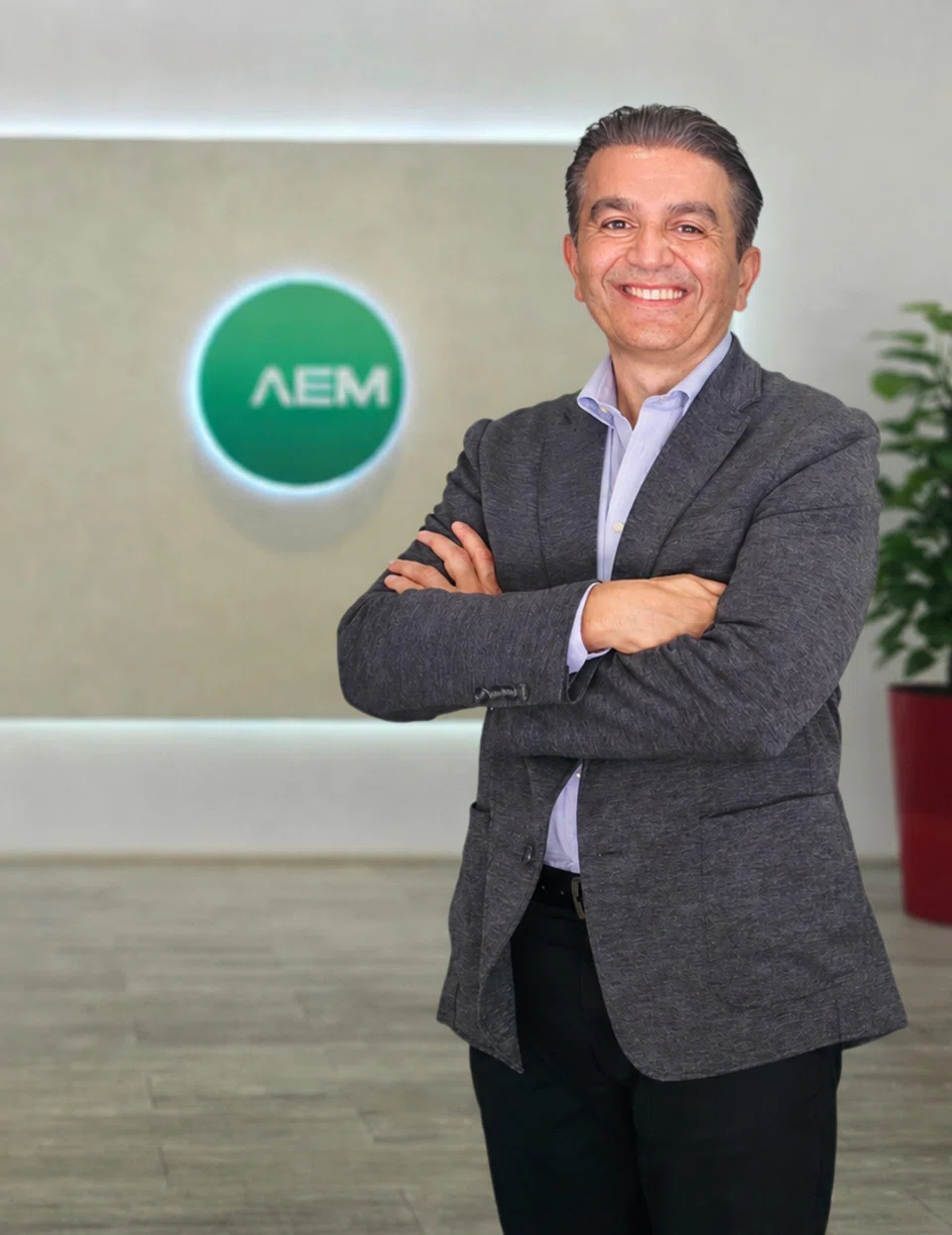
[SINGAPORE] When AEM Holdings reported its first-quarter results in May, the profit jump was not the most useful line. The more useful one was a single box on the slide. The chip tester raised its FY2026 revenue guidance by around a fifth, to between S$550 million and S$600 million.
The market did the rest. AEM shares closed 10.7 per cent higher at S$8.35 that day. CGS International raised its target price to S$14.79 from S$10.15, and lifted its FY2026 to FY2028 net profit estimates by 33 to 44 per cent.
In August, AEM did it again. It raised the range to between S$630 million and S$680 million, and added full-year earnings per share guidance of 24.5 to 27.5 cents.
To be fair, a range on a slide did not move the shares on its own. Artificial intelligence (AI) chip makers buying AEM’s test gear did most of that work. What the guidance did was tell the market how big the order wave was, and when it would land. Analysts could put the numbers into their models the same day.
AEM did not only do this in the good years. It had guided for FY2023 revenue of around S$500 million, then cut the range to between S$460 million and S$490 million in August that year as a key customer delayed a product launch. Full-year revenue came in at S$481.3 million – within the revised range.
The following February, it gave only a half-year revenue range, and investors were irked that it had skipped full-year guidance.
Think of guidance as a pilot’s arrival time. Nobody expects the plane to land to the minute, but passengers get upset when the cockpit goes quiet.
Why so few do it
AEM is still one of the exceptions on the Singapore bourse, and the regulator knows it.
On Wednesday (Sep 23), SGX RegCo said it will tighten its listing rules on pay, dividends and investor relations.
SEE ALSO



Annual reports for financial years starting on or after Jan 1, 2027, must include a dividend policy and an investor relations policy. They must also describe the company’s main shareholder engagement over the year, and explain which performance measures drive executive pay. Every issuer will need an investor relations website, or at least a dedicated section on its own site.
The rules stop short of earnings guidance. Even the dividend policy does not force a company to promise a payout. A firm that wants to keep its cash for growth can simply say so.
In other words, SGX RegCo now requires companies to explain how they pay shareholders. Forecasting what they will earn is still up to them.
Some respondents to SGX RegCo’s consultation wanted the rules widened to cover capital management more broadly. That idea now goes to the Corporate Governance Advisory Committee.
SGX RegCo chief executive Tan Boon Gin was blunt about the stakes. “Singapore’s equity market is benefiting from a resurgence of investor interest, but this interest will not last if boards and management do not increase investor engagement and demonstrate greater transparency,” he said. He urged companies to go beyond the minimum, so they can attract global capital and improve valuations.
On guidance itself, SGX RegCo has been nudging for months. In a column in January, Tan and head of listing compliance Michael Tang took on three myths with explicit assurance: the regulator does not frown on guidance; an auditor’s sign-off is needed only in narrow cases; and updates can wait for the next results, as long as big changes are flagged.
All this sits inside a wider effort to lift the market. MAS has set up the S$6.5 billion Equity Market Development Programme to draw money into Singapore stocks, and a S$30 million Value Unlock programme to help companies court investors. SGX practises what it preaches, giving its own shareholders medium-term revenue growth guidance.
Yet the message on guidance has not landed. In May, SGListCos, the listed companies’ association, polled 32 people at a members’ event on how they frame forward-looking statements. Not one described theirs as highly quantitative. 14 said balanced and 11 said mostly qualitative. Seven avoided them or did not issue them at all. Asked for the main barrier, 16 of 31 named regulatory risk, liability and investor scrutiny.
Justin Teh, senior director at FTI Consulting’s financial communications and special situations practice, says many firms still think they cannot or should not guide “in the name of prudence and compliance”.
FTI Consulting is part of SGX’s Value Unlock panel of investor relations service providers.
“Across other international markets, giving forward guidance is relatively commonplace,” he said. In the US, it is a well-established voluntary practice. In Japan, next-year earnings forecasts have long been the norm. London-listed companies give far more medium-term guidance than Singapore issuers do.
The risk of silence, he says, is that others fill the gap. “If companies stay silent, analysts and investors may fill in the blanks themselves; and their version could be messier or further from reality.”
What good looks like
For companies unsure where to start, SGX has published reference guides built from real disclosures. The first came out in April. Sector deep dives on real estate investment trusts (Reits) and industrials followed in July.
The examples range from hard numbers to plain words. DBS and Singtel set out outlooks by business line. CapitaLand Investment gives funds under management targets by region. ST Engineering has five-year targets by segment, with progress updates.
Seatrium shows when its order book turns into revenue, and sets targets for revenue, Ebitda and return on equity. Among Reits, CapitaLand Ascendas Reit flags the rental reversion it expects for the year.
Stoneweg Europe Stapled Trust told investors it expects FY2026 distributions to be broadly in line with FY2025. Its chief capital markets officer, Elena Arabadjieva, told the SGListCos panel the move came from investors. They wanted to know “not just what the number is today, but clarity on future distributions”, she said.
The small-cap problem
Analysts say the case for guidance is strongest where it is least common.
Thilan Wickramasinghe, head of research at Maybank Securities, names DBS, OCBC, UOB, SATS and Singtel among large caps that guide well. He adds mid-caps Centurion, Food Empire and CSE Global.
Guidance, he says, lets analysts judge management. They track what was promised against what was delivered, and trust builds from there.
“Share prices react to changes in expectations,” he said. “The more confident an analyst is in expressing their expectations, the market will be able to better reflect the right valuations.”
His bigger point is about size. Singapore has a small pool of analysts, and most of them cover large caps. “Ironically, these large-cap companies already tend to provide the best guidance,” he said.
Smaller firms get fewer analysts and a wider spread of forecasts. Their shares swing harder when results surprise. Clearer guidance can narrow that spread, draw more coverage and bring in institutions.
More institutional money means better liquidity and a broader shareholder base, “creating a virtuous cycle that supports stronger market visibility and potentially higher valuations over time”.
Wickramasinghe does not expect every company to guide – firms with low visibility, cyclical demand or commodity exposure may be right to hold back. For the rest, he has one request: “Give fewer words, but more measurable targets.”
Too often, he says, guidance comes as “cautiously optimistic”. That works as a mood. It does not work in a spreadsheet.
Terence Wong, founder and CEO of Azure Capital, hunts small caps for a living. Asked to name one that gives good guidance, he struggled to come up with any.
That says a lot on its own.
Wong has been pushing some of the companies he invests in to give at least dividend or profit guidance. Without it, and without analyst coverage, estimates end up all over the place and many investors simply will not buy. “Expectations drive share prices,” he said.
Foreign funds new to Singapore tend to start with blue chips, he adds. Visibility is what gives them the comfort to look further down the market. Better guidance will not close the valuation gap with other markets by itself, he says. But it helps.
Fear versus the law
So is the fear of being sued justified? Adrian Chan, partner and head of corporate at Lee & Lee, thinks it is overdone.
“Where guidance is properly prepared and qualified, the perceived risk may be disproportionate to the actual legal exposure,” he said.
The main risk sits under the Securities and Futures Act, which targets statements that are false or misleading. Directors can also be personally liable under the Companies Act if they fail to take reasonable care over disclosures.
The test, Chan says, is whether the company had reasonable grounds when it spoke. Missing the number is not, by itself, the test.
SGX RegCo’s column said good-faith guidance with proper caveats “should in the ordinary course of events not attract regulatory queries”. Chan welcomes that. But MAS keeps its own enforcement powers, and investors can still sue. “SGX RegCo’s comfort is significant, but not a complete shield,” he said.
That is why he wants a wider safe harbour. Changes to the Securities and Futures Act for the new Global Listing Board include a US-style defence for issuers on that board against civil claims over forward-looking statements. It does not extend to criminal liability. Most Mainboard and Catalist companies get nothing similar.
“Plugging this gap would go quite far to allay the perceived fears of liability that plague the slow adoption rate of forward guidance across the market and encourage broader adoption of forward guidance,” Chan said.
Until then, boards should document their assumptions and test them against bad scenarios. They should use clear cautionary language, and have a sign-off chain that runs from management to the audit committee and then the full board.
The part firms forget is what happens after the numbers go out. “It is the ongoing stewardship of guidance once issued that can be overlooked and most likely to give rise to problems,” he said.
The one thing a company cannot do is go quiet. “The moment an issuer is aware that the guidance is materially off the mark, silence is no longer an option – it becomes a potential breach,” Chan added.
SGX RegCo has made that easier than it sounds. A company need not rewrite its guidance the moment things change. It must flag a big deviation promptly and say whether the guidance still holds. The size of the gap and any new numbers can wait for the next results. It can even pause guidance, if it explains why.
Put simply, the captain does not have to announce every bump. But he does have to say when the plane is diverting.
Investors understand this, says FTI’s Teh. “Good guidance is not a promise to hit earnings to the last cent,” he said.
“Investors understand that forecasts change. What matters is whether management explains its assumptions clearly, updates the market when circumstances change materially and is transparent about why actual performance differs from previous expectations.”
AEM’s record bears that out. Its 2023 cut stung, but it landed where it said it would. The year investors grumbled about was the one when it gave them only half the picture. Two upgrades later, nobody is grumbling.
Most of Singapore Inc remains “cautiously optimistic”. But all investors want is a number they can use.
Decoding Asia newsletter: your guide to navigating Asia in a new global order. Sign up here to get Decoding Asia newsletter. Delivered to your inbox. Free.
Copyright SPH Media. All rights reserved.
TRENDING NOW

Once staunchly pro-China, Malaysian Chinese businesses are now distancing themselves from Beijing

Looking beyond looming CEO succession, should UOB potentially pursue a transformative merger?

Could stablecoins be the future of money?

Grab CEO’s wife Chloe Tong on life with Anthony Tan and finding her purpose

