

US dollar in holding pattern as markets await progress on Middle East peace talks
BOJ governor Ueda’s upcoming speech eyed for rate hike signals
[LONDON] The US dollar was steady on Monday (Jun 1) after a small weekly loss, as investors awaited developments in Middle East peace talks and US jobs data later this week that could shape the Federal Reserve’s monetary policy path.
The dollar index, which measures the currency against six peers, edged lower last week on expectations that a deal between the US and Iran to reopen the Strait of Hormuz was close. The closure of the key oil artery has lifted oil prices and worsened the inflation outlook, leading some to expect the Fed would raise rates this year.
But with little fresh insight into the progress of peace talks and a flare-up of hostilities between the US and Iran over the weekend, currency markets are in wait-and-see mode.
“We’re waiting to see some progress in one direction or another,” said Tommy von Bromsen, FX strategist at Handelsbanken.
Should the Strait of Hormuz reopen to traffic and oil prices come down, the dollar would likely weaken in the near term and risk-sensitive currencies, such as the Swedish krona, would outperform, von Bromsen added.
The dollar had rallied at the onset of the conflict, buoyed by safe-haven demand and the US economy’s relatively limited exposure to energy-driven inflation. However, it has given back some of those gains due to uncertainty surrounding the conflict’s trajectory.
The dollar index was little changed on the day at 99.05 after last week’s drop of 0.4 per cent.
The euro was down 0.1 per cent at US$1.1645, while sterling edged up 0.1 per cent to US$1.3464.
Fed watch
Markets are betting the Fed’s next move will be to raise its key rate, compared with expectations for a cut before the start of the Iran war, given rising energy prices and the impact they will have on inflation, and a still-resilient jobs market.
The US labour market figures due on Jun 5 could help sway what the Fed will do in the near term. The data is expected to show a steady unemployment rate of 4.3 per cent and an increase of 85,000 jobs, indicated a Reuters poll of economists.
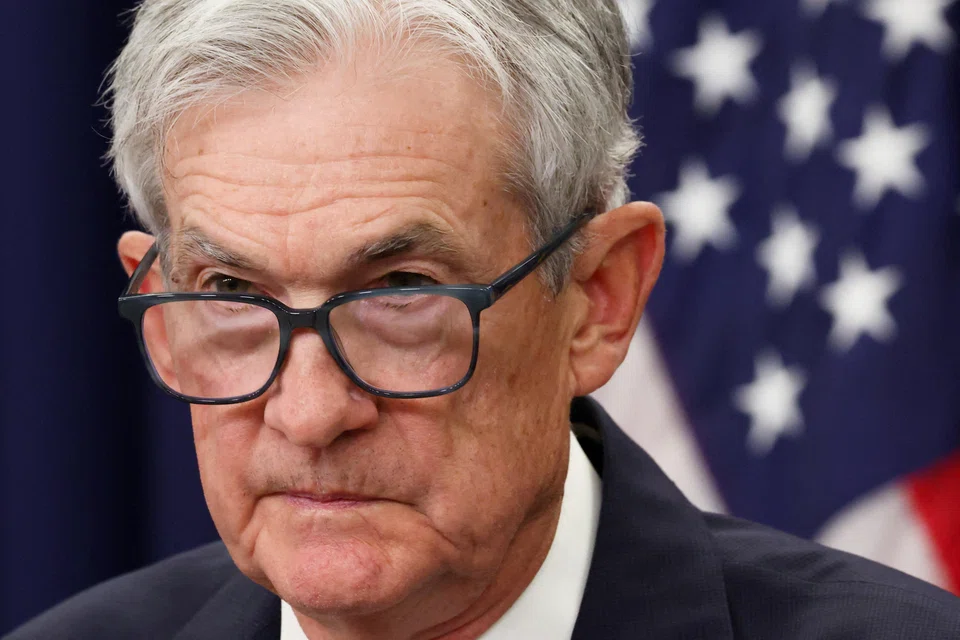
Fed governor Jerome Powell, whose term as chair formally ended on May 15, warned in a speech on Sunday about the politicisation of monetary policy. He has decided to continue as a Fed governor in part because of what he regards as ongoing threats to the Fed’s independence. The Fed’s Beth Hammack, Lorie Logan and Mary Daly are among policymakers due to speak later in the week.
Yen in focus
A speech by Bank of Japan (BOJ) governor Kazuo Ueda on Wednesday is also highly anticipated for signals as to whether the central bank will proceed with a rate increase the following week.
While there is no consensus yet within the BOJ on the decision, a pause in the central bank’s taper of government bond purchases is increasingly seen as a preferred option, said two sources familiar with the deliberations.
The yen weakened 0.1 per cent to 159.46 per dollar, close to the psychologically important 160 level that saw intervention by Japanese authorities to strengthen the currency.
“It seems like 160 is where they draw the line,” said Handelsbanken’s von Bromsen. “I think there will be intervention if we approach that level again.” REUTERS
Decoding Asia newsletter: your guide to navigating Asia in a new global order. Sign up here to get Decoding Asia newsletter. Delivered to your inbox. Free.
Share with us your feedback on BT's products and services
TRENDING NOW

Two Singapore-listed palm oil firms named in Greenpeace report on Indonesian plantation fires

Singapore Airlines flight returns to San Francisco after ‘unruly’ passenger incident

Singapore looking into which companies responsible for haze-causing fires: PM Wong

Deluge IPO 3.86 times subscribed ahead of SGX debut

