

US startup Databricks to raise Singapore headcount by up to 50% as AI demand grows
It has more than 250 employees in the Republic, which serves as its Asia-Pacific and Japan headquarters

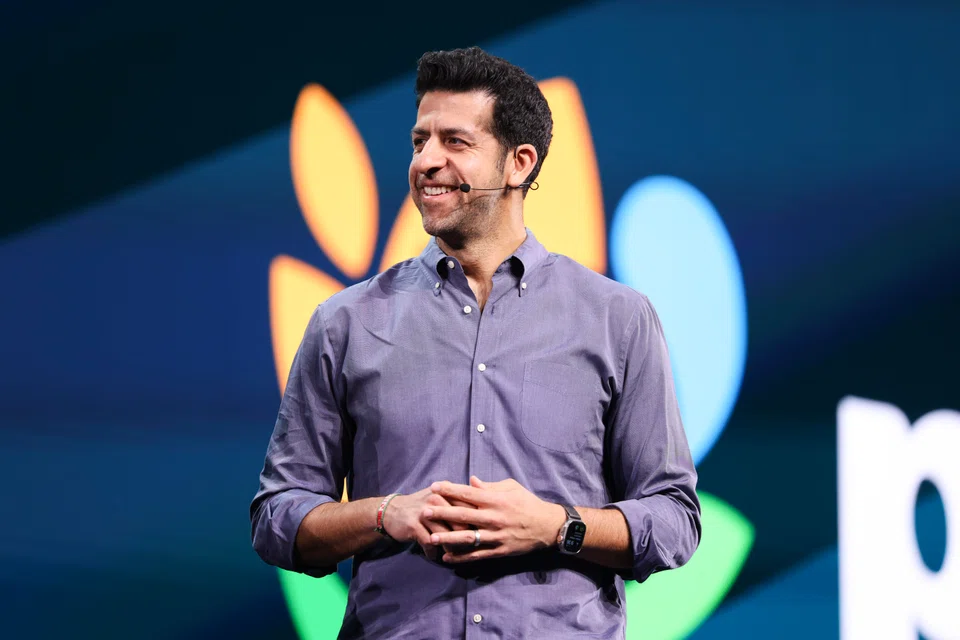
[SAN FRANCISCO] US startup Databricks plans to increase its Singapore headcount by up to 50 per cent over the next year as it rolls out new artificial intelligence products and expands, thanks to growing enterprise demand.
The data management and AI company currently has more than 250 employees in Singapore – which serves as its headquarters for Asia-Pacific and Japan – out of a regional workforce of more than 1,500.
It is already actively hiring for more than 50 new roles in the Republic, said Arsalan Tavakoli-Shiraji, senior vice-president of field engineering and one of Databricks’ seven co-founders.
These roles span the “full gamut” of sales, engineering, marketing and other functions, Tavakoli-Shiraji told The Business Times in a recent interview.
The privately held startup was most recently valued at US$134 billion. Media reports have put its annualised revenue as at June at US$6.9 billion, up more than 80 per cent from the year before.
Databricks is also expanding its physical footprint in Singapore, as announced in April. Later this year, it will move into a 32,000 square foot office at IOI Central Boulevard Towers, quadrupling its existing office space.
Niche roles
One “very interesting” area of hiring in Singapore is for forward deployed engineers, said Nick Eayrs, vice-president of field engineering for Asia-Pacific and Japan, in a separate interview.
These are hybrid technical and customer-facing roles. Such engineers work with clients to customise AI systems for their business problems, rather than offering standard software tools.
Such roles have risen in prominence as AI companies try to help enterprises move from experimentation to production. In Singapore, firms such as OpenAI have also signalled plans to hire and train more people for such roles.
Asked if the focus on these niche roles means that companies are chasing the same limited pool of AI talent in Singapore, Eayrs acknowledged that “there is definitely a fight for talent”.
But he noted: “Talent wants to work with the latest capability, and talent wants to work on the biggest problems that are out there, and we’re doing both. I think we’re attracting talent really, really well.”
He added: “We’ve got 50-plus requisitions that are open in Singapore, and we continue to hire – to be clear, there’ll be a lot more coming.”
In 2024, the company partnered the Infocomm Media Development Authority with the target of upskilling more than 10,000 people over three years, through data and AI courses and certifications.
Model flexibility
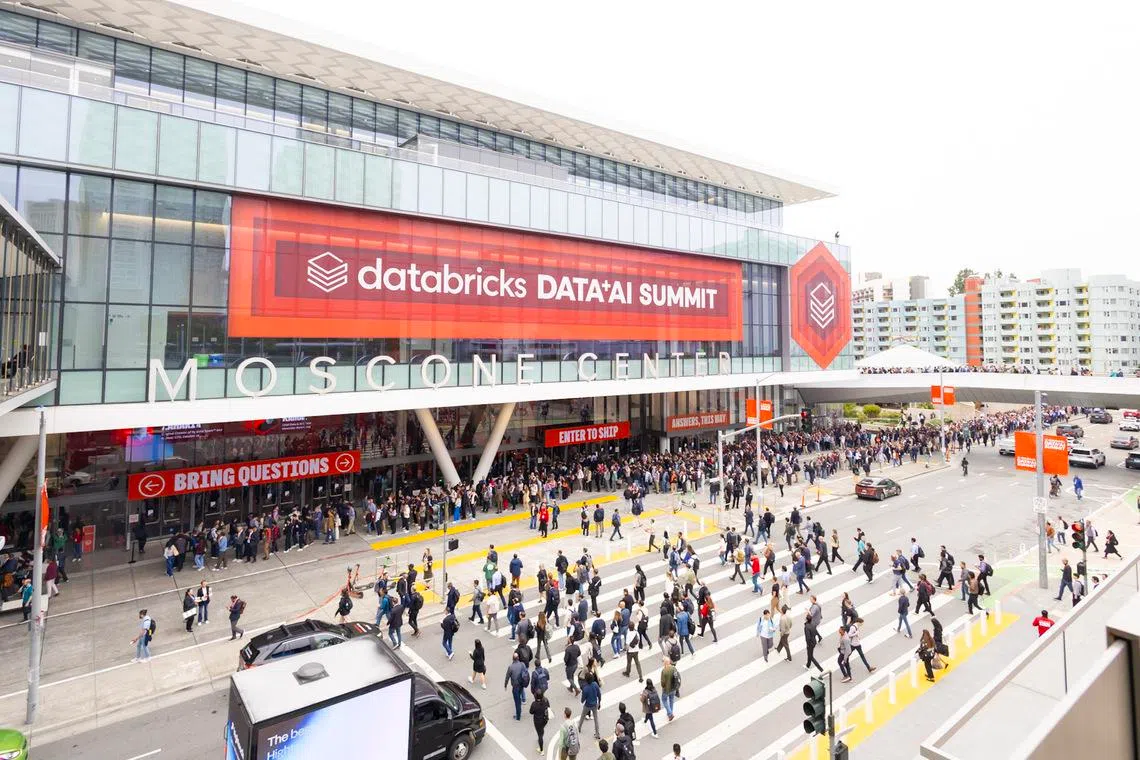
Tavakoli-Shiraji and Eayrs were speaking on the sidelines of Databricks’ annual Data and AI Summit, held from Jun 15 to Jun 18 in downtown San Francisco.
At the event, Databricks announced several new products to help companies deploy and govern AI systems more efficiently.
One of them is Omnigent, an open-source “meta-harness” that presents a single interface through which companies can manage different AI agents.
This interface sits above the various tools or frameworks used to build agents, allowing companies to coordinate them while applying consistent security, governance and collaboration controls.
Another new product is Unity AI Gateway, a governance and control layer for AI systems. It lets companies manage how models, agents and tools are accessed, monitored and paid for, while giving administrators a clearer view of usage, cost and security risks.
The launches come as AI costs become a bigger concern for enterprises moving from pilot projects to broader deployment.
AI models typically charge based on tokens: the units of text that models process and generate. Token usage can rise quickly when companies run agents at scale because each query, reasoning step, retrieval process or tool call may consume additional tokens.
The cost pressure is greater when companies rely heavily on advanced models, which tend to be more expensive than smaller, open-source or lower-tier models.
But not every task requires the most advanced model, noted Tavakoli-Shiraji. Simple tasks such as drafting e-mails, summarising documents or transcribing meeting notes can often be handled by less expensive models.
Put simply, Databricks’ new products help users route different queries and workflows to the right model for the task’s complexity, he explained. That can reduce spending of tokens, while giving companies more control over how AI tools are used across their organisations.
The new products also aid companies in their shift towards model-agnostic systems, to reduce their dependence on any single AI model or provider.
That issue came into sharper focus when Anthropic said on Jun 12 that it would disable its advanced Fable 5 and Mythos 5 models for all users, after the US government ordered it to suspend access to the models for foreign nationals on national security grounds.
With Omnigent and Unity AI Gateway, a user’s workload can be moved between models more seamlessly, Tavakoli-Shiraji said. “It basically makes you resilient to the model itself changing underneath or moving away.”






