Vietnam’s e-scooters rise on policy tailwinds, eroding petrol bike sales
VinFast logged a jump of nearly six times in e-scooter sales in 2025, outpacing Honda’s marginal growth and a decline at Yamaha

[HANOI] Petrol-powered motorbikes are losing appeal in Vietnam, the world’s most motorbike-dense market, as tighter emissions rules and shifting consumer preferences accelerate the shift towards electric alternatives.
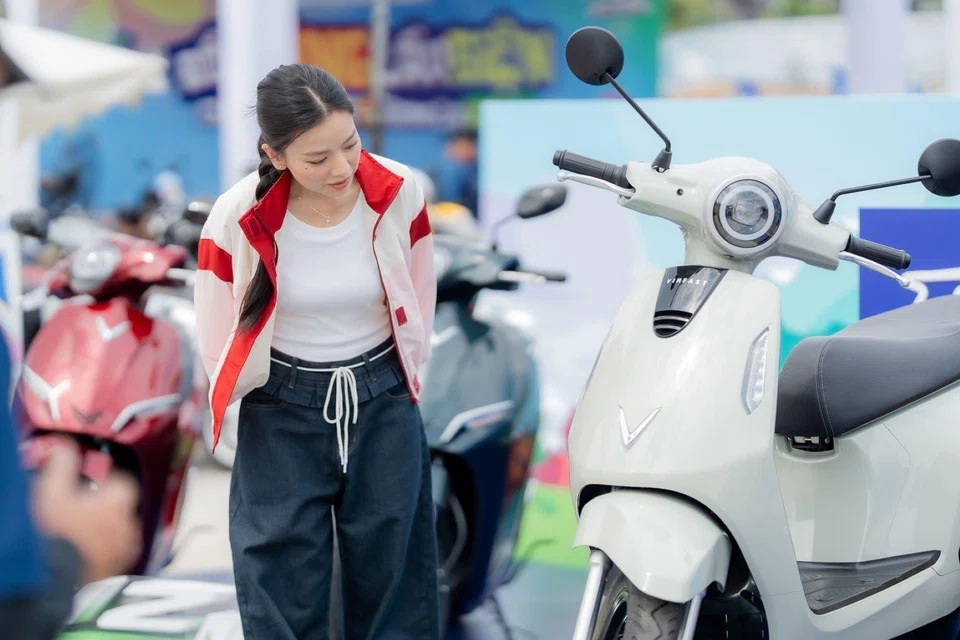
Domestic electric vehicle maker VinFast vaulted into the upper ranks of Vietnam’s motorbike market after delivering 406,453 e-scooters in 2025, a 473 per cent increase from a year earlier – a performance the company described as “record-breaking”.
That surge pushed VinFast into second place overall, according to industry tracker Motorcycles Data, in a market that sold about 3.4 million two-wheeler units last year, up roughly 15 per cent year on year.
Electric scooters accounted for most of the growth. Besides VinFast’s outsized gains, Chinese manufacturer Yadea posted 61.6 per cent growth, while domestic brands Pega and Dibao expanded 60 per cent and 75 per cent, respectively.
In contrast, Japan’s long-dominant brands struggled to keep pace. Honda, though it has remained the market leader in Vietnam for more than seven decades, recorded growth of just 1.3 per cent in 2025. Rival Yamaha saw sales fall 17.3 per cent, ceding its long-held second-place position to VinFast.
Data from the Vietnam Association of Motorcycle Manufacturers – whose five members are Honda, Yamaha, Piaggio, Suzuki and SYM – showed a similar trend, with total sales of petrol motorcycles slipping 1.5 per cent to 2.62 million units in 2025, down from 2.65 million a year earlier.
The downturn intensified in the second half. Third and fourth-quarter sales fell 9.4 per cent and 6.8 per cent, respectively, following announcements of internal combustion engine vehicle restrictions in Hanoi and Ho Chi Minh City as authorities seek to curb air pollution.
Vietnam is the fourth-largest two-wheeler market globally, with an estimated 77 million registered motorcycles accounting for around 90 per cent of road traffic. While convenient and affordable – ranging from roughly US$300 to US$500 for used basic models to US$1,000 to US$3,000 for new, popular scooters – authorities cite motorcycles as a major source of urban transport emissions.
In November 2025, Hanoi announced that petrol motorcycles will face time-based and area-based restrictions inside Ring Road 1 from July 2026. While the city stopped short of an outright ban, the rules will apply to personal vehicles and ride-hailing services during designated hours.



Ho Chi Minh City is pursuing a similarly aggressive timeline. The southern metropolis plans to introduce a low-emission zone in early 2027, followed by a full ban on petrol motorcycles in central areas by 2028. Emissions inspections could begin in July 2027, with peak-hour restrictions for motorcycles that fail Euro 2 standards.
The southern metropolis has also unveiled a draft road map to fully convert 400,000 ride-hailing motorbikes to electric vehicles by 2029, with interim targets of 30 per cent by the end of 2025, 50 per cent by 2026, and 80 per cent by 2027.
Policy shifts have pushed platform operators such as Grab and Be to fast-track EV partnerships, while e-bike manufacturers have also sought to raise fresh capital to expand amid supportive regulations.
VinFast catching on
After dominating Vietnam’s electric car market, VinFast has now moved quickly to capitalise on the shift in motorbike policies. Its Evo lineup, with multiple price points from US$600 to US$1,000 and one or two-battery configurations, became Vietnam’s best-selling e-scooter range in 2025, delivering more than 250,000 units.
Besides the extensive rollout of service workshops and public e-scooter charging stations, VinFast has installed about 4,500 battery-swapping stations, with plans to expand to 45,000 battery cabinets by the end of the first quarter of 2026.
Users receive free charging at V-Green stations through mid-2027, along with complimentary battery swapping for up to a year for drivers operating on Xanh SM, VinFast’s ride-hailing affiliate.
The Vietnamese EV manufacturers now have a network of more than 600 authorised e-scooter dealers nationwide. It is also offering generous consumer incentives, including zero-down-payment financing, retail discounts and support for vehicle registration fees.
“2025 marks a pivotal year in Vietnam’s green mobility transition,” said Hoang Ha, chief executive officer of VinFast’s e-scooter business in Vietnam. “I am confident that 2026 will be an even more remarkable year for VinFast and for the future of green mobility in Vietnam.”
Decoding Asia newsletter: your guide to navigating Asia in a new global order. Sign up here to get Decoding Asia newsletter. Delivered to your inbox. Free.
Copyright SPH Media. All rights reserved.