

‘We wanted to assure investors of our trajectory’: AEM offers rare EPS guidance amid growing AI demand
It is particularly bullish on the outsourced semiconductor assembly and test segment

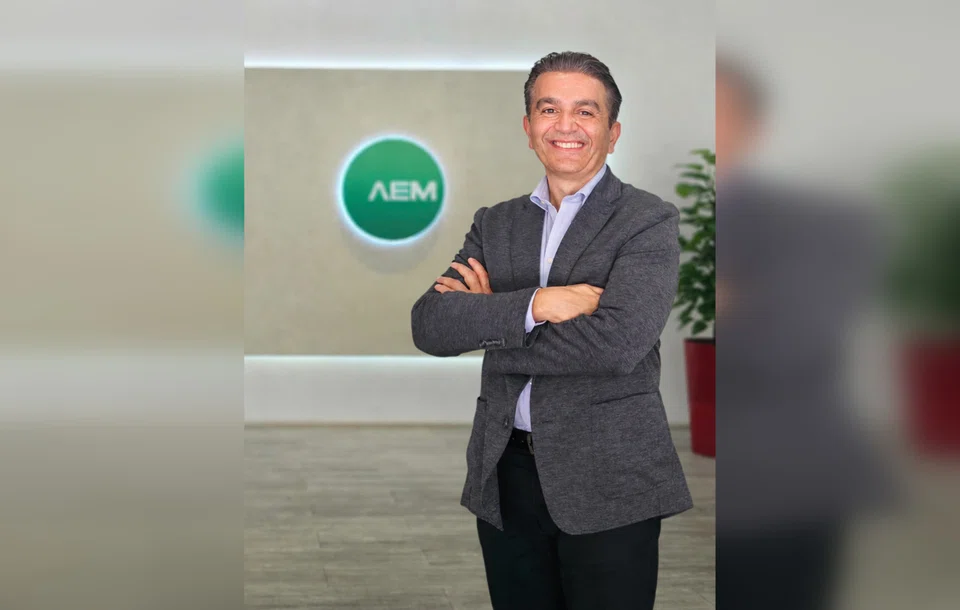
[SINGAPORE] Mainboard-listed AEM is riding a wave of artificial intelligence-driven demand for chip testing, giving it enough visibility to take an unusual step for a Singapore-listed company – providing investors with earnings per share (EPS) guidance.
The semiconductor test-equipment maker issued full-year 2026 EPS guidance of S$0.245 to S$0.275, alongside its half-year results, earlier this month.
This was its first such forecast and marked a rare level of specificity among listed players here.
“I was getting congratulated by some of our analysts because we were the first one to issue an EPS projection (as an absolute range) in the history of” the Singapore Exchange (SGX), AEM chief executive Samer Kabbani told The Business Times.
“We wanted to assure investors of our trajectory, but we are also trying to appeal to both local and international investors.”
Kabbani said international investors in particular expect companies to provide such projections, and that AEM hopes to continue offering forward guidance – in line with SGX Regulation’s encouragement that issuers give shareholders greater visibility into their strategic direction and business targets.
The company also raised its full-year 2026 revenue guidance to between S$630 million and S$680 million, from its previous range of S$550 million to S$600 million, following a robust H1.
Kabbani said the improved visibility that gave AEM the confidence to issue its EPS guidance was driven largely by the central processing unit (CPU) market.
The company is an incumbent test partner of leading manufacturers and has seen a sharp increase in demand in that market.
“The biggest change for us is that demand (has) moved from early evaluations and discussions into firm orders,” he said.
Bullish outlook
Founded in 2000 and headquartered in Singapore, AEM operates in more than seven countries. It counts major CPU and graphics processing unit suppliers and hyperscalers among its customers.
AEM posted a net profit of S$31 million for the half-year ended Jun 30, up from S$3.1 million in the previous corresponding period, as demand for its test equipment from AI chipmakers strengthened.
AEM continues to see strong demand from its existing fabless AI and high-performance computing (HPC) customer. Although it has not disclosed the customer’s identity, most research reports identify it as semiconductor giant global semiconductor manufacturer AMD.
This quarter, AEM also announced that a personal computer and foundry customer had adopted its flagship Asynchronous Modular Parallel Smart (AMPS) platform for future test requirements.
Together, the two customers now account for more than S$400 million in AMPS backlog, Kabbani said.
Launched in early 2018, the AMPS platform is designed to cater to a broad range of chipmakers and third-party testing companies.
Against this backdrop, AEM’s test-cell solutions business remains the key driver of growth. Including this business, the group has three main revenue segments – the other two are contract manufacturing and instrumentation.
Revenue from test-cell solutions grew 52.5 per cent to S$180.9 million, accounting for 73.2 per cent of overall revenue.
Meanwhile, the contract manufacturing segment continued to support the scale-up of the group’s flagship AMPS test-equipment platform. The instrumentation segment, by comparison, recorded revenue of S$3.1 million, down from S$4.6 million in the year before.
AEM’s production and engineering base in South-east Asia is closely aligned with customers’ technology road maps in the US, further strengthening its position, said Kabbani, who joined AEM as chief technology officer in 2020 and became CEO in July 2025.
He expects the CPU sector to expand at a compound annual growth rate of roughly 50 per cent over the next four to five years, driven by customers investing heavily in new capacity.
A veteran in the semiconductor capital equipment industry, Kabbani said the AI boom is benefiting AEM not only through higher chip volumes, but also because increasingly complex chips require more testing, with customers willing to spend more on this.
For a US$10,000 chip, for instance, manufacturers are more inclined to invest in premium testing equipment to ensure the package performs reliably, he said.
That growing complexity has also increased the importance of AEM’s proprietary thermal-control technology, which Kabbani said has become “much more essential” as chip power consumption rises and designs become more heterogeneous.
Maintaining a constant temperature during testing is critical, as fluctuations can distort results or damage the device.
AEM’s systems can also test around 80 devices in parallel, allowing customers to achieve higher test throughput per unit of factory floor space.
“It’s been built for high volume, high complexity,” Kabbani said.
“Razor blade” model
Beyond its PC and foundry as well as HPC and fabless AI customers, AEM is targeting the memory, outsourced semiconductor assembly and test (Osat), and contract manufacturing segments.
For now, Kabbani said the company remains focused on its first two verticals, although memory and Osat could become larger contributors over time.
AEM is particularly bullish on Osat; it has partnered Advanced Semiconductor Engineering (ASE), the world’s largest Osat provider.
Kabbani noted that ASE’s selection of AEM after extensive due diligence is a strong endorsement of the company’s technology.
He said: “If you think about it, (why would a Taiwanese Osat provider) come to Singapore and pick a supplier? It is a testament to what we do and what we offer in this market.”
AEM’s business also has a recurring-revenue element, which Kabbani likened to a “razor blade” economic model.
Equipment sales build an installed base, while device-specific consumables generate recurring revenue as customers move to new chip generations.
“Even if AI growth stalls, every time they change the chip to a new-generation chip, that will trigger changes in the device-specific collaterals and generate a more sustained, more resilient floor that will continue to generate revenue for us,” he said.
As for whether AEM could cross S$1 billion in annual revenue in the coming years, Kabbani declined to give a timeline, noting that the company has not provided guidance beyond 2026.
But he pointed to AEM’s estimate that its serviceable addressable market will grow from about S$3 billion in 2026 to S$4.5 billion by 2028.
Kabbani also sees AEM’s roots in Singapore and South-east Asia as a strategic advantage. Unlike many global semiconductor companies that have established operations in the region, AEM, he noted, “was born here”.
Singapore provides a stable ecosystem and strong government support, while Malaysia is emerging as the company’s most promising near-term growth market.
He described the latter as a “hotbed for attracting technology companies that are looking to diversify away from other locations”.
Roughly 70 per cent of AEM’s production is based in Penang, where a growing concentration of PC and memory players are expanding their operations.
Taiwan and, to a lesser extent, South Korea are other markets of interest, he added.
AEM shares closed at S$9.36 on Friday (Aug 21), down 3 per cent or S$0.29.
TRENDING NOW

OCBC mobile, online banking services restored after Friday afternoon disruption

SGX CEO Loh Boon Chye to step down; succession planning under way

Waymo founder predicts ‘landslide’ robotaxi adoption in Singapore, driven by high car costs

Vietnam’s northern provinces, not Hanoi or Ho Chi Minh City, are powering near 10% GDP growth

