

Wealth flows, Asean momentum to anchor DBS, OCBC and UOB as lower rates loom in 2026: analysts
Asset-quality trends remain an area to watch, but banks have likely made pre-emptive provisions for such risks

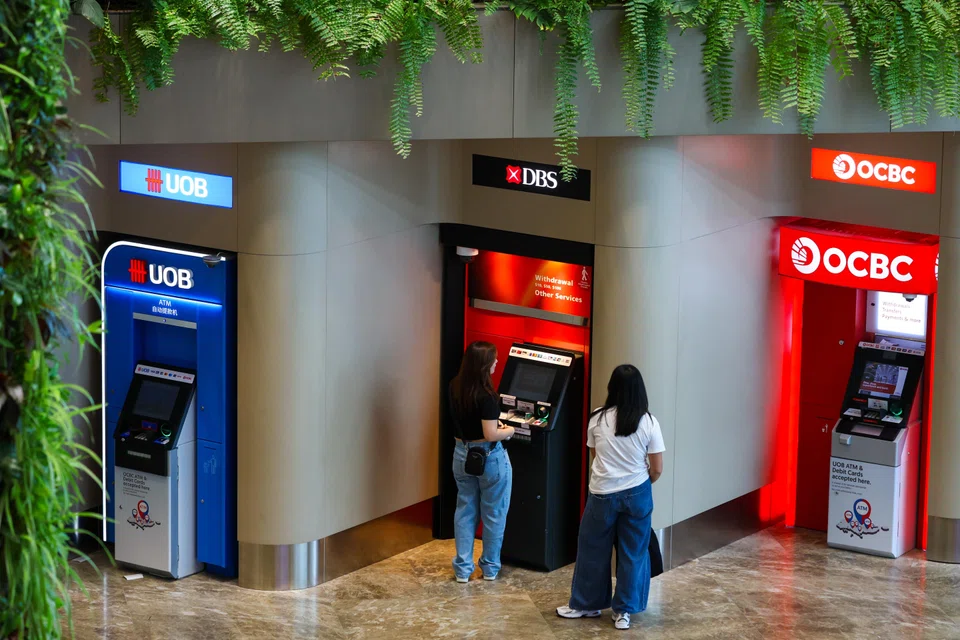
[SINGAPORE] Singapore’s three local banks exited FY2025 on a firm footing, as stronger fee and wealth income helped offset pressure from lower interest rates, while provisioning buffers kept asset quality broadly stable heading into 2026.
With further rate cuts expected to weigh on margins in FY2026, attention is turning to Asean loan growth and sustained wealth inflows as the next drivers of performance, even as asset-quality trends remain an area to watch.
This comes as intra-Asean trade and investment flows are expected to remain a medium-term pillar despite tariff-related volatility, said analysts.
Regional trade and investment have become “even more critical” amid global uncertainty, noted Carmen Lee, head of equity research at OCBC Group Research. She expects cross-border collaborations and capital flows to rise in the coming years.
Kathy Chan, equity analyst at Morningstar, said: “We think tariff uncertainty might bring about short-term volatility, (for example) on trade finance, but the banks are generally positive on Asean opportunities in the long term.” She added that she prefers DBS for its “more diversified portfolio”.
Asean focus
This optimism was echoed by banks’ senior management at their respective earnings calls.
Tan Su Shan, chief executive officer of DBS, said on Feb 9 that the lender was “seeing more intra-regional trade in Asia”, and pointed to existing programmes – such as in Singapore, where large companies are encouraged take their smaller suppliers overseas as part of a “queen bee” strategy – as examples of supply-chain shifts.
“I think we will see continued opportunities there in the long term,” she pointed out.
Other banking leaders struck an even more bullish tone on Asean trade-growth opportunities.
Tan Teck Long, who formally took the helm of OCBC in January and fronted his first earnings briefing as group CEO on Feb 25, spoke about a “pivot” to the Asean domestic market as one of four new broad thrusts for growth, even as he stressed that Greater China remains important to the lender.
Tay Wee Kuang, research analyst at CGS International Securities Singapore, noted that the “fast-growing” technology, media and telecommunications sector, in particular, along with adjacent industries such as data centres, should provide “stronger loan growth momentum” for OCBC in the region.
For UOB, its deputy chairman and CEO Wee Ee Cheong on Feb 24 pointed to “increasing contributions” from its core Asean markets outside Singapore, which as a bloc delivered positive growth in total income in FY2025, compared with an overall decline of the same at the group level.
He said then: “Asean is actually positively trending up.”
Lim Rui Wen, analyst at DBS Group Research, highlighted UOB’s “phenomenal” trade loan growth of 26 per cent year on year to S$45 billion in FY2025 as an example of regional flows, with trade loans now constituting about 13 per cent of the group’s loan book.
However, UOB’s traditionally higher-than-peers exposure to regional economies and small and medium-sized enterprises (SMEs) could “imply higher sensitivity to tariff-related risks”, though provisions have been made, said Morningstar’s Chan.
Tay concurred: “UOB, while having greater exposure, could be more impacted given (its) exposure to more SME loans, whereby business owners may be more cognisant of softer macroeconomic conditions.”
For FY2025, DBS posted a net profit of S$10.9 billion, down 3 per cent year on year; OCBC reported S$7.4 billion, down 2 per cent; while UOB recorded S$4.7 billion, down 23 per cent.
Total income rose 3 per cent to S$22.9 billion at DBS, 1 per cent to S$14.6 billion at OCBC, and 3 per cent to S$13.8 billion at UOB.
Wealth cushion
A key theme across the sector is the growing contribution of wealth management and fees, particularly as non-interest income served as the main earnings buffer in FY2025 and interest rates are expected to remain compressed in 2026, the analysts said.
Ongoing macroeconomic uncertainty, which is driving Asean trade flows, can also play a dual role in boosting wealth activity.
“Heightened market volatility can benefit trading income and sustained wealth management growth arising from shifts in investor sentiments and asset management flows,” explained Rena Kwok, senior credit analyst at Bloomberg Intelligence.
DBS’ Lim said that wealth management is “likely to remain a structural growth driver” in the years to come, supported by liquidity inflows into Singapore and rising investment activity.
“If we look through to banks in Hong Kong, they see similar strength in wealth management,” she noted. “Singapore and (the) Singapore dollar continue to be a safe haven for liquidity inflows and this will benefit the sector.”
On capturing wealth flows, CGS’ Tay pointed to OCBC, which “may be better-positioned given its product offerings across the wealth continuum, especially with its insurance arm, that the other two banks may not have”, referring to Great Eastern.
In FY2025, DBS saw wealth management fees hit S$2.8 billion, up 29 per cent year on year; OCBC saw wealth management fees surge 33 per cent from a year earlier, contributing to a 22 per cent rise in net fee income to S$2.4 billion; and UOB saw gross fees from wealth reach S$822 million, up 18 per cent and outpacing the overall 10 per cent rise in gross fees.
Credit watch
Despite pockets of stress in overseas commercial real estate, analysts broadly view credit risks as contained.
The latest results season suggests that the banks have largely identified potential stress areas and made pre-emptive provisions in prior periods, said CGS’ Tay.
Both DBS and OCBC recorded specific provisions alongside general provision write-backs in the fourth quarter, he noted, while UOB also saw general provision write-backs following heavier provisioning in the third quarter.
Provisioning buffers should allow the lenders to remain within management’s FY2026 credit cost guidances, said Kwok.
“DBS’ better reserve coverage and asset quality could allow for provision write-backs, lifting profits,” she added. “The key watchpoint is whether new non-performing assets form at a faster pace than recoveries.”
Commercial real estate exposure in Greater China and the United States has been a key contributor to bad debt formation in FY2025, with UOB notably setting aside more than S$1 billion in provisions in Q3.
Still, the non-performing loans ratio across the three banks remained stable in FY2025. DBS improved to 1 per cent from 1.1 per cent a year ago, while OCBC and UOB were unchanged at 0.9 per cent and 1.5 per cent, respectively.
Looking ahead, lower interest rates are generally supportive for commercial real estate, and signs of stabilisation are emerging in Hong Kong, Morningstar’s Chan noted, suggesting limited risk of further sizeable provisions.
On Friday (Feb 27), shares of DBS closed 0.1 per cent lower at S$57.12, while OCBC rose 0.4 per cent to S$21.43 and UOB gained 0.6 per cent to S$36.97.
Year to date, the trio are up 1.3 per cent, 8 per cent and 4.9 per cent, respectively.






