‘Whole deck of cards just toppled’: FoodXervices’ Nichol Ng on how a 92-year-old family business unravelled – and what’s next
The company tried various ways to stay afloat, but revival plans collapsed

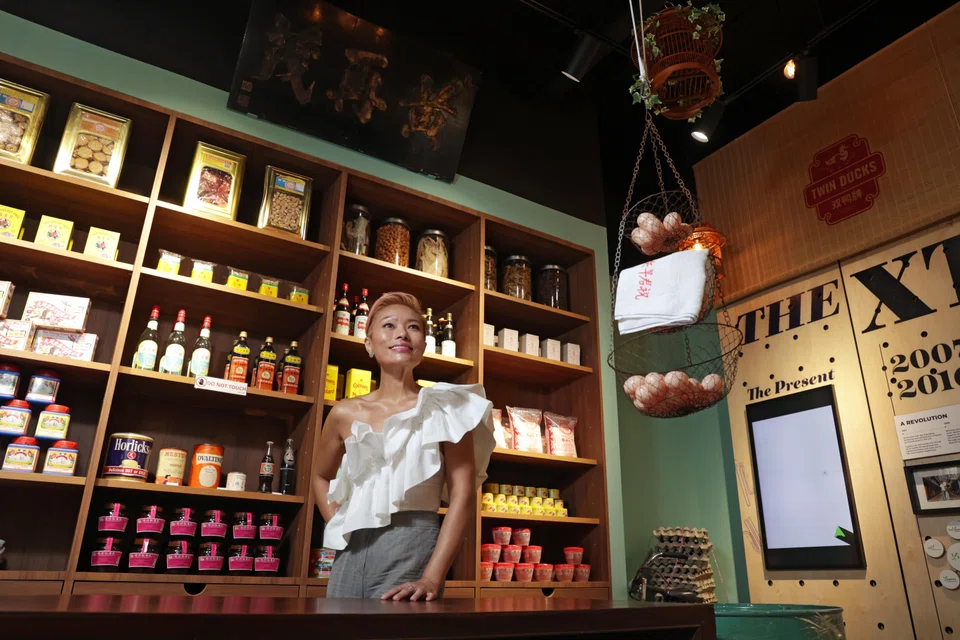
[SINGAPORE] An ill-timed property bet, a generational pandemic and a wave of customer closures – just any one of these would have been a severe setback for a business.
But for third-generation food distributor FoodXervices, all three hit at once; eventually, something had to give.
That moment came in April, when the company abruptly shut down and entered voluntary liquidation, drawing the curtain on a 92-year family business legacy.
“The whole deck of cards just toppled in the second half of March this year,” recalled Nichol Ng, co-founder of FoodXervices, in a recent interview with The Business Times.
At the time of its closure, the company had about 50 employees. All were laid off, with some salaries for April unpaid, pending the outcome of the liquidation.
It is also working with its suppliers and customers to link them up, to help ensure some continuity of sales and build new business networks.
Set up by Ng and her brother Nicholas, FoodXervices traces its roots to 1934, when the original family business, Ng Chye Mong, was started by their grandfather.
After buying out Ng Chye Mong, the siblings chose to incorporate a new company under a new name, as part of a push to modernise the food distribution business. Its closure was announced in early April through an Instagram post.
A big bet – at the worst possible time
FoodXervices’ troubles began in January 2020, mere weeks before the Covid-19 pandemic swept across the world.


That month, the company had just completed construction of its new S$50 million headquarters in Pandan Loop. The 250,000-square-foot facility was five times the size of the warehouse it previously occupied in Keppel Road. Construction began in 2018.
To fund the development, FoodXervices took a bank loan amounting to 80 per cent of the project cost.
At the time, the investment appeared to make sense. The food distribution sector was in its “golden years” from 2015 to 2019, said Ng.
The food and beverage industry, which FoodXervices supplied, was “doing very well”, while funding costs were low and banks were “very willing” to support F&B businesses and their suppliers.
When the siblings joined the family business in 2002, sales were less than S$2 million, Ng said. By 2007, when FoodXervices was incorporated and the business rebranded, revenue had risen to about S$12 million.
The top line continued to grow, reaching a record S$65 million in the financial year ended 2020. “The growth was very rapid, backed by a very healthy F&B ecosystem, and we grew from 1,000 to 5,000 customers.”
That gave the siblings the confidence to build the Pandan Loop facility, dubbed Xpace.
Beyond serving as a logistics facility for FoodXervices, the building was meant to be a “co-working” space for other F&B players, offering shared services such as central kitchens and storage.
“Just an empty building”
Then, the pandemic struck.
Sales plunged 90 per cent almost overnight, as many F&B clients saw footfall disappear amid movement restrictions. Plans to lease out spaces for co-working and shared services also fell through, as potential tenants held back in an uncertain environment.
“At that point, it was just an empty building,” said Ng.
For a time, government rental and salary support measures helped the company, which then had about 250 employees, get through the initial turmoil.
But as the scale of the financial strain became clearer, the pressure mounted. Electricity and logistics overheads alone were close to S$500,000 a month, even as sales had declined to roughly the same level.
The company’s management was then told by its creditor to find a buyer for the building. Other banks also pulled trade lines, Ng said.
Such trade lines, a form of working capital facility, were critical to cash flow. The industry norm was for food distributors to give customers a 90-day payment period, while they had only 30 days to pay their own suppliers.
That mismatch meant distributors relied heavily on banks to finance working capital, Ng explained.
“When the banks stopped the trade lines, it stopped our blood flow,” she said. Without that financing, the company could not buy, and therefore sell, as much stock as before.
At the same time, the F&B ecosystem was weakening. Many of FoodXervices’ customers shuttered during this period, Ng said, while higher manpower and ingredient costs added to the strain.
The pain showed up in the financials. Revenue fell every year after FY2020 – the 12 months ended Apr 30, 2020, when it stood at S$65 million – to S$21.4 million in FY2024. The company posted losses in every year except FY2021.
“If a family business can no longer feed your family, then what’s the purpose?”
Nichol Ng
A long fight to survive
From 2020 to 2026, the business tried various ways to stay afloat, including shifting to an asset-light model, said Ng. She also sold her matrimonial home and injected the proceeds into the company.
FoodXervices went through a restructuring in 2023, which included further trimming headcount through attrition, and bringing in an individudal “white knight” to support the business through loans.
It eventually found a buyer for Xpace, selling the facility to an unnamed Australian fund in 2024. But the proceeds were only enough to repay the bank.
After the sale, FoodXervices remained in the same premises, paying monthly rent of about S$300,000.
It also transferred its logistics function – comprising about 30 delivery trucks and 150 employees – to one of its existing logistics partners. The partner took over the workers’ salaries and truck leases, and in turn charged FoodXervices for logistics services.
But the company’s financial position continued to deteriorate as more large customers closed, and it eventually fell behind on its rent.
Its landlord took one of its subsidiaries to court in October 2025, as that subsidiary held the tenancy agreement. FoodXervices was still negotiating the rental arrears, including instalment plans, while also seeking fresh funding from a potential new investor.
Those ongoing talks gave Ng confidence that the business could survive. That was why FoodXervices signed an agreement with the Singapore Business Federation (SBF) on Mar 13 to help companies identify skills gaps and redesign jobs.
It was also appointed a SkillsFuture “Queen Bee” for the wholesale trade sector in August 2024. The term refers to industry leaders tapped by SkillsFuture Singapore to support training across the wider industry, including among peers, suppliers and customers.
“We were very confident that we (would have been) able to get past March in a very good way,” said Ng, when asked why the SBF agreement was signed while the company was still under financial stress.
But later that month, the revival plan collapsed. The landlord rejected the potential new investor, while the "white knight” from the 2023 restructuring pulled funding and placed the company in receivership, against the backdrop of the ongoing Middle East conflict, which began on Feb 28, Ng said.
That left FoodXervices with no lifeline.
Faced with eviction from its “home” in Xpace, receivership, and with no outside funding to settle its current debts, the siblings decided to place FoodXervices in voluntary liquidation in April.
The Food Bank Singapore, a charity founded by the siblings in 2012, is not affected, as it is a separate entity with its own management team.
Asked about her family’s legacy and the business they acquired, Ng was blunt: “A non-profitable business legacy – you might as well not uphold it.
“If a family business can no longer feed your family, then what’s the purpose?”
Pitfalls for entrepreneurs to avoid, as told by Nichol Ng – and what’s next for her
Q: Looking back, is there anything you feel you could have done differently?
Nichol Ng: When I was building FoodXervices, we were very focused on the top line because money was easy. Brands came to us non-stop; every two months, there was a new brand coming in as a customer, and things were flowing. We were obsessed with top-line growth.
But were we necessarily making a lot of money? No. I think for many years, we just broke even, even though our top-line growth was spectacular. Ultimately, as a business owner, what is most important? It is your profits, because at the end of the day, that is what matters.
If there is one thing I will take to my next venture, it is that I want to ensure it is a business with higher gross profit, more fat, and perhaps easier margins for us to earn.
Another lesson is collaboration. I think what is really needed for our industry – and for Singapore businesses in general – is more collaboration.
For example, we envisioned FoodXervices becoming something like a co-op. I may be good with groceries and frozen foods, but I could work with someone who is No 1 in fish, or in vegetables.
Why can’t all of us come together to achieve economies of scale in warehousing and share our efficiencies? For example: My finance system is very good, you should try it. I think there needs to be more of this sharing for more of us to survive.
Q: What is next for you?
Ng: I am continuing the entrepreneurial spirit of what my grandfather started. We are a family of business owners; we will come back again, and we will re-flourish in a very different shape, possibly in a new business.
As for whether the family name needs to be retained, I really do not think so. We proved that when we pivoted from Ng Chye Mong to FoodXervices.
If we could do it in 2007, we can do something again – possibly in a very different shape. I am already looking at a few impactful projects, including around food and nutrition.
Decoding Asia newsletter: your guide to navigating Asia in a new global order. Sign up here to get Decoding Asia newsletter. Delivered to your inbox. Free.
Copyright SPH Media. All rights reserved.