NEWS ANALYSIS

Why the SGX-Nasdaq dual-listing bridge suits Temasek and GIC portfolio companies

The bridge allows firms to access both investor bases in parallel, cutting cost and complexity relative to separate listings

Summarise
Benjamin Cher
Published Thu, Jan 15, 2026 · 07:00 AM
    • The SGX-Nasdaq dual listing bridge stands to gain more with Temasek and GIC participation than without.
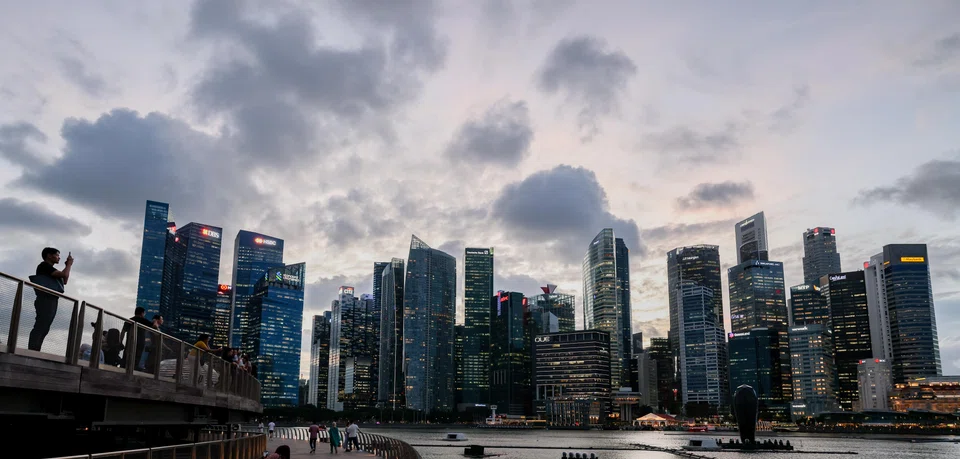
    • The SGX-Nasdaq dual listing bridge stands to gain more with Temasek and GIC participation than without. FILE PHOTO: BT

    [SINGAPORE] As more details emerge over the proposed dual listing bridge between the Singapore Exchange (SGX) and Nasdaq, it is becoming increasingly clear that Temasek and GIC portfolio companies are among those best placed to make use of the new framework.

    For years, many of the startups that Temasek invested in have ultimately sought listings in the US, particularly on Nasdaq, drawn by a deeper investor pool and generally higher valuation benchmarks.

    Companies such as Grab, Sea and electric scooter company Gogoro are among those that have chosen US exchanges for their public market debuts.


    GIC, on the other hand, invests primarily outside Singapore, with significant exposure to the Americas and Asia-Pacific. Since its mandate is to preserve and enhance Singapore’s international purchasing power over the long term, GIC’s investments in real assets have been largely overseas.

    These companies – which range from tech to consumer to healthcare – have not naturally viewed SGX as a listing venue, even when they have significant operations in the region.

    The dual listing bridge changes the equation as it would enable companies to list simultaneously on both exchanges with a single set of offer documents, lowering the regulatory friction involved in tapping Singapore’s equity market.

    Rather than positioning SGX and Nasdaq as competing venues, the bridge allows companies to access both investor bases in parallel, cutting cost and complexity relative to separate listings.

    This structure aligns well with the evolving profiles of Temasek and GIC-backed companies. In recent years, Temasek has shifted its focus to invest in later-stage startups, backing companies that are closer to a listing.

    These companies are more likely to meet the qualifying benchmark of a S$2 billion market capitalisation. With investment sizes for state investors typically coming in at tens to hundreds of millions, the post-investment valuation can easily be in the unicorn range of above US$1 billion, such as fintech Nium.

    Even the other quantitative requirements are unlikely to be a constraint, given that the prospective dual listees need to only satisfy only one of the requirements. Companies with a market cap of S$2 billion should comfortably have shareholders’ equity of at least US$55 million, clearing the quantitative standards criteria for listing.

    Dual listing is likely to be a boon for Temasek’s broader ecosystem. Temasek-owned 65 Equity Partners, which manages an anchor fund aimed at supporting SGX listings, has unlisted tech startups such as used car platform Carsome and loyalty platform ShopBack in its portfolio.

    Such companies would benefit from Nasdaq’s generally higher valuations and gain a global investor base, while a concurrent SGX listing could help anchor trading liquidity closer to home.

    While Nasdaq is often associated with tech firms, it is not exclusively so. Warehouse retail chain Costco Wholesale, for instance, is among the exchange’s most significant constituents by weight on the Nasdaq 100. This suggests that the dual listing bridge would not preclude non-tech portfolio companies from Temasek and GIC.

    This proposed move could also potentially benefit Singapore’s retail investors, giving them a chance at a slice of the pie. Listing rules for the Global Listings Board call for a 5 per cent or US$50 million – whichever is lower – of the total value of shares being offered as the retail share tranche for Singapore investors.

    A dual listing via the bridge could allow local investors to participate directly in the initial public offerings (IPO) of companies that might otherwise have been accessible only through US markets or via indirect exposure through Temasek-linked entities on SGX.

    For retail investors, this added accessibility can make a difference. Buying into companies at the point of listing could mean more upside compared with acquiring shares after they have begun trading.

    Getting in at the point of listing will allow a new generation of retail investors to invest alongside Temasek’s and GIC’s portfolio companies from day one.

    This could be a win-win for Temasek and GIC. This enables them to realise returns from a Nasdaq investor pool, while offering Singapore retail investors earlier access. That, in turn, could inject greater interest and vibrancy into SGX.

    Greater visibility on a pipeline of companies backed by Temasek and GIC, as well as SGX’s own efforts to cultivate quality IPO candidates, would help to sustain the momentum and market interest drummed up by the Equity Market Development Programme (EQDP).

    Another way Temasek and GIC would stand to benefit from the dual listing bridge is that the companies they have invested in could attract attention from fund managers selected and funded by the Monetary Authority of Singapore’s EQDP kitty.

    However, this is not to say that the approach is without risk. Should the portfolio company not meet shareholders’ expectations in the years to come, scrutiny of the state investors’ decisions would inevitably follow.

    Even so, the upside for Temasek and GIC should outweigh the downside. Successful listings would serve as validation, while deepening the pool of investable names on SGX.

    In that sense, the SGX-Nasdaq dual-listing bridge stands to gain meaningfully from Temasek and GIC’s participation – more so than it would without them.