China's cautious consumers offer clues for post-pandemic world
Q1 PBOC poll shows 49% of respondents increase savings, up from 46% in Q4 2019; fewer people are spending more
Beijing
CONSUMERS in China remain cautious even though the Covid-19 outbreak has been under control for much of the past year. This is offering clues for the kind of spending patterns that emerge globally once pent-up demand fades.
While China did not pump up consumers with stimulus cheques, its aggressive control over the virus allowed the economy to quickly reopen and drive real household income growth to 13.7 per cent in the first quarter of this year.
Yet the consumer recovery has been weaker than expected with economists identifying two major reasons: an unequal distribution of savings from the pandemic and lingering virus worries that has prompted more conservative habits and has lowered spending on services - subduing an otherwise V-shaped recovery for the world's second-biggest economy.
Like the US and UK, retail sales in value terms are above pre-pandemic levels in China, while they are recovering in the euro area. Consumers in the largest economies amassed US$2.9 trillion in extra savings during Covid-related lockdowns, according to Bloomberg Economics, which is helping to fuel the fastest world growth in 60 years in 2021.
The question is what happens to spending on services, and how sustainable the global consumer rebound proves to be. Evidence from China suggest the recovery could be slow despite the nation's world-leading 20 million vaccine doses a day with more than 40 per cent of the population having had at least one shot.
Li Weiyao, a 26-year-old tea shop owner and tea farmer in Xishuangbanna, a famous tourism destination in southern China's Yunnan province, said the impact from the pandemic on his business is far from over.
"There are a lot fewer travellers now, and even those who come into the shop are much less willing to make a purchase," he said. Monthly sales plunged to around 2,000 yuan (S$414) now from as much as 20,000 yuan before the pandemic, he said.
"Now I only buy things that I absolutely need," Mr Li added. "I used to be a huge fan of smartphones and would always buy the latest model, but now I'm sticking with my old phone as long as it's still working. And I only buy the most basic types of clothes."
That caution is showing up in a survey series conducted by the People's Bank of China of 20,000 depositors across 50 cities. The poll in the first quarter of this year found that some 49 per cent of the respondents said they were increasing their savings, up from 46 per cent in the fourth quarter of 2019. Only 22 per cent said they were spending more, down from 28 per cent in late 2019.
A gauge measuring how confident the respondents feel about their future income stood at 51 in the first quarter, rebounding from a low of 45.9 in the first quarter of 2020 but still below the 53.1 recorded in the final quarter of 2019.
"I'm staying at home a lot more nowadays compared with before the pandemic," said Johnny Sun, a 29-year-old coffee shop worker in Nanjing, Jiangsu province. "I'm just very used to not going out after this year. I used to like going to the nightclubs, but now I just don't feel like I need that anymore."
While corporate executives said business has rebounded, they also added that there is some way to go before confidence is fully restored.
"We expect it will take time for same-store sales to fully recover to pre-Covid levels," Andy Yeung, chief financial officer of Yum China Holdings Inc, said during the first-quarter earnings call in April. Yum China is the largest restaurant business in the country and operates KFC and Pizza Hut in the world's most populous nation.
China's retail sales expanded 17.7 per cent in April, far slower than a projected 25 per cent rise. Growth softened to 4.3 per cent in April on an average two-year basis from 6.3 per cent in March, with the consumption of goods and catering services both turning weaker, denting expectations that consumer demand was beginning to replace investment as a driver of growth.
To be sure, some of the recovery in China may be clouded by an accelerated shift to online shopping - meaning that patterns have changed rather than demand. Consumption will continue to recover given an improving jobs market and as the virus remains under control, National Bureau of Statistics spokesman Fu Linghui told reporters at a briefing last month.
An index compiled by Baidu based on searches for shiye, or job losses in Chinese, has fallen to levels seen before the pandemic while household income are also repairing, according to Bloomberg Economics.
Shang-Jin Wei, a China expert at Columbia Business School in New York and formerly chief economist of the Asian Development Bank, said much of the difference in China's retail rebound reflects the diverging approach to stimulus with its major peers. Even as spending on some areas such as eating out lags, consumption in other categories can make up the gap, he said.
"It's not too surprising that consumption growth is not as robust as GDP growth," said Mr Wei. "However, with enough people being vaccinated, I'd expect consumption growth to catch up too."
Still, the pandemic has left scars that have yet to fully heal. While households have high savings on an aggregate level, that buffer is not evenly distributed. Some of those savings are going into property or high-end goods. One example: sales of luxury cars have outpaced demand for middle-of-the-road sedans.
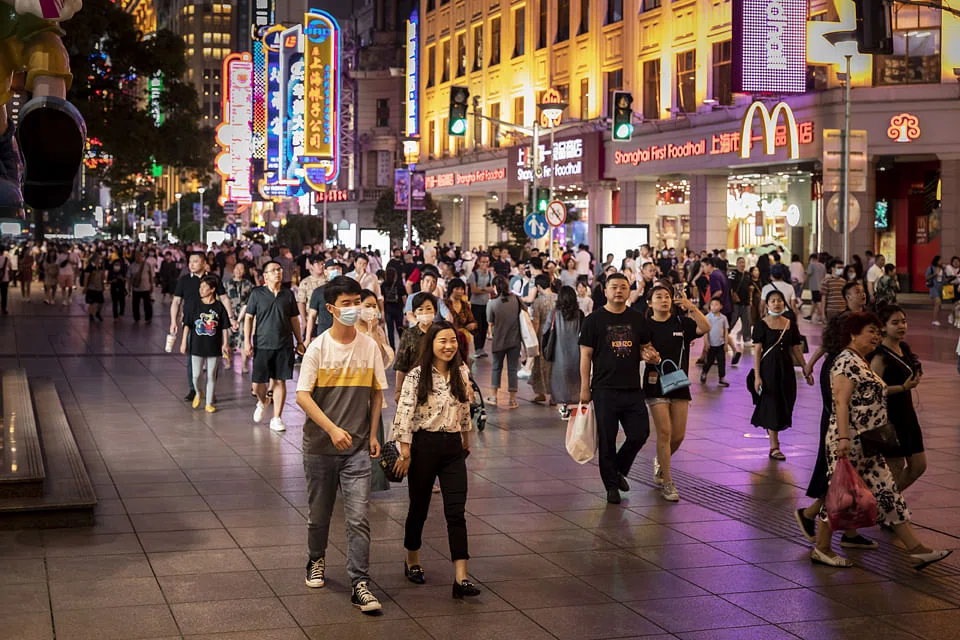
"Consumers are not necessarily cautious, but they are definitely more conspicuous," said Hao Hong, head of research at Bocom International in Hong Kong. "The long queues outside the luxury goods boutiques in China's shopping malls seem to confirm this observation."
Shaun Roache, Asia-Pacific chief economist for S&P Global Ratings, said there is a clear reluctance to spend with savings rates remaining well above pre-pandemic levels at almost 40 per cent of disposable income.
"This is not what a recovery is supposed to look like, especially as income has recovered smartly," he wrote in a note.
Bloomberg Economics notes that last year, the bottom 40 per cent of earners - the kind of shopper who typically spends - took a bigger hit to their income growth than more affluent groups. Retail sales may grow around 9 per cent this year and gradually approach its trend growth path towards the end of the year, Bloomberg Economics estimates.
Sentiment is also being challenged by sporadic outbreaks of the virus, including one in Guangdong province that triggered a new round of social distancing restrictions.
While demand for consumer staples is not being impacted, discretionary spending is hurting a bit, said Tao Shiquan, founder and chief executive officer of liquor distiller Chongqing Jiangxiaobai Liquor Co. The company produces baijiu, a sorghum-based spirit that is extremely popular in China, and markets its brands towards younger adults.
"Some consumers are spending optimistically, while some feel uncertain about the next few years and are more conservative in spending," Mr Tao said. "Both situations are appearing." BLOOMBERG
Decoding Asia newsletter: your guide to navigating Asia in a new global order. Sign up here to get Decoding Asia newsletter. Delivered to your inbox. Free.
Share with us your feedback on BT's products and services