COP31: Singapore-backed corporate coalition to launch first tender for 1 million carbon credits in 2027
The aim is to get to 10 million tonnes by 2030, to advance key global corporates’ sustainability commitments

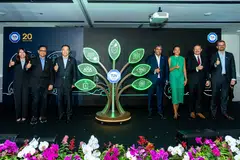
[SINGAPORE] A coalition formed to raise corporate demand for high-quality carbon credits will launch its first tender in 2027 to purchase a million tonnes of such credits.
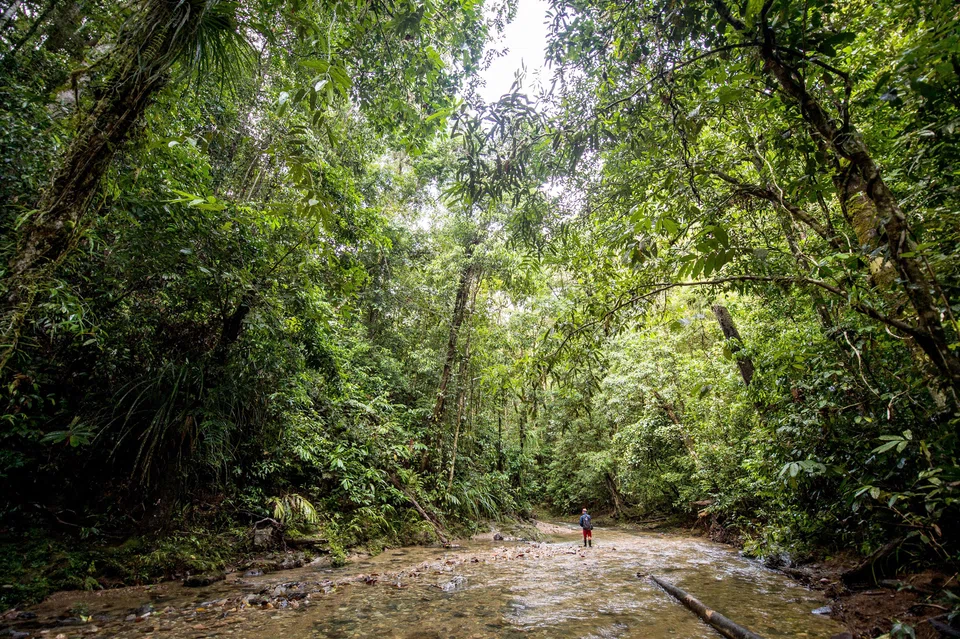
The inaugural request for proposal (RFP) by the Action for a Resilient Climate (ARC) coalition will focus on nature-based carbon projects, including those for afforestation, reforestation and revegetation, mangrove restoration, and improved forest-management projects.
These focus areas reflect the coalition’s ambition to scale quality nature-based carbon solutions that deliver measurable climate benefits, enhance biodiversity and support local communities, while addressing critical financing gaps and unlocking investment in high-quality projects, it said in a statement on Friday (Nov 13).
Unveiled on the sidelines of the COP31 climate summit in Antalya, Turkey, the RFP is the coalition’s first step towards procuring at least 10 million tonnes of carbon credits by 2030. This is aimed at helping major global and Asian corporates credibly advance their sustainability commitments.
Supported by government agency Enterprise Singapore (EnterpriseSG), the coalition was formed in May 2026 to look into channelling financing towards carbon projects.
Besides EnterpriseSG, organisations such as GenZero, Bain & Company, Climate Impact X, Mitsubishi Corp, Tencent and World Wide Fund for Nature Singapore are supporting the industry alliance.

Law Heng Dean, executive director of ARC, said the RFP is a significant first step in translating ARC’s ambition into collective action.
“Voluntary carbon markets have an important role to play in channelling finance towards high-quality climate projects and complementing companies’ decarbonisation efforts.
“By aggregating corporate demand at scale, we aim to give buyers greater confidence to act, provide stronger demand signals to project developers, and unlock capital to bring more high-quality carbon projects to market.”
SEE ALSO




The RFP will prioritise projects using internationally recognised carbon credit methodologies. The preference will be for projects located in Asia, though projects from elsewhere all are also eligible.
It will also favour projects that have yet to issue carbon credits under their registered project methodology. This is because the tender will consider only forward-offtake agreements, which are those in which the buyer agrees to procure carbon credits to be generated and delivered at a future date, rather than credits that have already been issued.
Projects are expected to deliver their first carbon credits by the end of 2028.
Carbon markets in South-east Asia
In a separate development, five carbon market associations from South-east Asia have renewed their cooperation for another two years to advance the Asean Common Carbon Framework.
The five associations are the Malaysia Carbon Market Association, the Asean Alliance on Carbon Markets, the Singapore Sustainable Finance Association, the Indonesia Carbon Trade Association and the Thailand Carbon Markets Club.
The framework, set up in November 2024 at COP29, aims to create a unified system for carbon credit trading in South-east Asia.
As part of the renewal, Aboitiz Foundation, the philanthropic arm of Filipino conglomerate Aboitiz Philippines, has joined the platform as an observer.
Aboitiz’s entry extends the regional footprint of the collaboration and reflects the growing interest among Asean member states in connecting national carbon market development with regional coordination efforts, said a joint statement by all six organisations.
Carbon project development
In another update, two carbon project developers have been awarded a grant by the Economic Development Board to set up early-stage carbon projects.
The first is Conservation International, which will identify, assess and develop a portfolio of projects and the investment needed to get them off the ground, said the environmental non-profit body in a statement on Thursday.
The projects will focus on ecosystems that are important not only for carbon storage, but also for biodiversity, climate resilience and the livelihoods of local communities.
Opportunities include forest conservation and restoration in Palawan in the Philippines, restoration in Bhutan and Cambodia, as well as improved forest management in Indonesia.
Other initiatives from Conservation International’s global portfolio are also being considered.
The programme will create a pathway for eligible projects that meet the issuance standards of Article 6 in the Paris Agreement, which is to be offered to Singapore-based buyers. Article 6 governs the international transfer of carbon credits.
The second developer is myclimate, a Swiss climate solutions provider that is expanding its international presence to Singapore and setting up local carbon project development capabilities from 2027.
The company said in a statement that it plans to build end-to-end Article 6 project development capabilities in Singapore. These include areas such as feasibility assessments, project design, carbon accounting and measuring, reporting and verification, financial and additionality assessments, as well as stakeholder engagement and Article 6 authorisation processes.
It plans to grow the Singapore-based technical team progressively, and aims to set up a team of five local specialists as it builds out its regional capabilities.
International experts will initially provide technical support, quality assurance and structured knowledge transfer, and progressively shift responsibility to the local team.
The company said it has been systematically expanding its capabilities in Article 6 carbon markets in recent years, with its existing portfolio consisting of a pipeline of several potential Article 6 projects.
The expansion to Singapore broadens myclimate’s geographical market access beyond its established European activities.
myclimate added in its statement: “Singapore offers proximity to project developers, corporate buyers, investors and partners in Asean and the wider Asia-Pacific region, while providing an established ecosystem for Article 6 project development and carbon-market services.”
Decoding Asia newsletter: your guide to navigating Asia in a new global order. Sign up here to get Decoding Asia newsletter. Delivered to your inbox. Free.
Copyright SPH Media. All rights reserved.