

COP31: Singapore revises data-centre energy-efficiency metrics in updated taxonomy
Criteria to qualify for transition financing updated for energy, maritime, iron and steel sectors as well

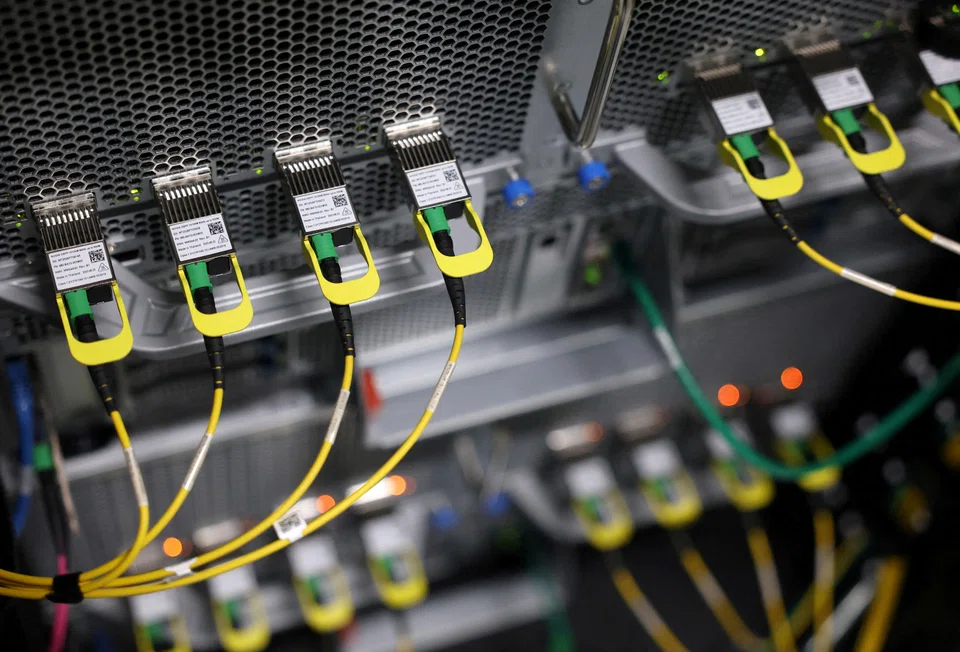
[SINGAPORE] Changes to energy-efficiency metrics of data centres are among some of the updates to the second edition of Singapore’s sustainable finance taxonomy.
In addition, the criteria for economic activities that qualify for sustainable or transition financing in the energy, maritime, and iron and steel sectors were also revised.
The updated version of the Singapore-Asia Taxonomy (SAT) was unveiled on the sidelines of the COP31 climate summit in Antalya, Turkey, on Wednesday (Nov 11).
Sustainable finance taxonomies set criteria and thresholds for a range of economic activities that would be considered eligible for sustainable and transition financing.
Singapore finalised its own taxonomy in 2023 at COP28 after four rounds of consultations, and is said to be the first globally to lay out criteria for transition activities through the use of a traffic-light system.
Unlike most taxonomies that either classify economic activities that qualify for sustainable financing as “green”, or those that do not qualify as “red”, an “amber” category was introduced to represent transition activities.

This means that carbon-intensive businesses looking to decarbonise can qualify for transition financing if their activities meet the transition criteria laid out in the taxonomy.
Sectors that are significant to region
This second edition comes after further consultations with the Monetary Authority of Singapore (MAS) and the Singapore Sustainable Finance Association (SSFA) over the last year, and reflects broad industry input and suggestions, said Abigail Ng, chief sustainability officer of MAS.
These four sectors were prioritised for their significance to the region’s transition finance needs, said SSFA in a separate media statement.
SEE ALSO



The energy-efficiency metrics for data centres located in water-constrained areas were revised to be less stringent, given the trade-offs between energy and water efficiencies.
As for the energy sector, the criteria for activities classified as “amber” are now aligned to an Asean-specific decarbonisation pathway laid out by the Global Energy and Climate Outlook.
The maritime sector’s criteria have been revised to align with the International Maritime Organization’s greenhouse-gas strategy and is also more interoperable with the EU and Asean taxonomy.
Eligibility requirements in iron and steel will no longer mandate specific technologies, such as carbon capture, utilisation and storage. It will instead focus on the activity’s emission intensity, with thresholds set with reference to the International Energy Agency’s 2050 net-zero emissions scenario.
SSFA said that this technology-neutral approach would allow a range of production routes – including upgraded blast furnaces, hydrogen-based direct reduction and others that may emerge – to qualify based on what they achieve rather than the technology they use.
As businesses navigate rising costs, supply-chain disruptions, and technological change, it remains important that the SAT’s technical screening criteria remain fit for purpose. The changes keeps the SAT aligned with evolving decarbonisation pathways and provide a credible, practical basis for transition finance across Asia, it added.
Additional guidance on how financiers may support enabling activities that are critical to achieving green and transition outcomes, which was released in July last year, will be included as an addendum to the revised taxonomy.
Ng noted that the changes are starting to see real-world application.
The Fund for Energy Efficiency Technologies, which is a blended fund that provides financing to shipowners to install energy-efficiency technologies on their vessels, plans to align its investments with the new transition criteria for the maritime sector.
Set up in Singapore by maritime-focused investor AIM Horizon Investments and the non-profit industry group Global Centre for Maritime Decarbonisation, the fund will deploy capital into vessel energy-efficiency technologies, such as wind-assisted propulsion systems.
“This shows how a taxonomy can guide capital in hard-to-abate sectors, where reductions often come from incremental yet critical investments in existing assets,” said Ng on Wednesday at the COP31 Singapore Pavilion.
The updates place greater emphasis on climate-mitigation outcomes, align more closely with international frameworks, and expand guidance on transition-enabling activities and equity financing aligned with the taxonomy, she added.
Carbon markets and insurance
Ng also announced the first two projects that received support from MAS’ carbon market development grant for the financial sector.
Standard Chartered would be expanding its carbon market capabilities across wealth management and corporate banking functions in Singapore. This includes developing carbon-related solutions for private banking clients, as well as small and medium-sized enterprises.
WWF-Singapore is collaborating with Great Eastern to develop and pilot insurance solutions for nature-based carbon projects supported by the non-profit group’s nature finance platform known as Canopy.
The aim is to de-risk nature-based solutions projects, improve their bankability, and unlock financing for nature conservation across South-east Asia.
The insurance programme will establish a risk-management framework and co-fund insurance premiums for nature-based projects, starting with eligible Canopy projects.
The premiums provide coverage for instances such as project failure, non-delivery of carbon credits, carbon credit eligibility risks, natural catastrophes and climate-related events, said WWF-Singapore in a previous media statement.
On insurance, Ng said that the sector has a distinctive role to play in supporting climate-resilience investments.
“Insurers see risks across the life of an asset, from design and construction to operation and, in some cases, failure. Their expertise can help businesses and financiers manage physical climate risks before they materialise,” she added.
MAS is also exploring developing a “common language” for resilience investments, alongside industry partners.
“We are not looking for a single framework or metric. We want to understand what different approaches measure, how they complement one another, and where the gaps are. Over time, that should make the landscape easier to navigate and support more investment in resilience,” she noted.
Decoding Asia newsletter: your guide to navigating Asia in a new global order. Sign up here to get Decoding Asia newsletter. Delivered to your inbox. Free.
Copyright SPH Media. All rights reserved.
TRENDING NOW

Higher rates, weaker spending: Is the Philippines entering stagflation?

Cabin fever: Airlines are rushing to refurbish plane interiors, but will their bets pay off?
Sheng Siong has fallen from its highs. Can its defensive appeal endure?

Nvidia heads for US$470 billion two-day wipeout as CEO affair fallout deepens

