

Green group files SGX complaint against OCBC alleging disclosure gaps in carbon-intensive assets
Market Forces flags lender’s possible failure to comply with sustainability reporting requirements around its exposure to captive coal plants

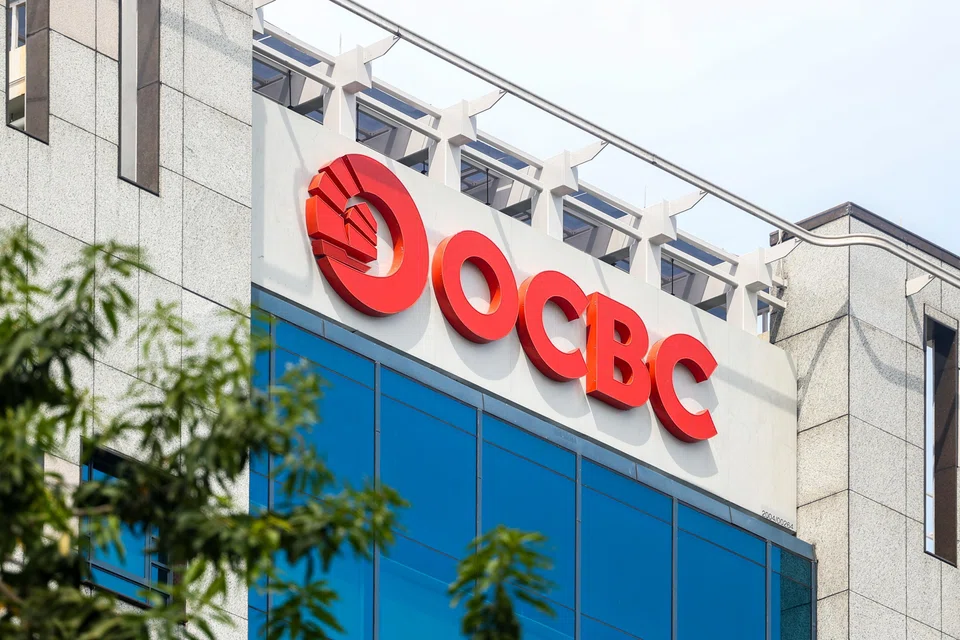
[SINGAPORE] A complaint has been lodged with the Singapore Exchange (SGX) against OCBC for potentially failing to comply with sustainability reporting requirements, specifically pertaining to the lack of disclosures around the bank’s exposure to captive coal plants.
Environmental group Market Forces said in a media statement on Tuesday (Feb 24) that OCBC did not provide complete information material to investors, including the true extent of its exposure to carbon-intensive companies that are powering their operations with off-grid coal plants, which are known as captive coal plants.
Neither did the bank disclose the material transition risk this exposure poses to it, the Australian-based organisation added.
Market Forces had previously flagged OCBC, along with UOB and DBS, for financing coal-powered nickel smelters and refineries run by Indonesia’s Harita Group, which builds and runs its own coal plants for its nickel operations.
Although all three Singapore banks have committed to cease the financing of new coal-fired power plants, financing the production of nickel does not fall under this remit even if the extraction activities are powered by coal.
Market Forces considers this a “loophole”, as the funds could be used by the company to construct additional captive coal capacity.
The Business Times has reached out to SGX for comment.
In response to queries from BT, OCBC group chief sustainability officer Mike Ng said that the bank remains committed to transparent sustainability and environmental disclosures that are aligned with SGX’s rules and international frameworks.
He added: “We are guided by our responsible financing framework and policies which outline our approach and dedication to managing (environmental, social and governance) risks within our lending practices, to ensure that our financial services do not adversely impact people, communities or the environment.”


Alleged disclosure gaps
In its complaint, Market Forces said that there is “a material information gap” between OCBC’s publicly stated sustainability commitments and the details of its financing policies, specifically on clients reliant on captive coal.
“OCBC does not clearly disclose whether captive coal power plants are included in the calculation of these thresholds, nor how such exposure is assessed for energy-intensive industrial clients,” the group stated.
It added that this lack of clear disclosure may constitute “material omissions” and potentially result in investors not being provided with an accurate representation of the bank’s climate-related risks, which are requirements under 711A and 711B of SGX’s rule book.
“The key point is not necessarily to list every client, but to ensure investors can understand the policy boundary, methodology and any material blind spots. The complaint appears to be alleging exactly such a boundary issue.”
Professor Liang Hao, Singapore Management University
When asked why Market Forces did not file a complaint with SGX against DBS and UOB – which were also flagged for their lending to Harita Nickel – Binbin Mariana, the organisation’s Asia energy finance campaigner, said that those two banks have different policies, funding timelines and exceptions.
Ng said that funding the production of nickel is necessary, with global demand for the material – which is a critical component for the production of electric vehicle batteries – projected to increase by nine times in the next 25 years.
Given that Indonesia has the world’s largest nickel reserves, its nickel industry is vital for the global decarbonisation effort, he added.
However, it is not pragmatic to expect the production of nickel to be fully powered by renewable energy, he said. This is a result of Indonesia’s unique geography.
“Grid connectivity is often beyond the control of companies. Renewable energy has limitations, given that hydropower and wind resources are location-specific and not available everywhere, especially in remote areas in Indonesia. Solar energy is intermittent,” he said.
“We recognise that the transition journey is not going to be a short and quick one. In the absence of reliable renewable energy to fully supply the required power for nickel producers, the energy transition inevitably incurs trade-offs.”
Striking the right balance
Under SGX’s rule book, banks also have to comply with International Sustainability Standards Board (ISSB) recommendations from their 2025 financial year, which means the first sustainability reports aligned with ISSB would be published only this year.
Under the new ISSB framework, lenders are required to disclose their absolute gross financed emissions for each industry by asset class. This would typically fall under the investment category of a bank’s Scope 3 emissions, which refer to indirect emissions arising from an entity’s supply chain.
However, this does not mean that banks need to disclose every transaction with a carbon-intensive company, even if it operates a captive coal plant.
The ISSB standards are fundamentally a materiality-based framework, and climate-related disclosures need to be “decision-useful” for investors.
This means that climate-related risks and opportunities that could reasonably be expected to affect the performance or prospects of an entity need to be disclosed, said sustainable finance experts.
In OCBC’s previous sustainability reports, which were not required to be aligned with ISSB standards, there were no disclosures on the financed emissions arising from its loan to Harita Nickel.
The bank reported the financed emissions of the six sectors – power, oil and gas, real estate, shipping, steel and aviation – for which it has set decarbonisation targets. This is also the reporting framework adopted by DBS and UOB.
Even as OCBC aligns its upcoming sustainability report with ISSB reporting standards, it is still not required to disclose climate-related information from the Harita Nickel deal.
However, the lender is obligated to include the financed emissions from this transaction into its absolute gross financed emissions across its loans portfolio.
If its exposure to mining or the nickel sector is material to the bank, then it must also disclose that sector’s financed emissions. Based on OCBC’s 2024 sustainability report, the mining sector accounts for 1 per cent out of its total credit exposure.
OCBC did not respond to BT’s query on the extent of its exposure to Harita Nickel and the resulting financed emissions. Banks typically do not comment on their transactions with their clients.
Nonetheless, sustainability experts said that a proportionally small amount of exposure – relative to a bank’s entire loans portfolio – does not mean the exposure is immaterial.
They noted that small exposures can become material if they are concentrated in specific borrowers, such as those associated with high transition or reputational risk; if they contradict a stated commitment such as “no-coal” financing; if they reveal a definitional loophole that could apply more broadly; or if they are likely to be of particular relevance to investors because of controversy or regulatory scrutiny.
“Banks therefore need to balance proportionality with transparency,” said Professor Johan Sulaeman, director of the Sustainable and Green Finance Institute at the National University of Singapore.
Liang Hao, professor of finance at the Singapore Management University, said that a tiered approach of deep disclosures and targets for sectors with major exposure, a portfolio-wide risk screening, and supplementary explanations for specific exposures or policy interpretations would help achieve that balance.
While banks are not required to disclose every instance of carbon-intensive financing, sustainable finance experts said that there is certainly room for them to expand their scope of disclosures.
This is especially so for cases where potential exposure sits on the edge of an existing policy definition, such as coal exposure arising via an industrial client’s captive power rather than a standalone power producer, said Prof Liang.
“The key point is not necessarily to list every client, but to ensure investors can understand the policy boundary, methodology and any material blind spots. The complaint appears to be alleging exactly such a boundary issue,” he added.
Prof Sulaeman said that disclosures need to accurately reflect where transition risk actually resides within the portfolio. “The focus should be on economic exposure to carbon risk, not just sector labels.”
Transition risk is also not confined to fossil fuel sectors. While an industrial borrower powered by captive coal may not be classified as coal exposure by a bank, the transition risk can be similar, noted Prof Sulaeman.
“What ultimately matters is structural carbon dependence and sensitivity to global transition dynamics, including carbon border measures, buyer decarbonisation standards, and repricing of capital,” he added. “If risk sits outside formal sector definitions, banks may need to reassess whether their monitoring frameworks fully capture that exposure.”
Decoding Asia newsletter: your guide to navigating Asia in a new global order. Sign up here to get Decoding Asia newsletter. Delivered to your inbox. Free.
Copyright SPH Media. All rights reserved.
TRENDING NOW

Once staunchly pro-China, Malaysian Chinese businesses are now distancing themselves from Beijing

Looking beyond looming CEO succession, should UOB potentially pursue a transformative merger?

Could stablecoins be the future of money?

Grab CEO’s wife Chloe Tong on life with Anthony Tan and finding her purpose

