

How Asia can lead the global energy race to net zero
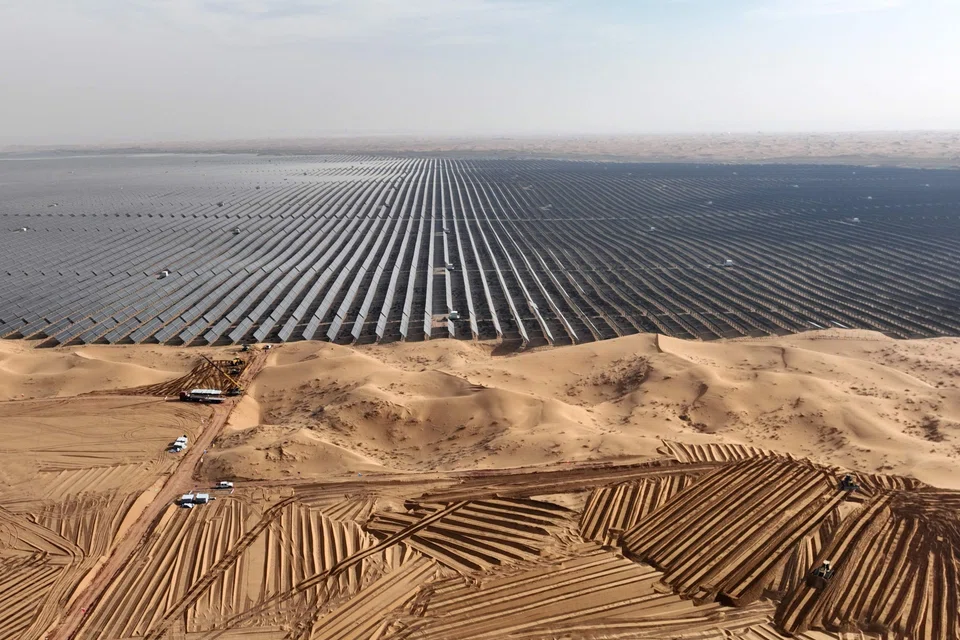
IN A world of accelerated advancement and dynamic development, there is no escaping energy consumption. We need energy to work and to live. In 2022, the demand for the already-hot commodity peaked at 604 exajoules – that is 604 with 18 zeros behind it, or about 3,000 times the energy needed to power Singapore for a whole year.
Asia, in particular, is set to become the world’s leading consumer of energy in the next few years to fuel its numerous growing economies: the region is expected to account for half of the world’s energy usage by 2050. About one-third of the region’s energy mix comes from coal, which is a cheap and reliable source of energy.
Amid the growing global demand for energy, the world as a whole is also transitioning to renewable energy. How the region responds and contributes to this transition will have a significant impact on the global trajectory.
It will not be easy. There are many challenges that must be addressed by dialling up commitment in these three areas: public governance, building collective will, and increasing the bankability of projects.
Enabling scale
Individual renewable-project financing by private companies shows that channelling capital to clean energy solutions is possible, with the right incentives. For example, companies such as Eden Renewables, Vena Energy and Adani Green Energy have all managed to secure funding to construct solar and wind farms in the region.
But they remain prototypes. If we are to push the energy transition ahead, such projects must scale. To this end, governments must step in.
One successful example is found in India. For a long time, it was difficult to invest in the country because of the creditworthiness of many strategic companies. However, after the government set up a federal institution called the Solar Energy Corporation of India (SECI) in 2011, which offloaded risk to the federal government, renewables began to take off. SECI’s most recent project is setting up 800 megawatts of storage-linked renewable energy projects connected to the inter-state transmission system.
China also adopted feed-in tariffs under the Renewable Energy Law in 2008. By 2018 its renewable energy capacity had reached 729 gigawatts, up 12 per cent from the previous year, making it one of the largest renewable energy markets in the world.
Innovative partnerships
Building a political consensus is important in tackling the different agendas of countries and getting the region ahead in the transition.
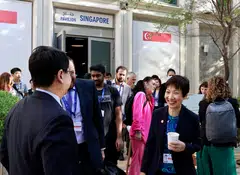
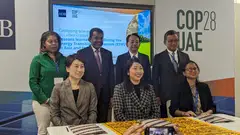

Speaking at the Singapore International Energy Week conference in October 2023, Keo Rottanak, Cambodia’s minister of mines and energy, noted that some countries in Asia may be ready to move forward while others are more interested in subsidising the fossil fuel industry.
One suggestion is to redouble efforts to build an Asean power grid. However, technical and commercial complexities coupled with resource constraints make this a stretch goal.
A quicker solution is to connect countries that can help balance out the resource equation. For instance, Singapore has the technology but not land, while countries such as Cambodia may be blessed with the land and renewable energy resources but not the know-how or financial wherewithal. Resource-rich countries have to connect with capital-rich countries to kickstart the next steps of the transition, and in doing so create a win-win situation.
The work surrounding the managed phase-out of coal is another prime example of the scale of collaboration and innovation required to accelerate a just transition. At the regional and domestic level, taxonomies and guidelines are already being developed to crystallise what this process looks like.
As a member of the Glasgow Financial Alliance for Net Zero, DBS co-chaired the workgroup to develop a proposal for a managed phase-out of coal in Asia-Pacific. This should provide clear guidelines to financial institutions to support accelerating the shutdown of coal-fired power plants in the region in a fair and just transition, so as to speed up the installation of clean energy solutions.
In a separate but related workstream, the Monetary Authority of Singapore, together with a consortium of financial institutions, recently announced pilots to test the use of high-quality transition credits as a potential income stream to enable the early retirement of coal-fired power plants.
Elsewhere on the sidelines of the COP28 climate summit, DBS served as the financial adviser on a deal signed between the Indonesian government, the Asian Development Bank and operators of a privately owned coal-fired power plant to retire the asset ahead of time by 2035. This could save up to 15 years’ worth of greenhouse gas emissions.
Financial innovation
With different industries at different points in their decarbonisation journey, financial institutions have a key opportunity to shape the course of their journeys in unique ways because of their multiple touchpoints across a range of industries.
For now, sustainable financing solutions are largely geared towards large corporations, which have greater access to resources for data tracking and measurement than small and medium-sized enterprises (SMEs). Banks must tailor sustainable financing solutions for SMEs too, especially since they comprise the vast majority of supply chains.
To accelerate the decarbonisation of supply chains, DBS partnered apparel giant H&M Group to develop a collaborative finance tool that marked its first successful transaction recently. Under the initiative, DBS directly funded the installation of solar panels, energy-efficient motors and water-conservation technologies for a textile supplier in India. These factory upgrades help the business reduce the carbon footprint of its operations and contribute towards H&M Group’s supply-chain emissions targets.
Whether government or bank, large corporation or SME, everyone has a part to play in the transition. Reaching the net-zero goal is no easy feat, but with closer collaboration among stakeholders, creativity and initiative, Asia could lead the world to a more sustainable future.
The writer is deputy head of energy, renewables and infrastructure at DBS Bank
Decoding Asia newsletter: your guide to navigating Asia in a new global order. Sign up here to get Decoding Asia newsletter. Delivered to your inbox. Free.
Share with us your feedback on BT's products and services
TRENDING NOW
Easy to rent out, hard to sell: Are buyers losing interest in Singapore’s one-bedroom condos?

GovTech retrenches another 38 staff in second round of layoffs
Stocks to watch: Seatrium, CapitaLand Investment, Keppel DC Reit, Suntec Reit, CLCT, TSH Resources
World’s largest offshore wind platform by Seatrium consortium on track to be completed by 2028

