Thales redefines the airport journey with AI-powered biometrics
Fly to Gate delivers a seamless passenger journey from check-in to boarding

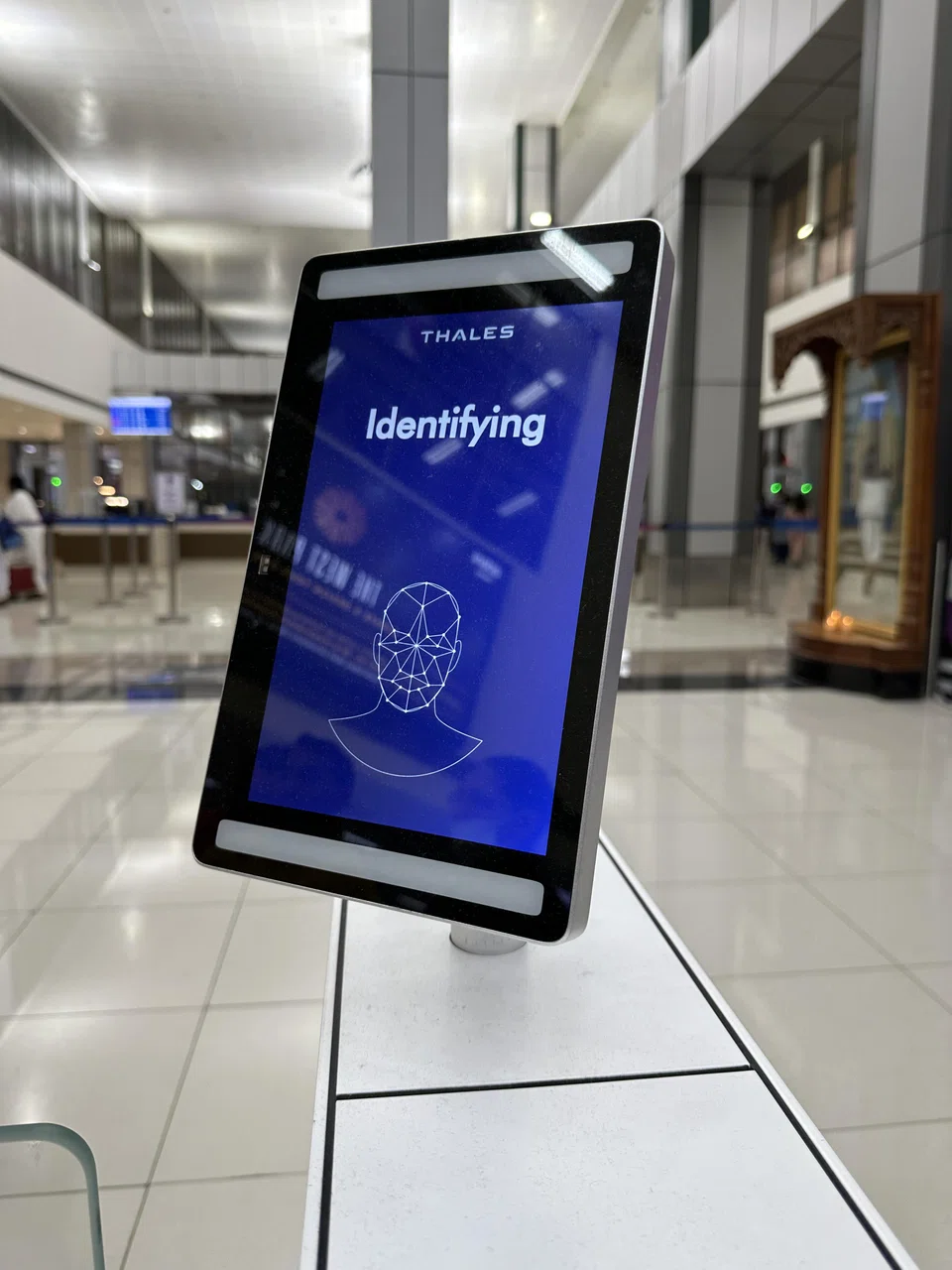
[SINGAPORE] The airport journey often involves queues, repeated checks and time pressure at key touchpoints. But Thales is about to change that.
Fly to Gate is the company’s touchless biometric passenger solution, designed to improve both passenger experience and airport efficiency. Travellers can expect a fast and easy journey from check-in to boarding.
Compliant with the International Air Transport Association’s One ID concept, it uses artificial intelligence (AI)-driven biometric authentication at mandatory airport checkpoints, allowing passengers to move through the airport effortlessly without compromising security and personal data protection.
After enrolment, the journey is hands-free, with no ID document or boarding pass to show.
To create the digital identity, passengers use a mobile phone or a kiosk to prove their identity with a selfie and an ID document photo. When successful, a digital ID is created and stored in each passenger’s digital wallet.
At check-in, passengers consent to share that digital ID with the airport for each trip, after which they can use face identification at each touchpoint in the airport.
Thales said more than 600 touchpoints at airports are equipped with its Fly to Gate solution. The system delivers an average recognition time of two seconds at each touchpoint, reduces boarding time by up to 30 per cent, and is aimed at increasing terminal throughput by at least 20 per cent.
Accurate and secure
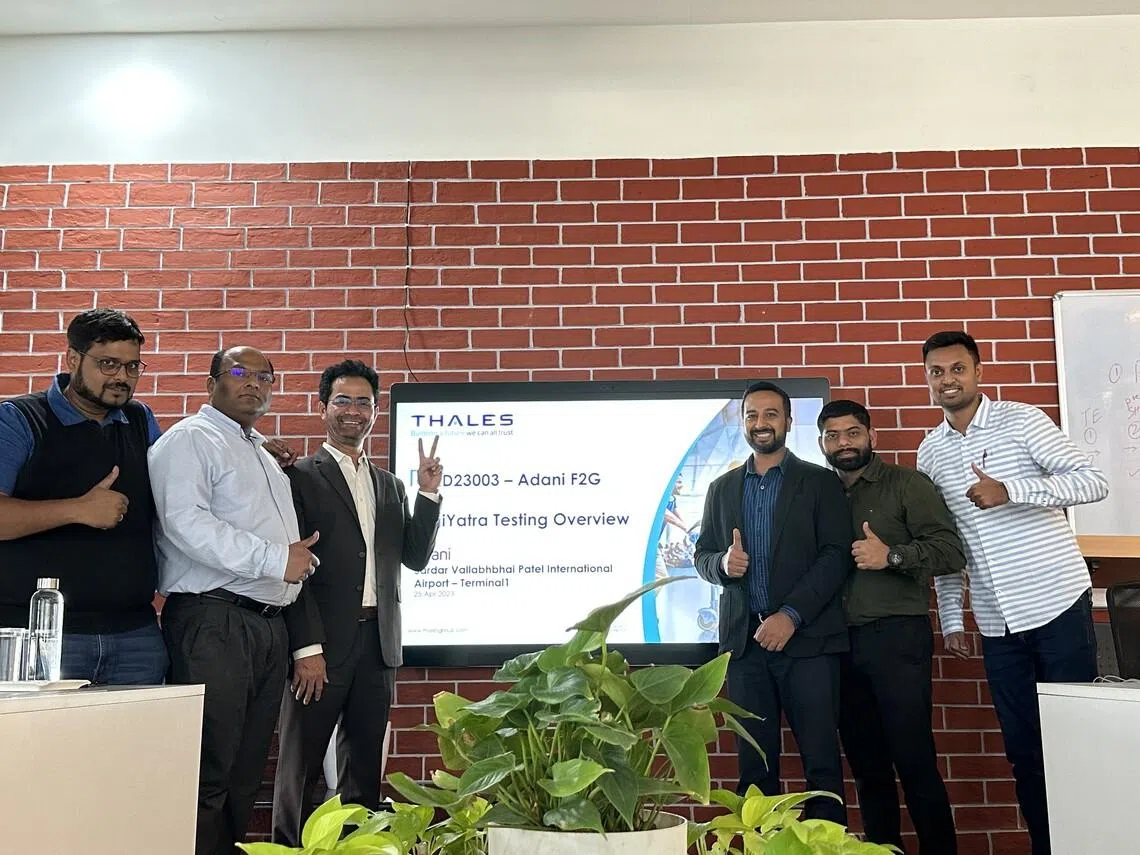
Fly to Gate was developed with a human-centred design-thinking approach grounded in real passenger journeys.
Thales said its team studied the needs of passengers, airport staff, airlines and security teams through interviews, observations and passenger-flow analysis; used journey maps to generate ideas; built rapid prototypes for user feedback; and carried out pilot testing in real airport settings. It made ongoing refinements based on staff feedback.
SEE ALSO









On the technology side, Thales said its AI facial recognition achieves 99.8 per cent accuracy (National Institute of Standards and Technology-ranked), reducing identity fraud risks and manual verification time by 80 per cent. Its biometric engine can perform a 1-to-10,000 search in less than one second.
The system also includes AI-powered liveness detection to distinguish a real person from spoof attempts such as photos, video replays, masks and deepfakes.
For identity verification, Thales said the system can automatically authenticate chip and no-chip documents, extract text from identity documents and verify travel-document security features against a worldwide template database with more than 2,500 documents.
Privacy and ethics are built into the architecture. Thales said Fly to Gate complies with its TrUE AI – short for transparent, understandable and ethical AI – framework, developed in conformance with the EU AI Act.
The framework is based on four core principles: validity, security, explainability and responsibility.
Biometric tokens are stored locally in a government-grade digital wallet on passengers’ mobile devices and shared with the airport backend platform, only with passengers’ consent and end-to-end encryption.
The system also allows passengers to keep control of their biometric data and manage consent in real time. The ID token is automatically deleted post-flight.
Decoding Asia newsletter: your guide to navigating Asia in a new global order. Sign up here to get Decoding Asia newsletter. Delivered to your inbox. Free.
Copyright SPH Media. All rights reserved.